
The SSB Five-Day Process, Day by Day: Screening to Conference
The SSB interview 5 day process runs in a fixed order: Screening on Day 1, Psychology tests on Day 2, Group Testing Officer tasks spread across Days 3 and 4, and the Conference on Day 5 where the board president decides who gets recommended. A candidate who clears Screening but stumbles on consistency between the Psychology and GTO days rarely makes it to Day 5 with a clean file.
Key Takeaways
- Five fixed days: Screening (Day 1), Psychology (Day 2), GTO outdoor tasks (Days 3-4), Conference and result (Day 5) — the sequence never changes across boards.
- Screening cuts hard: Roughly 4 out of 5 candidates are sent home after Day 1’s OIR test and Picture Perception exercise, before the psychology or group tasks even begin.
- Fifteen qualities, one file: Assessors track fifteen Officer Like Qualities across all five days and cross-check whether a candidate’s Day 2 answers match their Day 3-4 behaviour.
- Timing for Chhattisgarh families: With the NDA 2 2026 written exam on 13 September 2026, candidates who clear the written paper get roughly six to eight weeks before an SSB call letter arrives — that gap is the real preparation window.
- Younger aspirants: Sainik School hopefuls should track the AISSEE 2027 notification, expected between September and October 2026, since SSB-style personality assessment increasingly shapes how coaching schools structure Class 6 and 9 prep.
SSB Interview 5 Day Process at a Glance
| Day | Main Test | Duration | Outcome |
|---|---|---|---|
| Day 1 | OIR Test + Picture Perception & Discussion Test (PPDT) | Half day | Screened in / out; roughly 20% proceed |
| Day 2 | TAT, WAT, SRT, Self-Description | Full day | Psychology profile drafted |
| Day 3 | Group Discussion, Group Planning Exercise, Progressive Group Task | Full day | Leadership and cooperation observed |
| Day 4 | Half Group Task, Lecturette, Command Task, Individual Obstacles, Final Group Task | Full day | Individual initiative assessed |
| Day 5 | Conference with board president | Half day | Recommended or not recommended |
What the SSB Interview 5 Day Process Actually Tests
Every task across the five days maps back to fifteen Officer Like Qualities: things like initiative, cooperation, courage, and sense of responsibility, as defined by the Services Selection Board under the Directorate General of Recruiting. Written exams check whether a candidate knows the syllabus. The SSB checks whether that same candidate behaves like an officer when tired, under pressure, or working with strangers they met an hour ago.
This is why a child who scores well in the NDA written exam can still get “not recommended” at SSB. The written paper and the interview measure two different things, and both matter for a career in the armed forces, a distinction the Union Public Service Commission notes clearly in its NDA notification documents.
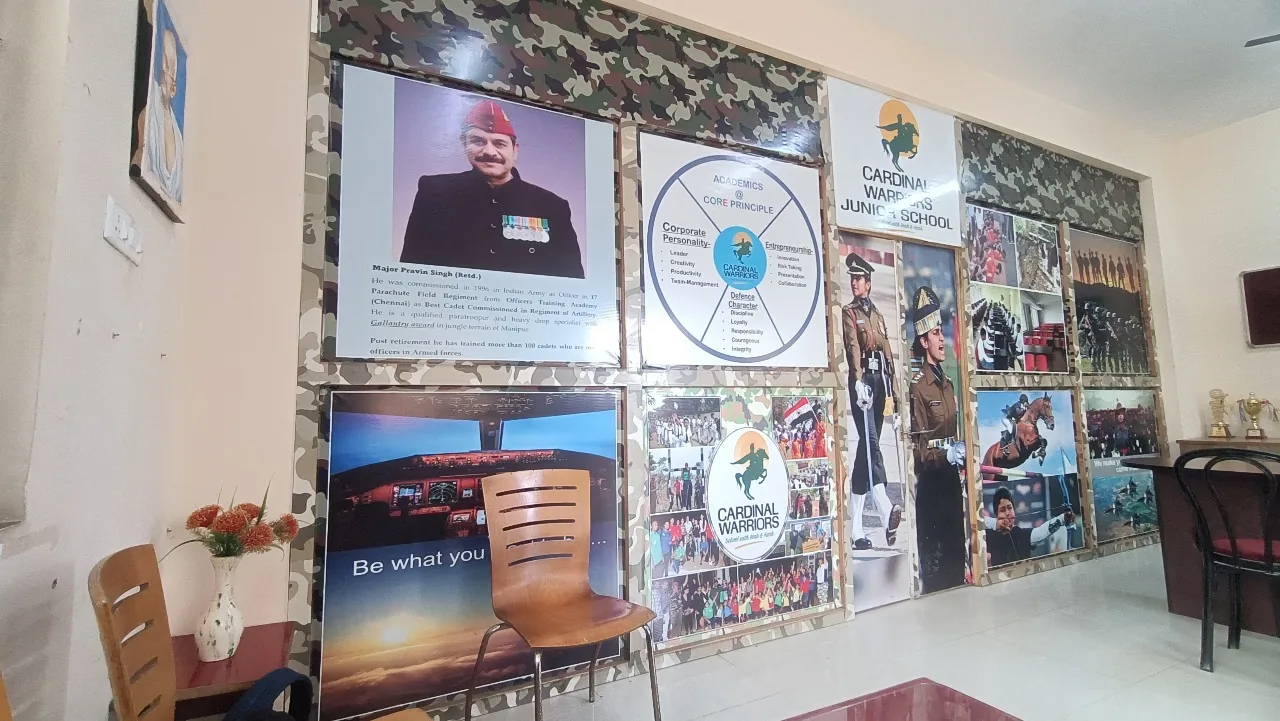
At Cardinal Warriors in Nimora, Raipur, this distinction shapes how SSB guidance is built into daily school life rather than treated as a separate weekend activity. Cadets get repeated, low-stakes practice at group tasks, public speaking, and quick decision-making long before any real board room.
Day 1: Screening, OIR Test and Picture Perception
The morning opens with the Officer Intelligence Rating (OIR) test, two short verbal and non-verbal reasoning papers under strict time pressure. Candidates who clear this move straight into the Picture Perception and Discussion Test, where a blurred image flashes on screen for thirty seconds. Each candidate writes a story around what they saw, then defends it in a small group discussion.
Assessors are not grading artistic imagination. They are watching whether a candidate can form a quick opinion, speak up in a group of strangers, and stay calm when others disagree. Roughly four in five candidates are screened out at this stage, often within a single morning. Families researching RIMC and RMS preparation should note that Screening-style group discussion practice starts well before Class 10 at schools built around this format.
Day 2: Psychology Tests
Day 2 is entirely written, but nothing like a school exam. The Thematic Apperception Test (TAT) shows a series of vague pictures; the candidate writes a short story for each in under thirty seconds of thinking time. The Word Association Test (WAT) flashes single words for a few seconds each, and candidates write the first sentence that comes to mind. The Situation Reaction Test (SRT) presents dozens of everyday problem scenarios that must be resolved on paper in minutes. A Self-Description exercise closes the day.
The time pressure is deliberate. It strips away rehearsed, polished answers and leaves a candidate’s actual instincts on paper. Assessors then compare this written profile against what they observe in the group tasks on Days 3 and 4. Mismatches, a candidate who writes about calm leadership but panics during a physical task, get flagged and discussed at Conference.
Days 3 and 4: Group Testing Officer Tasks
These two days move outdoors and involve the largest block of the entire SSB interview 5 day process. Group Discussions and a Group Planning Exercise open Day 3, followed by the Progressive Group Task, where a team crosses a series of obstacles using ropes, planks, and drums, with the difficulty rising each round.
Day 4 adds the Half Group Task, an Individual Lecturette on a topic drawn by lot, the Command Task where each candidate briefly leads a small team through an obstacle, Individual Obstacles for personal scoring, and a Final Group Task that closes out the physical component.
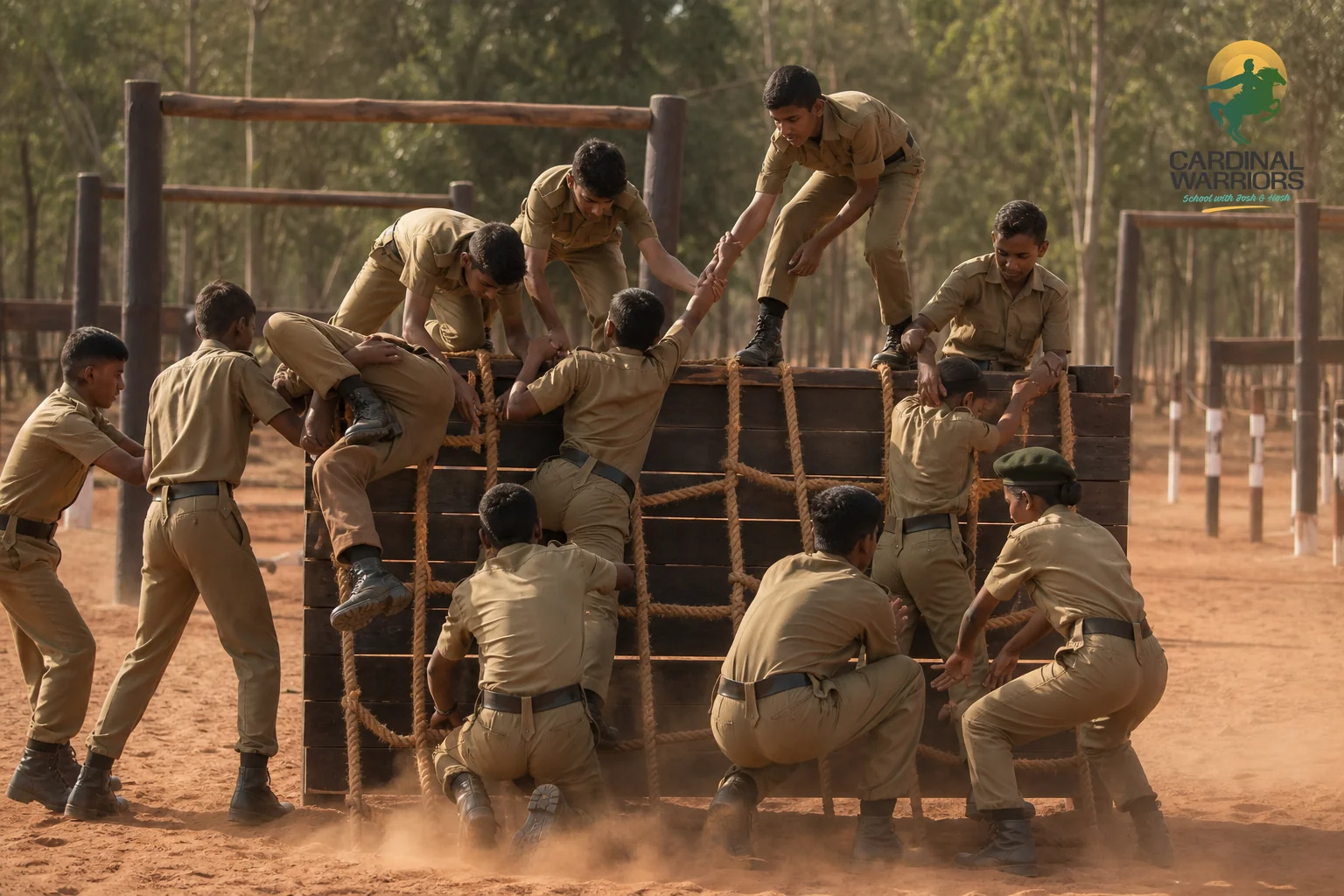
None of these tasks reward the loudest voice in the group. The Group Testing Officer notes who actually gets the team moving, who listens before speaking, and who stays composed when a plan fails halfway through an obstacle. This is exactly the kind of task-based leadership practice built into daily obstacle course training and squad-level drills, which is why a structured campus routine tends to translate into calmer performance on these two days. Parents comparing training environments can read more on what these adventure sport and drill routines actually teach a child before any SSB call letter arrives.
Day 5: Conference and Result
The final morning is shorter but decisive. Each candidate sits before the full board, usually five or six officers led by the board president, for a brief conference where the entire five-day file is discussed openly. Questions here often revisit inconsistencies noticed earlier: a hesitant answer from the personal interview, a mismatch between the psychology tests and group behaviour, or a task where the candidate underperformed.
Results are read out the same day, usually by evening. Candidates marked “recommended” proceed to merit-based allotment once medical examinations clear, following the same eligibility framework covered in our guide to NDA eligibility, age and physical standards. Those not recommended can reattempt at a future SSB call, provided they still meet the age and qualification criteria for that entry.
How Parents in Raipur Can Prepare a Child Before Day 1
Preparation for the SSB interview 5 day process works best when it starts years before the actual call letter, not in the six weeks after a written exam result. A few practical steps matter more than mock interviews alone:
- Build a physical base early. Daily PT, obstacle drills, and sport build the stamina Days 3-4 demand, since fatigue is when true reactions surface.
- Practice thinking aloud under time pressure. Timed writing exercises and quick group discussions at home or school mirror the OIR, PPDT, and psychology test formats.
- Reduce screen dependence. Children used to constant device stimulation often freeze during silent, timed tasks like WAT and SRT; a structured, low-screen boarding routine helps here.
- Track the NDA calendar. With the NDA 2 2026 written paper on 13 September 2026, candidates aiming for that entry should already know their SSB preparation window runs into November 2026.
- Watch the AISSEE 2027 window. Families with younger children eyeing Sainik Schools should expect the AISSEE 2027 notification between September and October 2026, and start basic personality and group-task exposure well before that.
Schools that fold this preparation into daily academics, rather than a weekend add-on, tend to produce steadier performance across all five days. Our detailed breakdown of the NDA 2 2026 six-week countdown covers how families in Raipur and Nimora can sequence written exam revision alongside this kind of groundwork.
Red Flags to Watch in SSB Coaching Claims
No coaching institute or school can guarantee an SSB recommendation. Boards are trained specifically to catch rehearsed, memorised answers, and a candidate who recites a coached response to the Lecturette or Personal Interview often scores worse than one who answers honestly and simply. Parents evaluating coaching options in Chhattisgarh should watch for a few warning signs:
- Promises of “guaranteed selection” or a fixed pass percentage.
- Scripted answers taught for the Self-Description or Personal Interview instead of habits built over months.
- Weekend-only batches with no physical training component, since Days 3-4 are as physical as they are mental.
- No exposure to actual outdoor group tasks before the real SSB.
A broader checklist for spotting these issues across military-style schools is covered in our piece on red flags to avoid when choosing a military school, which applies equally to SSB-focused coaching claims.
Cardinal Warriors integrates SSB-style group tasks, timed psychology exercises, and daily obstacle training into the regular school week on its Nimora campus, guided by retired defence personnel who have sat on the other side of the board table. That day-to-day exposure, not a last-minute crash course, is what tends to hold up across all five days of the real process.
Frequently Asked Questions
Can a candidate reattempt the SSB after being not recommended?
Yes. A candidate not recommended can appear again at a future SSB call as long as they still meet the age, education, and physical eligibility for that particular defence entry.
Is the SSB interview 5 day process the same for NDA and CDS candidates?
The five-day structure, Screening, Psychology, GTO tasks, and Conference, stays the same across NDA, CDS, and other entries, though group sizes and specific tasks can vary slightly by board. Our comparison of NDA, CDS, and AFCAT routes explains how the entry point differs even though the SSB format stays consistent.
How many candidates actually clear the Screening on Day 1?
The exact ratio varies by board and batch, but roughly one in five candidates typically proceeds past Day 1 into the full five-day process.
How early should a child in Chhattisgarh start SSB-style preparation?
Group task exposure, timed writing practice, and physical fitness habits are most effective when built over years rather than weeks. Families targeting Sainik School entry can start this groundwork well before the AISSEE 2027 notification window opens in September-October 2026.
Take the Next Step Toward SSB Readiness
The SSB interview 5 day process rewards habits built over years, not answers rehearsed over a weekend. If your child is preparing for the NDA, RIMC, RMS, or Sainik School entries and you want a campus in Raipur where obstacle training, group discussion, and timed reasoning practice happen every week rather than once a term, read more about Cardinal Warriors’ approach to defence career preparation. You can also explore more about our school’s SSB guidance or contact us directly to discuss admissions for the current academic cycle. Follow updates on our Facebook and Instagram pages for upcoming campus visit dates and NDA/AISSEE preparation sessions.

You may also like
What Changes When a School Is Run by an Army Veteran
Homesickness in Boarding School: An Honest Look at Month One