
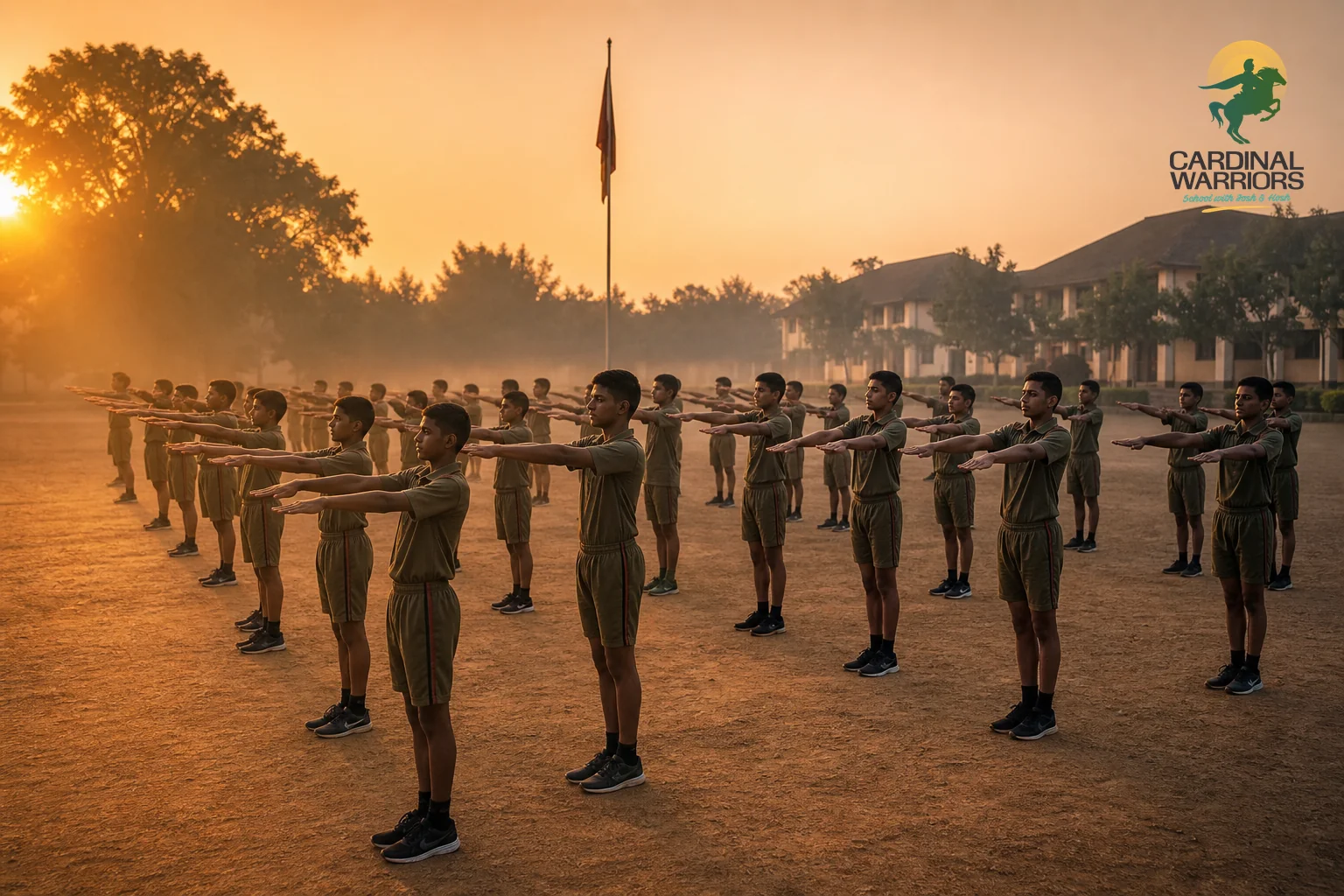
The First 90 Days: Six Habits a Military School Routine Builds
A military school daily routine builds discipline through repetition, not lectures: fixed wake times, timed transitions, shared accountability, and exam goals attached to a real date on the calendar. At Cardinal Warriors in Nimora, Raipur, parents typically see the first visible shift in their child’s habits within 90 days of joining, not through punishment, but through a schedule that leaves no room for drift.
Key Takeaways
- Fixed clock, not negotiation: A 0500-0530 wake-up with 30 minutes of PT/Yoga replaces the daily back-and-forth over getting out of bed.
- Bell-based transitions: Moving between PT, academics, tactical training and prep on a bell builds task-switching without arguments.
- Reporting culture: Cadets learn to report a problem to a squad leader or instructor instead of hiding it, a habit built into the school’s core values framework.
- Exam-anchored study: With NDA 2 2026’s written exam set for 13 September 2026 and the AISSEE 2027 notification expected between September and October 2026, study blocks are tied to real dates, not vague ambition.
- 90 days is the visible marker: Most families notice a settled routine, not full mastery, by the three-month point; deeper habits take longer.
At a Glance: The 90-Day Routine
| Time Block | Activity | Habit Being Built |
|---|---|---|
| 0500 – 0530 | Wake, bunk inspection, assembly | Punctuality and self-ownership |
| 0530 – 0600 | PT / Yoga | Physical discipline, energy management |
| 0600 – 0730 | Mess, uniform, prep | Time-boxed personal care |
| 0800 – 1300 | CBSE academic classes | Sustained academic focus |
| 1400 – 1600 | Tactical training / sports (METTALS) | Teamwork, physical resilience |
| 1600 – 1800 | NDA / AISSEE / RIMC coaching blocks | Goal-anchored study habits |
| 1900 – 2030 | Evening prep and mess | Structured self-study |
| 2100 – 2130 | Lights-out | Sleep discipline, screen displacement |
Why the First 90 Days Matter for Military School Daily Routine Habits
A child’s brain does not adopt a new schedule on day one. It resists it, tests it, and eventually settles into it, usually somewhere between six and twelve weeks of consistent repetition. That window is why the first 90 days at a residential school matter more than any single rule.
At Nimora, on Mana, Dhamtari Road, this period is treated as a deliberate build phase. Instructors and house staff expect friction in week one, adjustment by week six, and a settled rhythm by week twelve. Parents in Raipur who compare this to a regular school day often underestimate how much of the shift comes simply from removing choice around wake time, meals, and screen access, not from any single dramatic intervention.
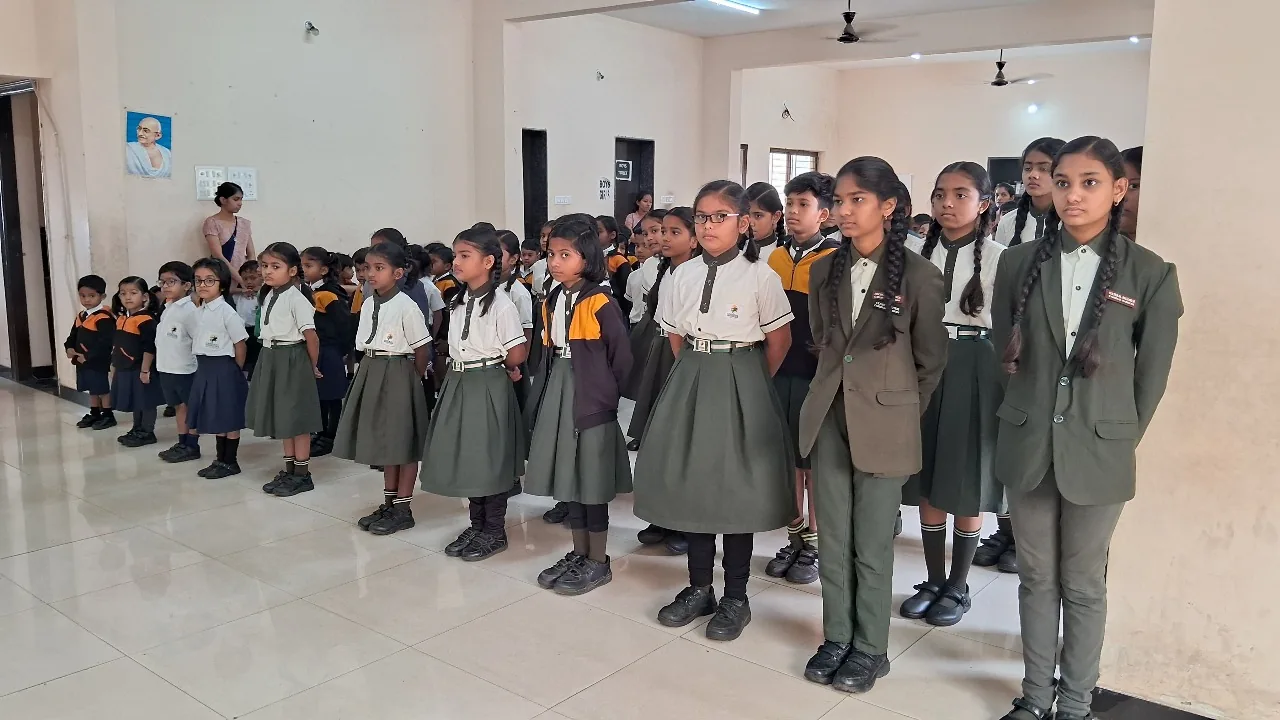
Families weighing what separates a genuine military-discipline school from one that only markets the label should look closely at whether this 90-day structure is written down and enforced daily, or left as a slogan on a prospectus.
1. Waking on a Fixed Clock, Not an Alarm Negotiation
The day starts between 0500 and 0530, with no snooze button and no phone to check first. A cadet who wakes at home negotiates with a parent or an alarm; a cadet on campus wakes because the bunk next to them is already moving.
Thirty minutes of PT or yoga follows immediately. This is not punishment, it is a deliberate way to burn morning restlessness before academics begin. Parents often report that within a few weeks, their child wakes up at the same time even during a home visit, without being told to.
2. Making the Bed and Owning a Personal Space
Every cadet is responsible for a bunk, a locker, and a squad post. Inspections are not about punishing untidiness; they build a habit of finishing a small task completely before moving to the next one.
- Bunks are made to a fixed standard, checked daily.
- Lockers are organised by a set layout, not personal preference.
- Squad posts rotate, so no cadet avoids a task by simply not being assigned it.
This habit transfers oddly well into academics. A cadet who has learned to finish making a bed properly, rather than “close enough,” tends to carry that same standard into a maths problem or an essay draft.
3. Switching Tasks on a Bell, Not a Mood
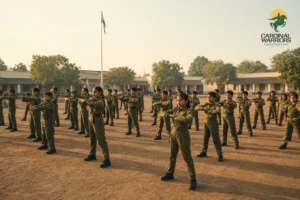
The METTALS structure at Cardinal Warriors, covering Military Education, Tactical Training, Academic Learning and Sports, moves cadets through distinct blocks each day. A bell ends PT. A bell starts class. A bell ends class and starts tactical training.
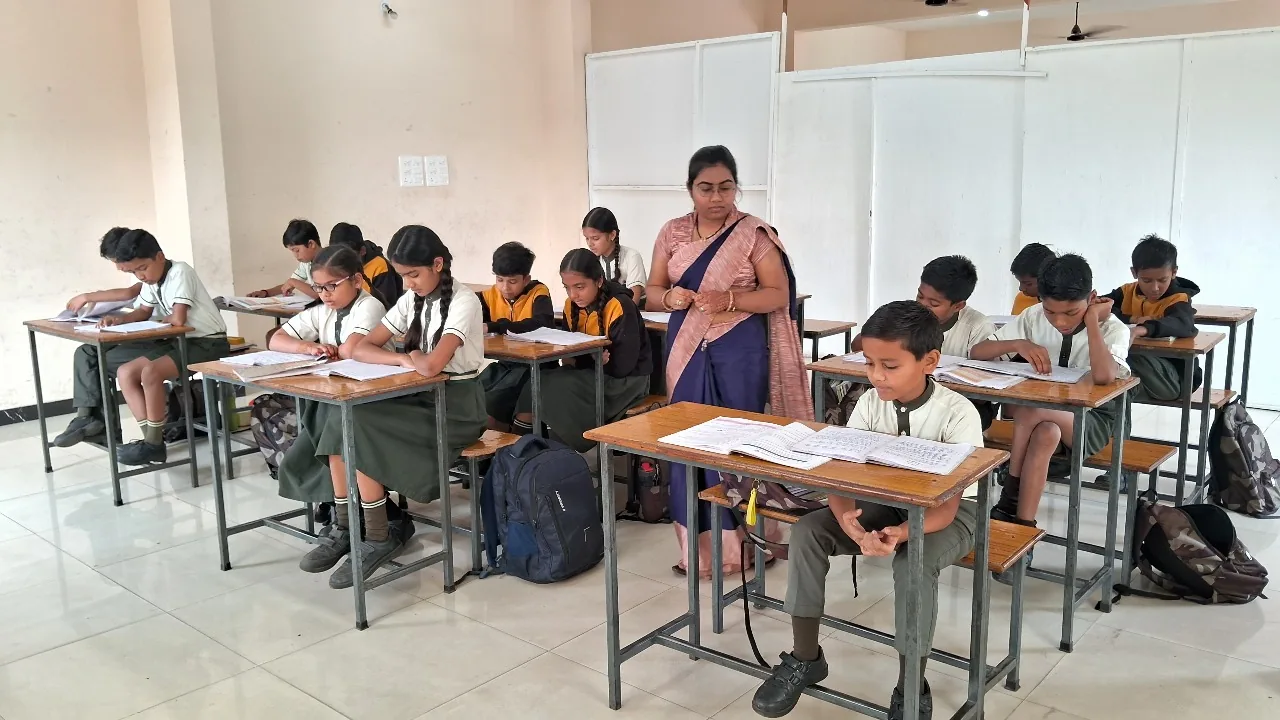
At home, a child often decides when to stop one activity and start another, which is exactly where procrastination creeps in. On a bell-based schedule, that decision is removed. The habit built here is task-switching on demand, a skill that shows up later in SSB interview settings, where candidates are assessed on how quickly they adapt to a changing task under time pressure.
4. Eating and Resting on a Fixed Mess and Lights-Out Schedule
Meals happen at set times in the mess hall, and lights-out is enforced around 2100-2130. There is no midnight snack run and no phone glow under a blanket. Sleep becomes a fixed input, not an afterthought squeezed in after screen time.
This matters more than it sounds. A child who sleeps seven to eight hours on a fixed schedule concentrates better the next morning than one who sleeps the same number of hours at inconsistent times. The routine does not just add hours of sleep, it stabilises when those hours happen.
5. Reporting Up the Chain Instead of Avoiding a Problem
Cadets who break equipment, miss an assignment, or have a conflict with a peer are expected to report it to a squad leader or instructor, not conceal it until it becomes a bigger problem. This expectation runs through the school’s daily values training.
This is one of the harder habits to build and one of the most visible to parents. A child who used to hide a bad test score or a lost item starts, over weeks, to simply say what happened. That shift in behaviour is a direct output of a chain-of-command routine repeated daily, not a single conversation about honesty.
6. Training for a Named Exam Instead of a Vague Future
Coaching blocks for NDA, AISSEE, and RIMC are scheduled against real dates, not open-ended ambition. The NDA 2 2026 written exam is set for 13 September 2026, and the AISSEE 2027 notification is expected between September and October 2026. Cadets preparing for either know exactly how many weeks remain, which changes how a study block feels.
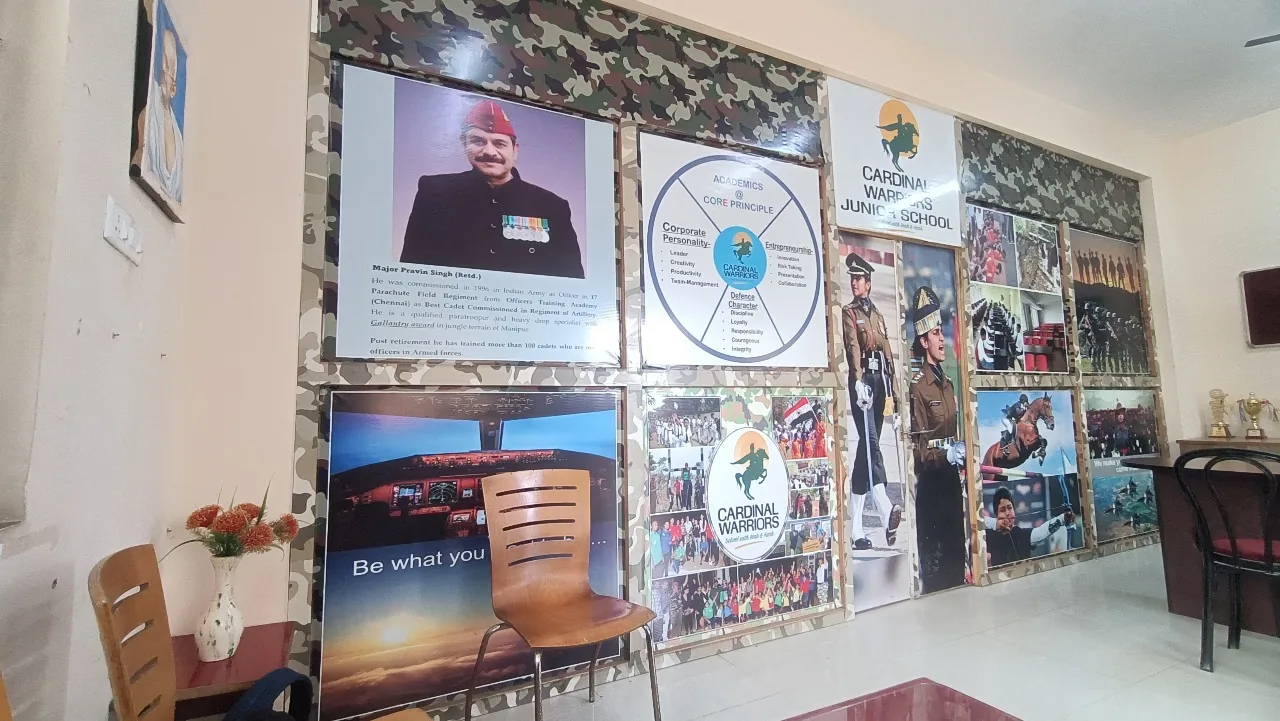
A vague goal like “do well someday” does not organise a Tuesday evening. A specific date does. Families tracking the NDA cycle can review the six-week countdown to the 13 September 2026 exam for a week-by-week breakdown, while those aiming at Sainik School entry can start with the AISSEE 2027 notification timeline and what to prepare before it opens.
Does a Military School Daily Routine Actually Improve Focus and Discipline?
Yes, primarily because it removes the daily decisions that erode focus, like when to wake, when to eat, and when to stop using a phone. A fixed schedule with physical training, timed academics, and reporting structures builds consistency faster than willpower alone, though results depend on how strictly the routine is enforced.
Military School Daily Routine vs a Regular School Day: A Side-by-Side Look
Parents in Raipur comparing a residential military school routine against a regular day school or a government Sainik School/RMS hostel often ask what actually differs beyond uniforms and drills.
| Factor | Cardinal Warriors (Nimora) | Typical CBSE Day School | Sainik School / RMS Hostel |
|---|---|---|---|
| Wake time | 0500-0530, fixed | Parent-managed at home | 0500-0530, fixed |
| Supervision | 24/7 on 5-acre campus | School hours only | 24/7, government-run |
| Screen access | Restricted, structured hours | Largely unrestricted at home | Restricted |
| Defence exam coaching | Integrated NDA/AISSEE/RIMC/SSB coaching on campus | Usually none, outsourced to coaching centres | Focused on entrance exam only |
| Non-defence career tracks | NEET, JEE, CA Foundation also offered | Standard CBSE subjects only | Limited beyond defence pathway |
| Admission model | Rolling assessment and interview | Standard school admission | Single annual entrance exam (AISSEE) |
Families still deciding between these paths often compare how military school and Sainik School admissions differ across intake models and eligibility before shortlisting a campus visit.
What to Ask Before You Commit to a 90-Day Routine
A prospectus can describe a routine; only a campus visit confirms it runs the way it is written. Before enrolling, ask to see the actual daily schedule posted in a hostel or barrack, not just the marketing version.
- Is the wake-up time and lights-out time enforced every day, including weekends?
- Who supervises the transition between PT, academics, and coaching blocks?
- How is a cadet’s failure to report a problem handled versus concealment?
- Are NDA/AISSEE coaching hours built into the fixed timetable, or an optional extra?
- What happens in the first two weeks when a child resists the schedule?
A structured walkthrough of these questions is covered in a full list of campus visit questions worth asking in Raipur before signing an admission form.
Frequently Asked Questions
How long does it take a child to adjust to a military school routine?
Most cadets show visible adjustment within four to six weeks, with the routine feeling fully normal by the 90-day mark. Younger children under age ten sometimes take a few weeks longer, particularly around the fixed sleep and mess timings.
Is the daily routine the same for younger children as for teenagers?
No. Wake times and PT intensity are adjusted for age, with pre-primary and primary cadets following lighter physical blocks and more supervised classroom time, while teenagers take on tactical training and exam-focused coaching blocks in addition to academics.
What happens if a child genuinely struggles with the schedule?
Instructors and house staff work with a struggling cadet individually rather than applying blanket discipline, often adjusting the pace of PT or academic load slightly while keeping wake and sleep timings fixed, since consistency in those two areas tends to resolve most early resistance on its own.
If you are weighing whether a structured, exam-anchored routine fits your child before the NDA 2 2026 written exam on 13 September or the AISSEE 2027 window opens, a campus visit to Nimora, Raipur is the most direct way to see the schedule in practice. Read more about how Cardinal Warriors runs its daily routine, or explore more with us before deciding. For a direct conversation about admission timing, contact us to schedule a visit.

You may also like
What Changes When a School Is Run by an Army Veteran