Horse Riding, Shooting and Drills: What Adventure Sport Teaches
A child who has never sat on a horse or run an obstacle course under an instructor’s whistle learns a different kind of fear response than one who has. At an adventure sports boarding school in India like Cardinal Warriors in Nimora, Raipur, horse riding, shooting range drills and squad exercises are not extracurricular fun; they train the nervous system to stay steady when things get hard, which is exactly what defence exams and life later demand.
Key Takeaways
- Horse riding builds command, not just balance: A horse responds to calm, consistent body language, so children learn steady authority long before they learn to give verbal orders.
- Shooting drills train breath and focus: The stance, breathing, and aim sequence used on the range mirrors the composure boards look for at NDA and SSB assessments.
- Obstacle courses turn repetition into instinct: Daily 30-minute PT and drill sessions on Cardinal Warriors’ 5-acre Nimora campus make disciplined movement automatic, not forced.
- Adventure sport timing matters for exam prep: With the NDA 2 2026 written exam scheduled for 13 September 2026 and the AISSEE 2027 notification expected between September and October 2026, physical readiness built now pays off on those dates.
- Location shapes what’s possible: A 5-acre campus in Nimora, on Raipur’s Mana-Dhamtari Road, allows horse riding and full-length obstacle courses that cramped urban day schools simply cannot offer.
Adventure Sports at a Glance: Cardinal Warriors, Nimora
| Activity | Core Skill Built | Frequency | Where It Happens |
|---|---|---|---|
| Horse riding | Calm authority, non-verbal command | Scheduled sessions, supervised | Open riding ground, Nimora campus |
| Shooting range drills | Breath control, precision under pressure | Part of tactical training rotation | Designated range area on campus |
| Obstacle course | Instinctive discipline, physical resilience | Included in daily PT/drill routine | Outdoor obstacle circuit, 5-acre grounds |
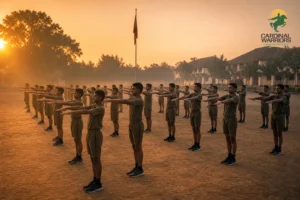
| Squad drills | Group accountability, posture, timing | Daily morning session, 30 minutes | Parade ground |
| Team sports (football, hockey, basketball, boxing) | Shared responsibility, competitive composure | Regular sports periods | Sports fields and courts on campus |
| NDA 2 2026 written exam | Application of readiness built through the year | 13 September 2026 | National exam centers |
1. Horse Riding Teaches Calm Command, Not Just Balance
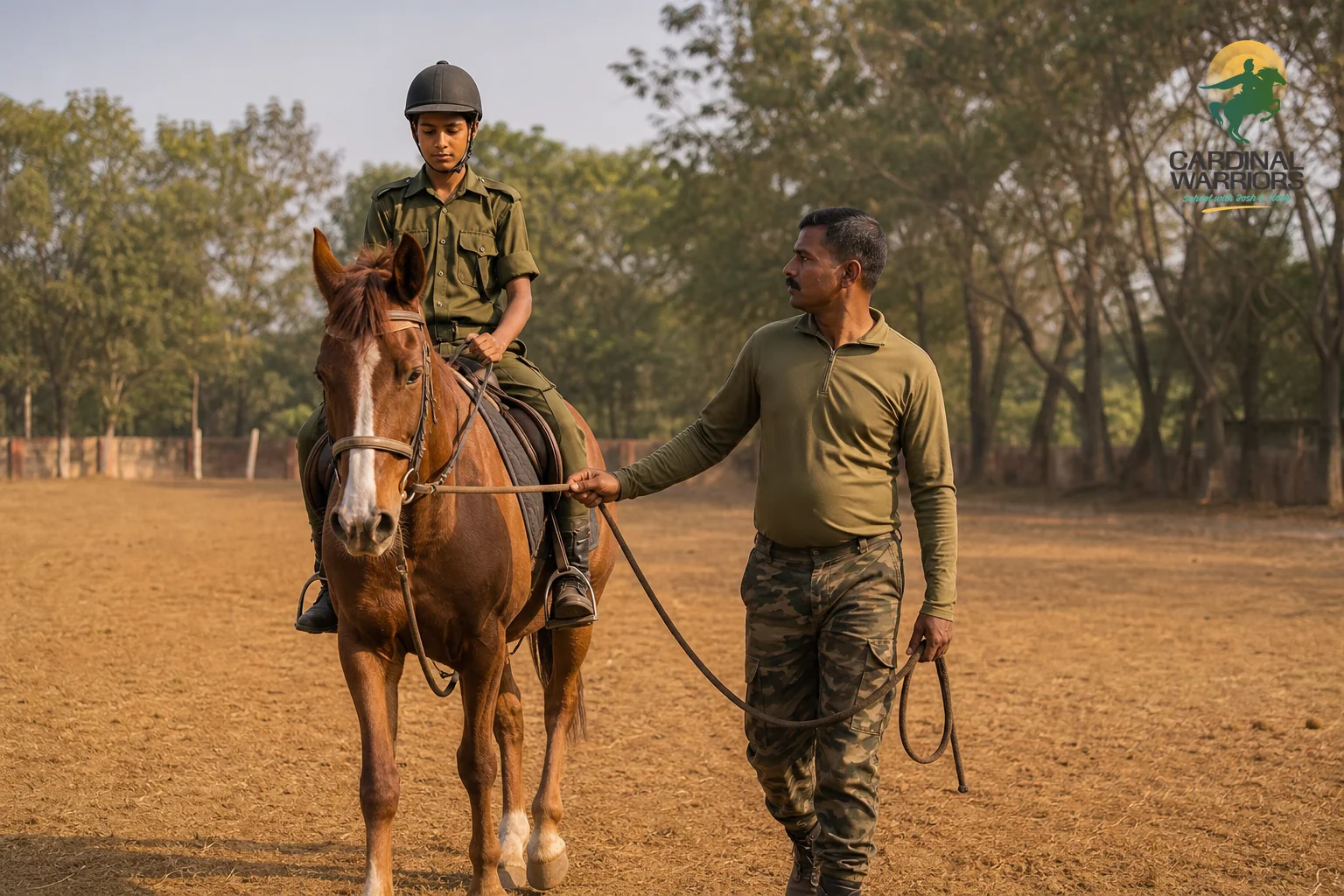
A horse does not respond to shouting or panic. It responds to a rider who sits still, breathes evenly, and holds the reins with quiet confidence. That is the first lesson most children learn at the riding ground, often before they realize they are learning anything beyond staying on.
At Cardinal Warriors, horse riding sessions on the Nimora campus are supervised closely, and children start with basic mounting, posture and lead-rein work before progressing to independent control. The skill transfers well beyond the arena. A child who can steady an animal many times their weight through calm body language carries that same steadiness into a classroom presentation, a sports match, or eventually an SSB interview room where composure is scored as much as answers.
Parents researching what military school education in India actually involves often assume it is all drills and no play. Horse riding is proof that structured adventure sport and genuine enjoyment are not opposites; they build the same qualities from different directions.
2. Shooting Range Drills Build Precision Under Pressure
Shooting is one part of the tactical training track at Cardinal Warriors, taught alongside military education, academics and sports as a combined approach. Under supervision, cadets practice stance, breath control and aim, the same sequence any marksman needs regardless of the target.
What matters for parents is what this teaches beyond the range. A child learns to slow their breathing before acting, to block out distraction, and to accept that a shaky hand ruins the shot no matter how much they want to succeed. These are the exact qualities assessors probe for during the physical and psychological stages of NDA screening. A student who has practiced this discipline for years walks into that room with a body that already knows how to stay quiet under scrutiny.
This is part of why families comparing options for NDA coaching school fees in Chhattisgarh look for schools that build these habits daily, not just in a six-week crash course before the exam.
3. Obstacle Courses and Squad Drills Teach the Body to Obey the Mind
Every morning at Cardinal Warriors begins with a mandatory 30-minute PT and drill session. Children move through the obstacle course, practice formation marching, and repeat the same sequences until the body stops hesitating. Repetition is the point. A hesitant climb over a wall on day one becomes an automatic, confident movement by month three.
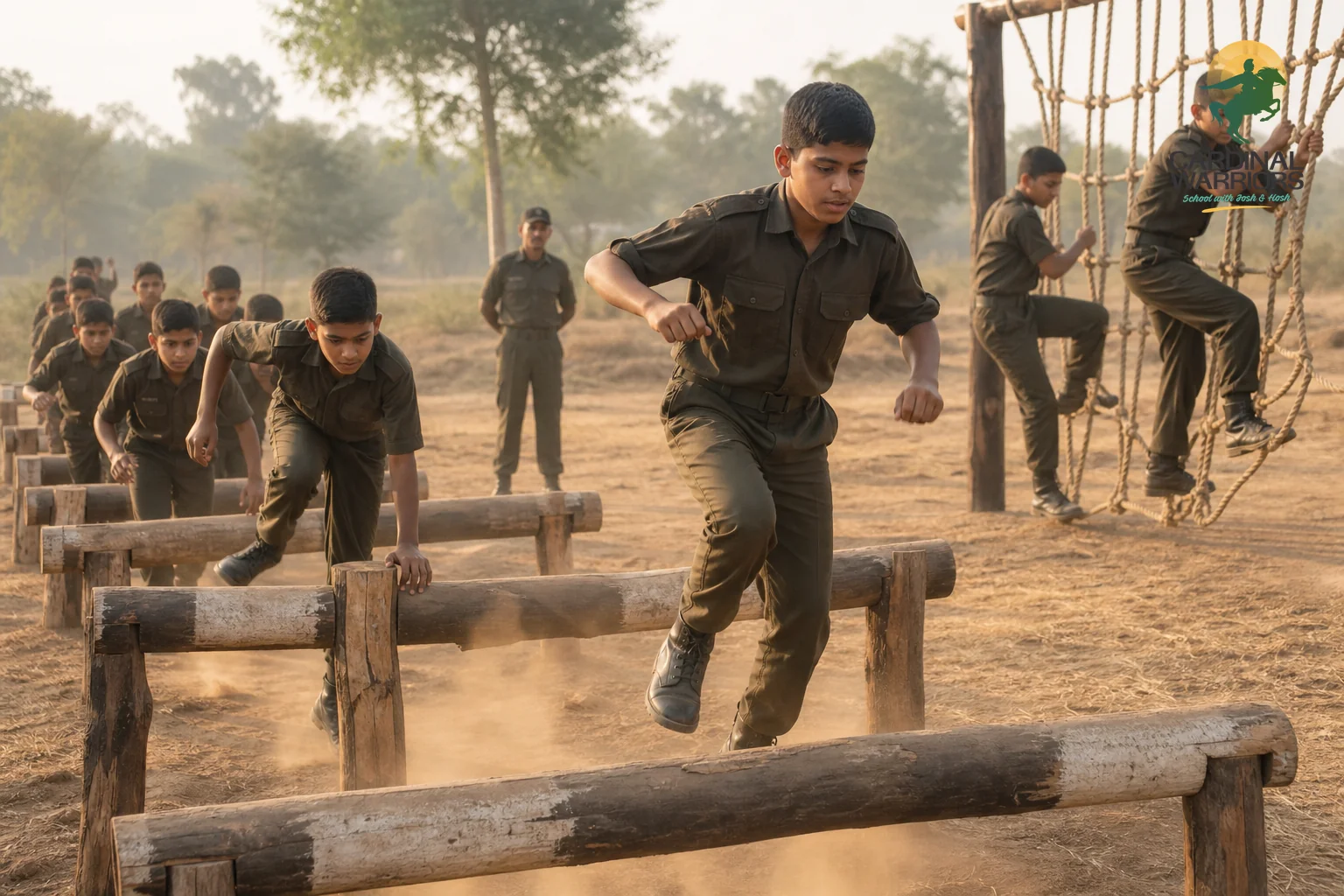
This daily physical rhythm does more than build fitness. It replaces the scattered attention many children bring from screens and unstructured routines with a body that has learned to follow instruction quickly and without argument. Parents worried about red flags in a military school, such as drills that exist only for show, should ask whether the obstacle course and PT routine run every single day, rain or shine, or only during parent-visit weeks.
4. Team Sports Turn Individual Grit Into Group Responsibility
Football, hockey, cricket, basketball and boxing round out the sports calendar at Cardinal Warriors. Unlike solo adventure activities, these sports force children to answer for someone other than themselves. A missed pass, a dropped ball, or a weak defensive line affects the whole squad, not just one player.
This squad-based accountability mirrors how military units actually function, and it is why adventure sport and team sport are taught together rather than as separate tracks. A child who has spent years covering for a teammate’s mistake, and being covered for in return, develops a different sense of responsibility than one who has only ever competed alone.
Readers exploring leadership development schools in Chhattisgarh should note that leadership rarely gets taught in a classroom lecture. It gets built on a field, in a squad, under a coach who holds the whole team to one standard.
5. Adventure Sport Feeds Directly Into NDA, RIMC and SSB Readiness
None of this training exists in isolation from the exam calendar. The NDA 2 2026 written examination is set for 13 September 2026, and families targeting that intake need their child’s physical and mental conditioning finished well before exam day, not started the week of it. Similarly, the AISSEE 2027 notification is expected to open between September and October 2026, which means Class 6 and Class 9 aspirants for Sainik Schools should already be building the stamina and focus that adventure sport provides.
Horse riding builds the calm command that SSB assessors probe for in group tasks. Shooting drills build the breath control that steadies a candidate during outdoor physical stages. Obstacle courses build the exact stamina NDA physical standards demand. None of these connections are accidental; Cardinal Warriors designs its adventure sport calendar around the defence exam timeline, not despite it.
Families preparing for these milestones can review RIMC and RMS prep schools in Chhattisgarh to compare how different institutions integrate physical training with exam-specific coaching.
What Parents Should Check Before Choosing an Adventure Sports Boarding School in India
Adventure sport carries real physical risk if it is not supervised properly. Before enrolling a child, parents should ask direct questions rather than accept a glossy brochure at face value.
- Supervision ratio: How many instructors are present per child during horse riding and shooting range sessions?
- Instructor background: Are trainers retired military personnel or certified sports coaches, not just enthusiastic volunteers?
- Medical backup: Is there an on-campus medical officer or nurse available during every activity, not just during school hours?
- Academic balance: Does adventure sport training fit around CBSE academics, or does it eat into study time without a clear schedule?
- Equipment condition: Are riding gear, protective equipment and range facilities properly maintained and age-appropriate?
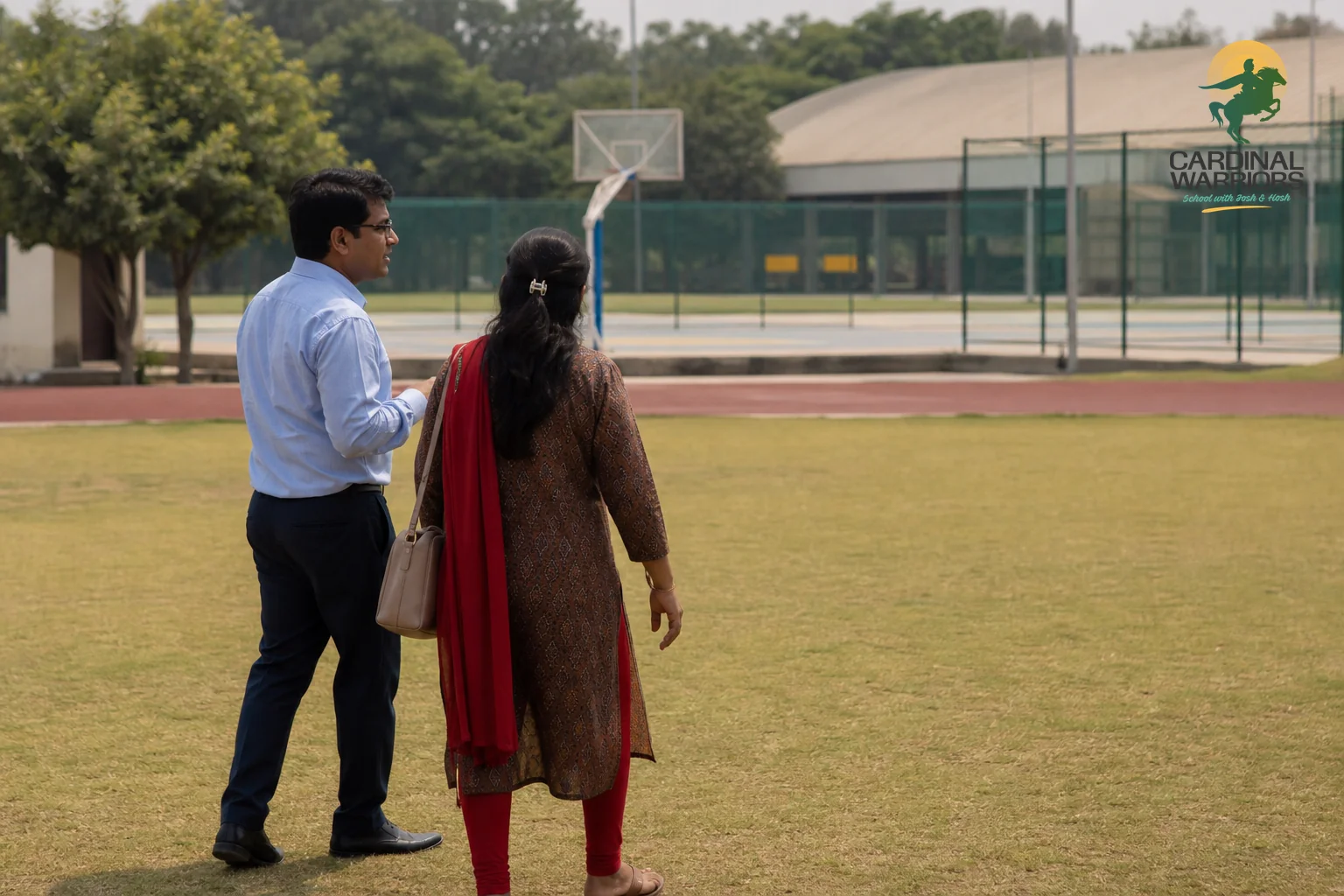
Parents who want a fuller checklist before making a decision can read what to look for in a disciplined boarding school, which covers supervision standards beyond just sport.
Why Geography Matters: Raipur and Nimora as a Training Ground
Adventure sport of this kind needs land, and land is exactly what most urban day schools in India lack. Cardinal Warriors sits on a 5-acre campus in Nimora, off the Mana-Dhamtari Road in Raipur, Chhattisgarh, which allows a full riding ground, an outdoor obstacle circuit and multiple sports fields to coexist without children fighting over limited space.
Chhattisgarh’s climate also supports near year-round outdoor training, with a dry season long enough to keep drills, PT and horse riding sessions running consistently rather than getting cancelled for weeks at a stretch. That consistency is what separates a school that offers adventure sport as a brochure line item from one that actually builds it into a child’s weekly rhythm. Families comparing Sainik School vs military school options in Chhattisgarh often find that private campuses with open acreage, like Nimora, can offer more consistent access to activities like riding than government institutions constrained by shared infrastructure.
According to the Ministry of Education, Government of India, physical education and sports are formally recognized as part of the CBSE curriculum framework, not an optional add-on, which supports schools that build daily PT and adventure sport into the academic calendar rather than treating it as a weekend activity. Parents can also check the official AISSEE notification page closer to the September-October 2026 window for exact Sainik School entrance dates.
Frequently Asked Questions
Is horse riding safe for young children at a boarding school?
It can be, provided sessions are supervised closely, children start on lead-reins before independent riding, and instructors are trained in both riding technique and child safety. Ask any school directly about their supervision ratio and safety protocol before enrolling.
Does adventure sport training interfere with CBSE academics?
At a well-structured school, adventure sport and drills are scheduled around the academic day, typically in the morning or during dedicated sports periods, so classroom hours remain protected. Ask for a written daily timetable before assuming either way.
Can adventure sports help with SSB interview performance?
Yes. SSB assessors evaluate composure, decision-making under pressure and group coordination, all of which horse riding, shooting drills and team sports train directly over months and years, not in a last-minute coaching crash course.
What age can a child start these activities at Cardinal Warriors?
Age-appropriate versions of PT, drills and sports begin early, with higher-risk activities like independent horse riding and shooting range work introduced progressively as a child’s coordination and discipline develop. Contact the school directly for age-specific programme details.
Choosing Adventure Sport That Actually Builds Something
Adventure sport at a genuine adventure sports boarding school in India is not measured by how thrilling it looks in a prospectus photo. It is measured by whether a child who rode a horse in Class 6 stands calmer in a group discussion by Class 10, and whether a child who ran obstacle courses at age nine can hold a steady aim and a steady mind at an SSB board years later. That is the real return on horse riding, shooting drills and squad training at Nimora.
If you want to see this training calendar firsthand, read more about Cardinal Warriors’ approach or explore more with us to understand how the Nimora campus fits adventure sport around CBSE academics and defence exam preparation. For direct questions on supervision, schedules or admissions timelines ahead of the NDA 2 2026 and AISSEE 2027 windows, you can contact us to speak with the admissions team. Follow updates on Facebook, Instagram and Twitter / X for campus activity and admission announcements.

You may also like
What Changes When a School Is Run by an Army Veteran
Homesickness in Boarding School: An Honest Look at Month One