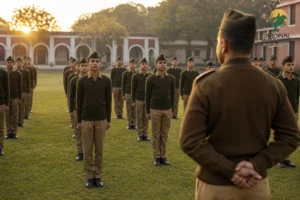

Red Flags to Avoid When Choosing a Military School
A brochure can promise “military discipline” and “career coaching” in bold letters, but the words that matter are the ones no brochure prints: who supervises the hostel at 2 AM, which fee gets added after admission, and whether the instructor training your child ever wore a uniform himself. Knowing how to identify red flags in a military school before you sign an admission form is the difference between a decision you trust for six years and one you regret within six months.
Key Takeaways
- Faculty credentials matter more than marketing: Ask directly whether instructors are retired defence personnel or CBSE-qualified teachers, not just staff wearing uniforms for photographs.
- Safety infrastructure should be visible, not promised: A genuine campus shows you CCTV coverage, a medical room, boundary security and a named night-duty warden without hesitation.
- Career coaching needs a syllabus, not a slogan: Ask for past NDA, RIMC, RMS or AISSEE selection numbers; a school with no data to share is a school with no track record.
- Discipline policy must exist in writing: A daily routine, a grievance process and clear PT timings should be documented, not described only in vague, reassuring language.
- Fee transparency is non-negotiable: Request a full annual cost sheet, including hostel, uniform, training and exam fees, before you pay a single rupee.
Military School Red Flags at a Glance
| Red Flag | What to Check | Why It Matters |
|---|---|---|
| Unqualified faculty | Ask for instructor profiles and CBSE teacher qualifications | Untrained staff cannot deliver real military discipline or safe physical training |
| Weak campus safety | CCTV coverage, boundary wall, infirmary, night-duty roster | Directly affects your child’s physical safety and wellbeing |
| No real career coaching | Past NDA/RIMC/RMS/AISSEE results, mock SSB interview schedule | Determines if defence and competitive exam prep is genuine or just a marketing line |
| Vague discipline policy | Written daily schedule, grievance redress process | Shows whether discipline is a structured system or an empty claim |
| Hidden fees | Full written annual cost sheet at admission | Prevents financial surprises mid-year and builds trust |
| Cash-only payments | Digital receipts, online fee portal | Protects you legally and financially from disputed payments |
| No parent communication system | Regular progress reports, visiting day policy | Keeps working parents informed without needing daily calls |
Choosing among the growing number of boarding options in Raipur and Chhattisgarh is not simple. Parents often compare a private military school against a Sainik School, a regular CBSE day school, or a legacy institution like Doon School, without a clear framework for what actually separates a well-run military-discipline institution from one that only looks the part on a website. This guide walks through the five red flags that matter most, then gives you a checklist to carry on your next campus visit.
1. Unqualified or Untrained Faculty
The single biggest predictor of whether military training will actually build discipline is who is teaching it. A civilian instructor in a borrowed uniform cannot replicate the judgment, bearing, or command presence of someone who has actually led troops. Before you enroll, ask the admissions office a direct question: how many faculty members are retired defence personnel, and how many are civilian staff trained specifically for cadet supervision?
A school that hesitates to answer, or gives only a percentage without names or backgrounds, is showing you a red flag. Reputable institutions are proud to introduce parents to their faculty, often featuring senior patrons and directors with verifiable service records. At Cardinal Warriors, for instance, the school is envisioned by an Army veteran as Director and guided by senior patrons including a retired Lieutenant General, and this kind of leadership lineage should be something any serious military school can demonstrate, not just claim.
- Ask for faculty qualifications: CBSE-recognised academic degrees plus verifiable military or NCC training background.
- Check staff turnover: High annual turnover among instructors usually signals poor working conditions or weak institutional leadership.
- Request a campus introduction: A confident school will let you meet instructors during your visit, not just view their photos in a prospectus.
If you’re still comparing what genuine military-style discipline should look like day to day, our guide on what to look for in a disciplined boarding school breaks down the specific routines a well-run campus follows.
2. Weak Campus Safety and Supervision Standards
Military discipline is meaningless if the campus itself is not safe. This is where many parents make the mistake of trusting a polished website over a physical inspection. A residential school housing children away from home carries a higher duty of care than a day school, and the gaps show up in specific, checkable details.
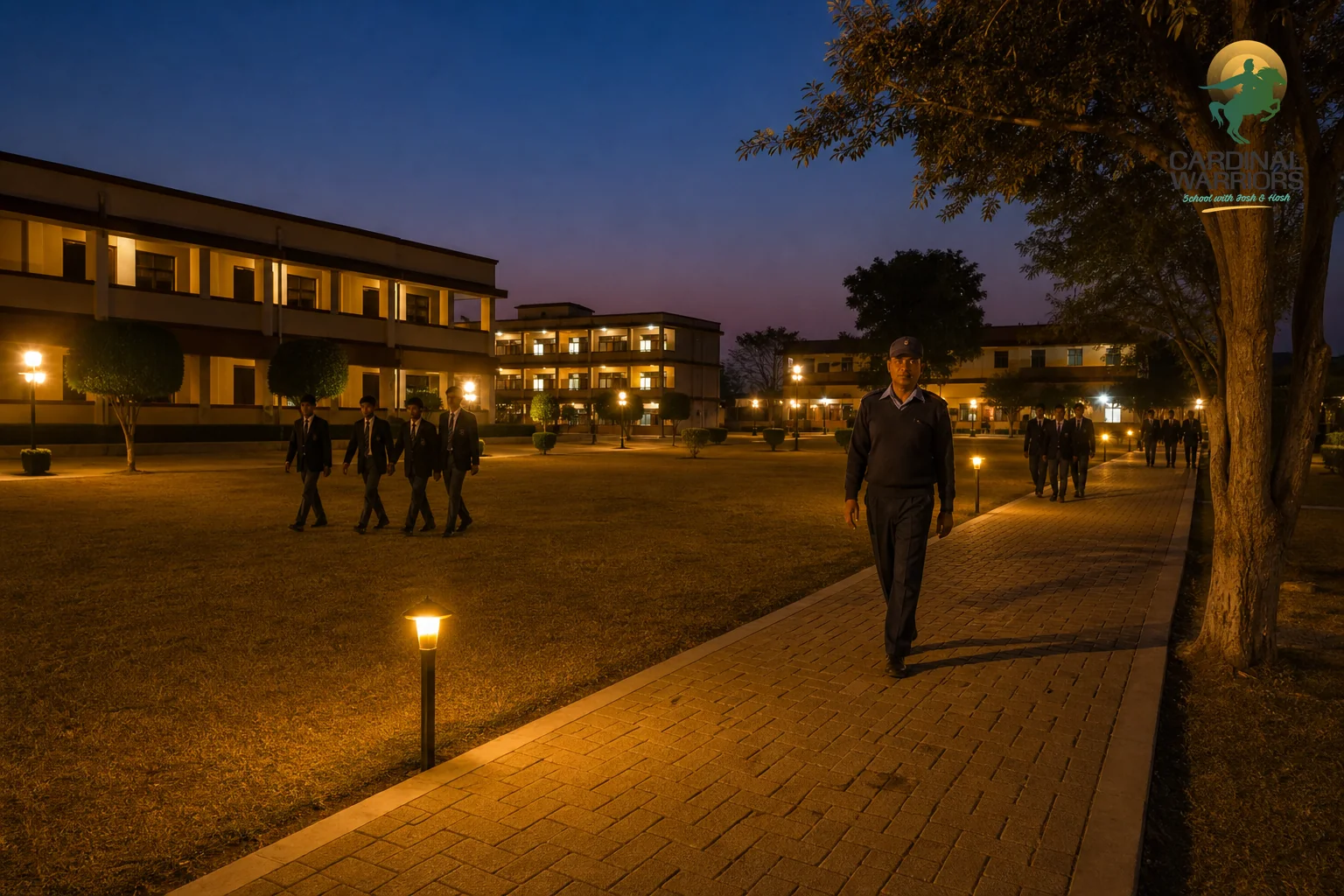
Watch for these warning signs during a campus tour. If the school cannot show you CCTV coverage in common areas, cannot name who is on night duty in the hostel, or cannot describe what happens if a child falls sick at midnight, treat that as a serious gap. A grandmother who once asked exactly this question at an admissions desk received only silence in return, and that silence told her everything she needed to know before we ever discussed it in an earlier post about choosing the best military school in Raipur, Chhattisgarh.
- Boundary security: A clearly defined, monitored campus perimeter with controlled entry points.
- Medical readiness: An on-campus infirmary or tie-up with a nearby hospital, plus a written protocol for emergencies.
- Supervision ratio: Ask how many wardens or house masters are on duty per group of students at night.
- Visitor and leave-out policy: A documented process for who can pick up a child and when, not an informal verbal arrangement.
According to the Department of School Education and Literacy, Government of India, residential institutions are expected to maintain documented safety and welfare protocols as part of their affiliation compliance. Any CBSE-affiliated military school should be able to reference these standards without discomfort.
3. No Structured Career Coaching Beyond Slogans
Many schools now advertise “NDA preparation” or “SSB interview guidance” because these phrases sell seats. The red flag appears when you ask a follow-up question and get no specifics. A school genuinely preparing cadets for the National Defence Academy, the Rashtriya Indian Military College, or Rashtriya Military Schools should be able to show you a coaching timetable, sample mock interview formats, and ideally some record of past student results.
Ask pointed questions: How many mock SSB interviews does a Class 11 student go through in an academic year? Is psychometric testing part of the curriculum, or only mentioned in the prospectus? Is NEET or JEE coaching taught by in-house faculty during the school day, or outsourced to an unnamed “partner institute” with no accountability to the school itself?
- Ask for outcomes, not intentions: Request numbers on AISSEE, RIMC, RMS, or NDA selections from previous batches.
- Check integration: Coaching folded into the school timetable beats coaching bolted on as an evening add-on.
- Look for psychometric testing: Genuine career guidance uses assessment tools to match a child’s aptitude to a stream, not a one-size-fits-all pitch.
Parents specifically researching defence-focused preparation often compare our detailed breakdown of the best RIMC and RMS prep schools in Chhattisgarh alongside a school’s SSB coaching claims, since the two are closely linked but not identical programs.
4. Vague or Inconsistent Discipline Policies
“We build discipline” is a sentence every military school prints somewhere. The red flag is not the sentence itself, it’s what happens when you ask for the actual document behind it. A serious institution can hand you a written daily schedule: wake-up time, physical training duration, study hours, meal timings, and lights out. If a school can only describe discipline in general terms without a schedule you can hold in your hand, that vagueness usually extends to how rule violations are handled too.
Equally important is a grievance redress process. What happens if a child feels a punishment was unfair, or a parent has a concern about how an incident was handled? A credible school has a named point of contact and a documented process, not just an assurance that “we handle it internally.” Vague answers here are one of the clearest warning signs a parent will encounter during the admissions process.
- Request the daily timetable in writing, not a verbal summary from the admissions counselor.
- Ask how rule violations are addressed, and whether there is a formal escalation path for parents.
- Compare the routine to your goals: does the structure actually build focus, or is it discipline theater for open-house day?
If you’re weighing a private military-discipline school against a legacy institution on this exact dimension, our comparison of military school versus Doon School for building discipline lays out how routines differ in practice, not just in prospectus language.
5. Hidden or Unclear Fee Structures
Few red flags cause as much frustration mid-year as a fee structure that grows after admission. A brochure quoting only “tuition fee” while hostel charges, uniform costs, training fees, and exam fees appear later as separate line items is one of the most common complaints among parents of boarding school students across India.

Before you commit, ask for a single document listing every cost for the full academic year: tuition, boarding, uniforms, mess charges, training equipment, and examination fees. A transparent school will provide this without resistance. Equally, insist on digital payment receipts rather than informal cash collection, since documented transactions protect you if any dispute arises later.
- Request a written annual cost sheet before paying any admission amount.
- Avoid cash-only demands: transparent institutions use online fee portals with proper receipts.
- Ask about mid-year additions: confirm in writing whether costs like trips, special training camps, or uniform replacements are included or extra.
For a full sense of what a legitimate CBSE military boarding school fee structure should include, see our detailed guide on CBSE military boarding school fees and our companion piece on what military school fees in India actually cost. Both help you benchmark a quoted number against realistic market ranges before you decide it seems fair.
How Cardinal Warriors Addresses These Red Flags
Cardinal Warriors was built in Nimora, on Dhamtari Road near Raipur, specifically to close the gaps described above. The school’s METTALS approach, standing for Military Education, Tactical Training, Academic Learning and Sports, is documented and visible on a 5-acre campus rather than described only in promotional language. Faculty includes experienced CBSE-qualified educators alongside retired military personnel, giving families a way to verify exactly who is training their child.
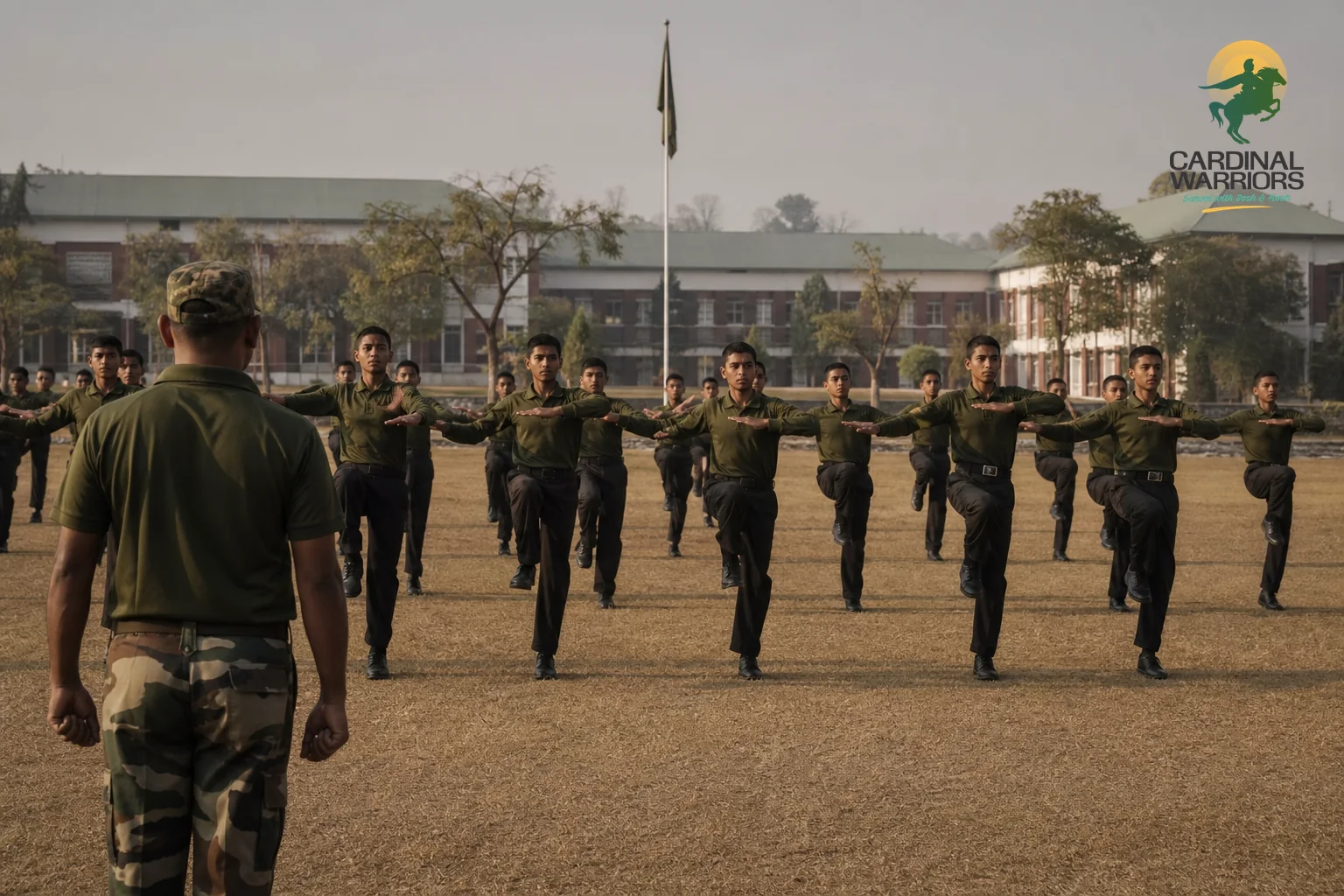
Campus safety is addressed through smart classrooms, a monitored residential setup, and daily routines that include a structured 30-minute morning PT and yoga session followed by mandatory military training, so parents can see exactly what their child’s day looks like rather than guessing. Career coaching at the school is integrated directly into the timetable, covering NDA, AISSEE, RIMC, RMS, SSB interview preparation, NEET, IIT/JEE, and CA Foundation, supported by psychometric testing and personalised career counseling rather than a single generic coaching label.
On the financial transparency question, the school follows an online-only fee collection policy, avoiding informal cash transactions entirely. This directly answers the fee-related red flag many parents worry about most. If you want to understand how the school’s approach compares to other options in the state, our guides on Sainik School versus military school in Chhattisgarh and the best boarding schools with military training in Chhattisgarh offer a side-by-side view.
A school that welcomes scrutiny of its faculty, safety systems, coaching results, and fee structure is telling you something important before you even ask: it has nothing to hide.
A Quick Checklist Before You Enroll
Carry this list on your next campus visit and ask each question directly. A confident, well-run school will answer all of these without hesitation:
- Can I meet a faculty member with a verified defence or NCC background?
- Where is the CCTV coverage, and who is on night duty in the hostel?
- What were last year’s NDA, RIMC, RMS, or AISSEE selection numbers?
- Can I see the written daily schedule, from wake-up to lights out?
- Can I get a complete annual fee sheet, including hostel and exam charges?
- Is there an online payment system with proper receipts?
- What is the process if I have a grievance about discipline or safety?
- How often will I receive updates on my child’s academic and physical progress?
If you’d like a broader framework for this decision beyond red flags alone, our step-by-step guide on how to choose the right military school for your child and our piece on whether military school is good for character building both cover the positive selection criteria that complement this checklist.
Frequently Asked Questions
What documents should I ask for before admission?
Request the school’s CBSE affiliation number and certificate, a written annual fee breakdown, the daily schedule, and faculty credentials. A school that provides these promptly and in writing is demonstrating the transparency parents should expect.
How do I verify a school’s military credentials?
Ask for the names and backgrounds of retired defence personnel on staff and check whether senior patrons or directors have a verifiable service record. You can also ask about NCC affiliation, tie-ups, or formal recognition from bodies overseeing NDA and RIMC preparation.
Is a lower fee always a red flag?
Not necessarily, but a fee that seems unusually low compared to other boarding military school costs in India should prompt closer questions about what is included. Confirm whether hostel, training, and exam costs are bundled in or charged separately later.
Can I visit the campus unannounced?
A transparent school generally welcomes scheduled visits and is open about what a normal day looks like, even if a fully unannounced visit isn’t standard practice for security reasons. Ask directly about the visiting policy and how often parents can see the hostel and training areas in person.
What if the school avoids answering questions about career coaching results?
Treat this as a significant warning sign. Genuine coaching programs for NDA, RIMC, RMS, and SSB interviews track outcomes because results validate the program. A school unwilling to share even approximate numbers over several years likely does not have a structured track record to share.
Choosing a military school is one of the most consequential decisions a parent in Raipur or anywhere in Chhattisgarh will make for their child’s next several years. Use this checklist at every campus you visit, ask the uncomfortable questions early, and insist on written answers rather than reassurances. To see how Cardinal Warriors addresses faculty transparency, campus safety, structured coaching, and fee clarity in practice, read more about our approach or explore more with us before your next visit. For direct answers to your specific questions, you can contact us at any time, and you can also follow campus updates on Facebook, Instagram, and Twitter/X.

You may also like

SSB Interview Coaching: What Parents Should Know