
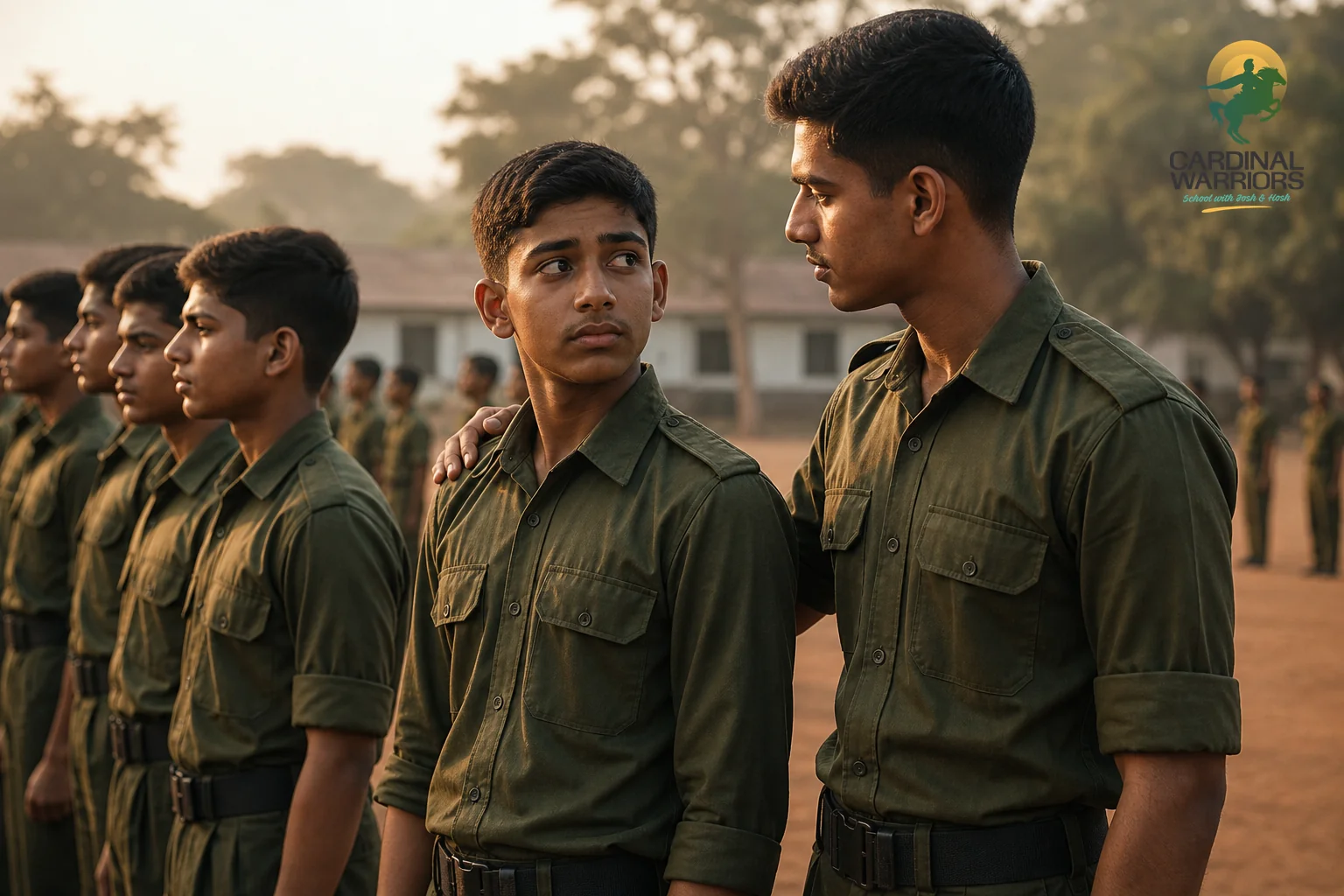
Homesickness in Boarding School: An Honest Look at Month One
Homesickness in a boarding school’s first month usually peaks between day four and day twelve, then eases as routine takes over by week four. At Cardinal Warriors in Nimora, Raipur, staff track this curve deliberately, because a child still unsettled in week five loses real preparation time against fixed dates like the NDA 2 written exam on 13 September 2026.
Key Takeaways
- Peak window: Most children hit their lowest point between day 4 and day 12, not on arrival day itself.
- Routine beats phone calls: Fixed daily drills, PT and academic blocks settle children faster than frequent unsupervised calling.
- Buddy system: Cardinal Warriors pairs new cadets with senior cadets in the same dormitory block for the first three weeks.
- Escalation signs: Refusal to eat for more than two days, sleep disruption past two weeks, or withdrawal from all peers needs a call to the school, not just patience.
- Exam clock: With AISSEE 2027 notification expected September-October 2026, a child still adjusting in month two starts defence coaching late.
Homesickness at a Glance
| Week | Typical Symptom | What Helps | When to Call the School |
|---|---|---|---|
| Week 1 (Days 1-3) | Excitement mixed with mild anxiety, disturbed sleep | Structured orientation, buddy assignment | Not usually needed |
| Week 1-2 (Days 4-10) | Crying, low appetite, asking to go home | Fixed calling window, letters, PT routine | If crying is daily and paired with refusal to eat |
| Week 2-3 (Days 11-20) | Mood improves during activities, dips at night | Squad bonding, sports, evening study groups | If nighttime distress persists past day 18 |
| Week 4 (Days 21-30) | Settled routine, occasional homesick moments | Normal parent-contact schedule | If child still avoids peers or classes |
| Beyond Day 30 | Should be largely resolved | Regular academic and METTALS routine | Persistent distress warrants a welfare review |
Why the First Month Hits Harder in a Military-Discipline School
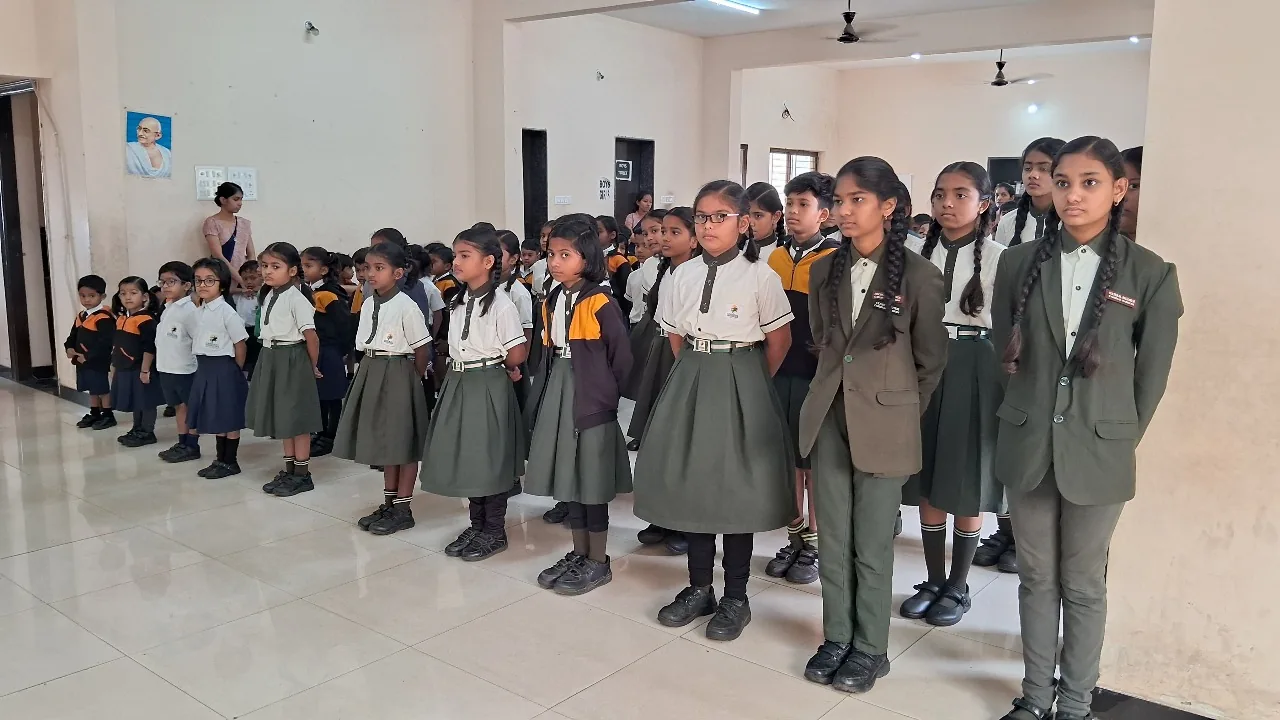
A regular boarding school asks a child to adjust to a new bed and new friends. A military-discipline school like Cardinal Warriors adds a third layer: a new daily rhythm built around drills, timed PT and shared squad duties, layered under the METTALS framework of Military Education, Tactical Training, Academic Learning and Sports.
For a child arriving from a regular day school in Raipur or a nearby district, the wake-up bugle, the morning parade line and the mess-hall schedule are all unfamiliar on day one. None of it is harsh by design. It is simply new, and new things feel bigger to a ten or twelve-year-old than they will look back in hindsight.
Distance plays a smaller role than most parents expect. Children coming from within Raipur city, only twenty minutes from Nimora, feel the same early dip as children arriving from Bilaspur or Durg. The trigger is the routine change, not the kilometres between home and campus.
What Homesickness Actually Looks Like Week by Week
The pattern is predictable enough that house staff at Cardinal Warriors plan around it rather than react to it.
Days 1-3 bring a mix of excitement and mild anxiety. New uniforms, a new dormitory bunk, and a full orientation schedule keep most children occupied. Sleep is often the first thing to wobble, not appetite.
Days 4-10 are the real dip. The novelty wears off. This is when a child is most likely to ask for a phone call home, skip a meal, or cry quietly at night. It is normal, and it is temporary for the overwhelming majority of children.
By days 11-20, the daily structure starts doing its work. Squad activities, sports periods and study blocks give the day a shape the child can predict. Homesick moments still surface, usually at night, but they are shorter and less frequent.
Days 21-30 should show a child who has settled into the rhythm: eating normally, joining group activities without prompting, and treating parent calls as a pleasant update rather than an emotional lifeline. If that shift has not happened by day 30, it is worth a direct conversation with the school, not another month of waiting.
How Cardinal Warriors Structures the First Month to Reduce Homesickness
Structure is the actual intervention here, more than reassurance or sympathy alone.
- Buddy system: Every new cadet is paired with a senior cadet from the same dormitory block for the first three weeks, someone who has been through the exact same adjustment a year or two earlier.
- Fixed calling windows: Phone access runs on a scheduled slot rather than being open-ended, which prevents a child from dwelling on home during study or drill hours.
- Morning PT and squad duties: The daily 30-minute PT and yoga block, followed by tactical training sessions, fills the exact hours where idle time would otherwise turn into brooding.
- House staff trained to observe: Residential staff and retired military personnel on campus are briefed to flag a child who stops eating, stops speaking in class, or withdraws from squad activities.
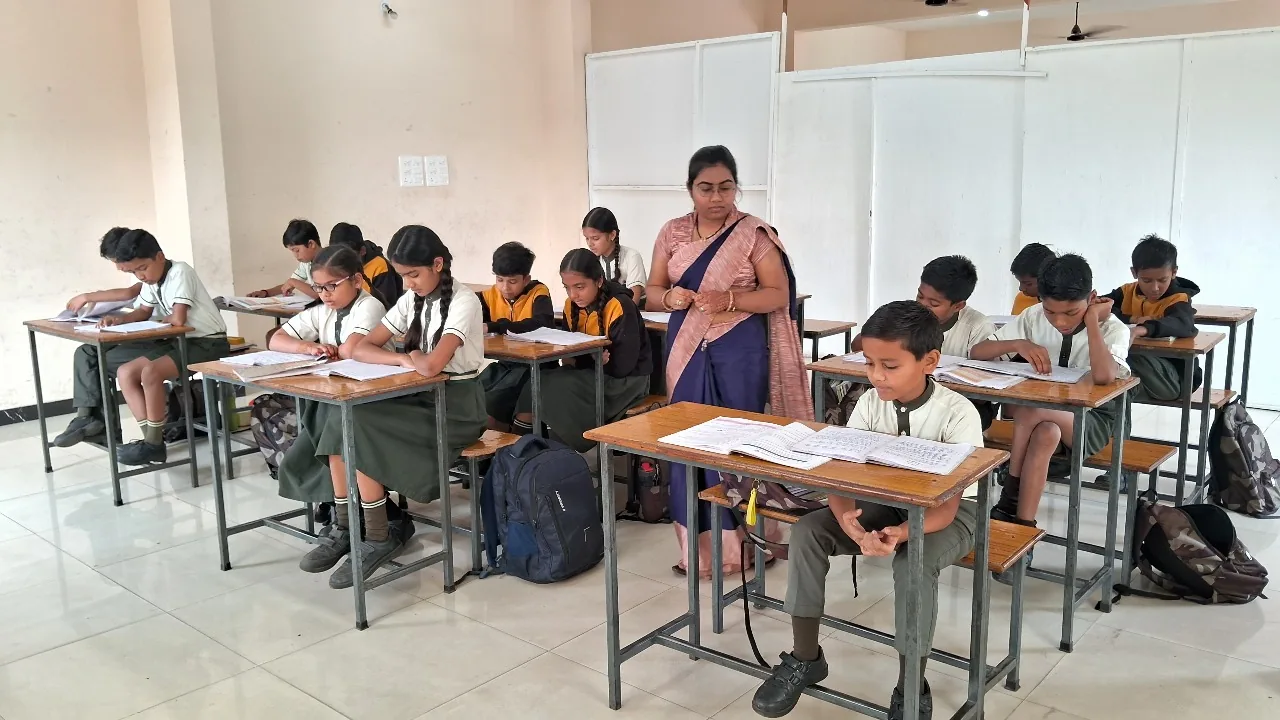
This is also where the school’s broader approach to leadership development in a structured campus setting quietly supports emotional adjustment. A child given a small responsibility, even something as simple as leading a squad line-up, recovers confidence faster than one left to sit with the discomfort alone.
What Parents Should and Shouldn’t Do in Week One
Skip promises you cannot keep. Do not tell a crying child on day five that you will visit “this weekend” unless the school’s policy actually allows it.
Do send short, upbeat letters or use the scheduled call window to talk about ordinary things: a pet, a cousin’s birthday, what the child ate that day. Long emotional conversations about how much you miss them make the adjustment harder, not easier.
Avoid asking “do you want to come home?” during the dip window. It reopens a decision the child has already made and undermines the very routine that is meant to help them settle.
When Homesickness Is Actually a Red Flag
Genuine homesickness fades with routine. A welfare issue does not, and it often hides behind the same words a homesick child uses.
Watch for refusal to eat for more than two consecutive days, sleep disruption that continues past the two-week mark, a child who avoids all peer contact rather than just missing home, or any mention of a specific person or incident triggering the distress. These patterns point past ordinary adjustment and need a direct conversation with the school’s residential staff.
Parents evaluating any residential school, not just Cardinal Warriors, should know the difference between a rough first month and a genuine institutional problem. Our own guide on red flags to avoid when choosing a military school covers the warning signs worth checking before admission, and they are equally useful for judging how a school actually responds once your child is already enrolled.
Why Getting Through Month One Matters for NDA and AISSEE Timelines
A settled month one directly protects the exam preparation calendar. The NDA 2 2026 written exam falls on 13 September 2026, and cadets preparing for it need focused study weeks, not weeks lost to adjustment. A child still homesick in week five effectively starts preparation a month behind classmates who settled by week three.
The same clock applies to younger aspirants. AISSEE 2027 notification is expected in the September-October 2026 window, based on past cycles, with the exam itself typically held in January. Families targeting AISSEE 2027 preparation for a Class 6 or Class 9 seat need a child who is academically present, not emotionally distracted, well before that notification lands.
This is one reason Cardinal Warriors treats the first thirty days as a distinct phase rather than folding it into the regular academic calendar. A child who settles by day 25 walks into serious NDA or AISSEE coaching with a clear head. A child still adjusting in week six starts that same coaching carrying an unresolved emotional load.
Frequently Asked Questions
How long does homesickness last in boarding school?
Most children move past the sharpest homesickness within two to three weeks, with the worst days falling between day 4 and day 12. A structured daily routine, rather than time alone, is what actually shortens this window.
Should I let my child call home every day?
No. Unlimited daily calling tends to prolong homesickness by keeping a child mentally anchored to home during the hours they should be adjusting to campus life. A fixed, scheduled call two or three times a week works better for most children.
Is homesickness worse in a military school than a regular boarding school?
It can feel sharper in the first week because the routine is more structured, but it typically resolves faster, since drills, PT and squad duties fill the idle hours where homesickness usually grows in a less structured boarding environment.
What if my child cries every night in month one?
Occasional night-time tears in weeks one and two are common and usually pass as routine sets in. If crying continues nightly past day 20, alongside poor appetite or sleep, it warrants a direct conversation with the school’s residential staff rather than continued waiting.
Adjustment in the first month is a real, well-documented phase, not a sign that boarding was the wrong decision. If you are weighing whether a structured, military-discipline residential environment is right for your child, or you want to understand how Cardinal Warriors in Nimora, Raipur supports new cadets through exactly this window, you can read more about our approach or book a campus visit to see the daily routine firsthand. For direct questions about the admission process or the first-month settling policy, contact us or follow updates on Facebook and Instagram.

You may also like

What Changes When a School Is Run by an Army Veteran