
Sainik School Reservation and Quota Rules, Plainly Explained
Sainik School reservation rules set aside seats through five separate channels: a home-state domicile quota, priority for wards of defence personnel and ex-servicemen, constitutional reservation for SC, ST and OBC candidates, a girls’ quota under the co-education rollout, and open all-India merit. A general-category family in Raipur or Nimora applying to a Sainik School outside Chhattisgarh competes for a smaller slice of seats than they might expect.
Key Takeaways
- Home-state quota: Roughly 67% of seats at each Sainik School go to domiciled residents of the state the school is located in; only about 33% are open all-India merit.
- Defence ward priority: A fixed share of seats is reserved for wards of serving or retired defence personnel, applied after category-wise merit sorting, not as an automatic guarantee.
- SC/ST/OBC reservation: Constitutional percentages (typically 15% SC, 7.5% ST, 27% OBC where applicable) apply within each school’s own seat matrix, not as a flat national pool.
- Girls’ seats: Most Sainik Schools now reserve a defined share of seats for girls following the co-education expansion, changing how competitive the girls’ merit list is compared to boys’.
- AISSEE 2027 timing: Notification is expected between September and October 2026, and category certificates must be ready before the form opens, not after.
Sainik School Reservation Rules at a Glance
| Quota Category | Approximate Seat Share | Who Qualifies |
|---|---|---|
| Home State Domicile | ~67% | Residents domiciled in the state where the specific Sainik School is located |
| Open All-India | ~33% | Any Indian citizen, regardless of state of residence |
| Defence/Ex-Servicemen Wards | Fixed share within above pools | Children of serving or retired Army, Navy, Air Force personnel |
| SC Reservation | ~15% | Candidates holding a valid SC certificate |
| ST Reservation | ~7.5% | Candidates holding a valid ST certificate |
| OBC Reservation | ~27% (where applicable) | Candidates holding a valid non-creamy-layer OBC certificate |
| Girls’ Quota | Defined seats per school (varies) | Female candidates under the co-education expansion |
These numbers are approximate and vary slightly by school and by year’s sanctioned intake, but the structure itself has stayed consistent across recent AISSEE cycles. Understanding it before you fill a form saves a family from applying under the wrong category and losing weeks waiting for a correction window that may not open again.
How the Home-State Quota Works for Chhattisgarh Families
Every Sainik School reserves the majority of its seats, close to two-thirds, for children domiciled in the state where that school physically sits. A Raipur family applying to a Sainik School located in Madhya Pradesh or Odisha competes only for the smaller all-India pool at that school, not the home-state pool.
This single rule changes strategy for many Chhattisgarh parents. If your child holds a Chhattisgarh domicile certificate, applying to a Sainik School within the state (where one exists) puts them in the larger 67% pool. Applying elsewhere pushes them into the tougher 33% open category, competing against applicants from every state. Families weighing this trade-off often ask how Class 6 entry compares with Class 9 entry for Sainik School, since seat availability and competition intensity differ sharply between the two stages.
Domicile is proven through a state-issued residence certificate, usually applied for through the local tehsil office well ahead of the AISSEE form. Families who wait until the notification opens often find the certificate takes longer than the application window allows.
The Defence and Ex-Servicemen Ward Priority Explained
Children of serving or retired Army, Navy and Air Force personnel receive priority consideration within Sainik School admissions, though this is not a blanket guarantee of a seat. The priority is applied as a weighted preference inside the merit list for the relevant quota, meaning a defence ward still needs to clear the AISSEE written exam and medical standards.
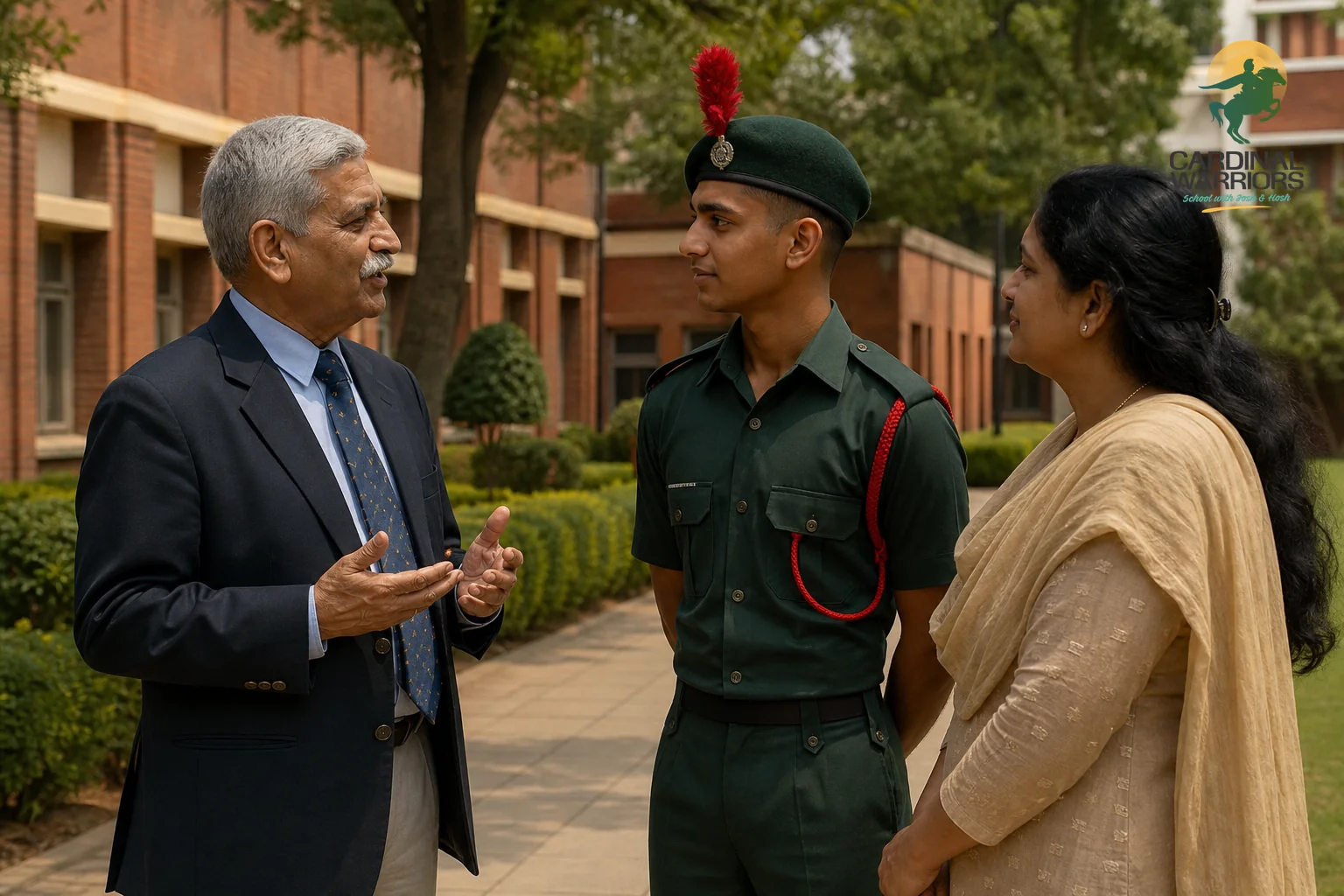
Proof required typically includes the parent’s service certificate or discharge book, a certificate from the unit or record office confirming rank and service status, and identity documents linking the child to that parent. Families should collect these well before AISSEE 2027 opens rather than scrambling once the portal goes live.
This defence-linked priority runs somewhat differently at Rashtriya Military School admission, where wards of defence personnel and ex-servicemen hold a structurally larger share of total seats. Parents sometimes confuse the two systems because both schools use the AISSEE exam, but the internal seat allocation differs meaningfully between them.
SC, ST and OBC Reservation Inside Sainik Schools
Constitutional reservation percentages apply within each Sainik School’s own sanctioned intake, not as one combined national figure. In practice, this means the SC, ST and OBC cutoff marks vary from school to school depending on how many candidates from each category applied and how many seats that school was allotted for the category that year.
A candidate applying under OBC needs a non-creamy-layer certificate valid for the current academic year; an expired or borderline certificate is one of the most common reasons AISSEE applications get flagged during document verification. SC and ST candidates should similarly confirm their certificate is issued in the correct format recognised by the school’s state government, since formats differ slightly between Chhattisgarh and neighbouring states.
Parents preparing a child academically for this exam, regardless of category, benefit from reviewing the AISSEE Class 6 syllabus across Maths, GK, Language and Intelligence early, since reservation only determines the seat pool a child competes in, not the exam content itself.
Girls’ Seats and the Co-Education Rollout
Sainik Schools began admitting girls in 2021, and most schools now reserve a defined block of seats for female candidates each intake year. This has shifted the competition math noticeably: because the girls’ seat pool is smaller in absolute number than the boys’ pool at most schools, the merit cutoff for girls can run higher relative to the number of applicants, even though the reservation itself exists to expand access.
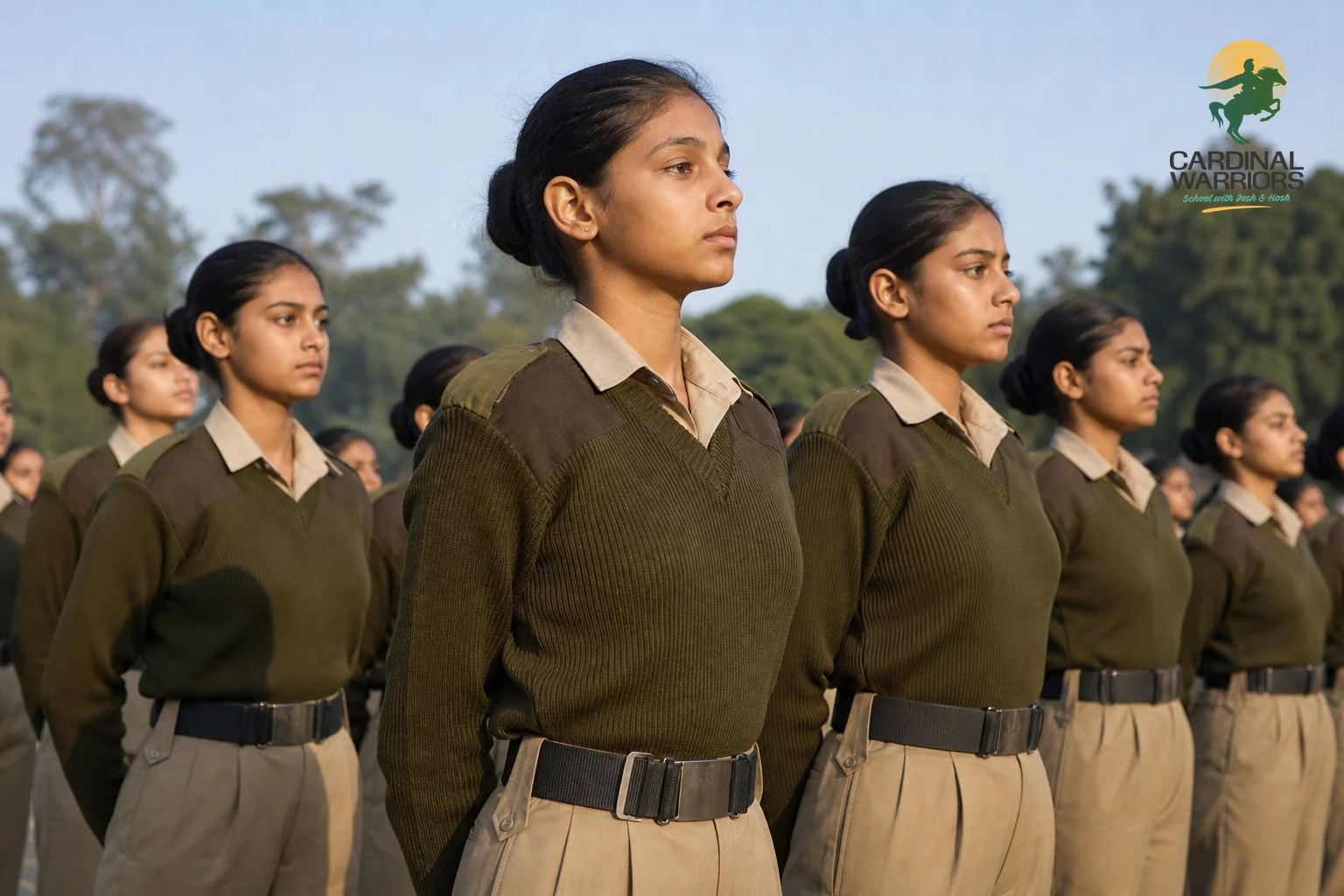
Families raising daughters interested in a defence career path should track this seat count year on year rather than assuming it mirrors the boys’ quota exactly. It’s a factor worth discussing directly with a school’s admission office before finalising which Sainik School to apply to.
Sainik School vs Rashtriya Military School Reservation: What’s Different
| Factor | Sainik School | Rashtriya Military School |
|---|---|---|
| Governing Body | Sainik Schools Society, Ministry of Defence | Rashtriya Military Schools Society, Ministry of Defence |
| Home-State Quota | ~67% domicile-based | No state domicile quota; national intake |
| Defence Ward Priority | Fixed share within category pools | Structurally larger, priority-weighted seats |
| Entry Points | Class 6 and Class 9 | Class 6 and Class 9 |
| Common Entrance Exam | AISSEE | AISSEE |
| Girls’ Seats | Defined quota per school since 2021 | Co-ed since inception at most RMS campuses |
Both systems use the same AISSEE exam, which is why families in Raipur often list both as options on a single form. For a fuller breakdown of how the two compare beyond reservation, the article on questions parents ask most about Rashtriya Military School admission covers the process end to end.
How AISSEE 2027 Timelines Affect Reservation Planning
The AISSEE 2027 notification is expected in the September-October 2026 window, based on the pattern of recent cycles, with the written exam typically following in January. This gap between notification and exam is short, and category-related documents (domicile, defence, SC/ST/OBC certificates) need to be ready before the form opens, not requested afterward.
Families with an older child aiming for the National Defence Academy instead should note that the NDA 2 2026 written exam falls on 13 September 2026, a separate but parallel timeline that some Cardinal Warriors families track alongside their younger child’s Sainik School application in the same admission season. Reviewing the general AISSEE 2027 notification dates and preparation checklist helps set a realistic sequence for both exams if a household has children at different stages.
A reservation category does not change the exam pattern or difficulty. It changes the pool of seats and the cutoff a child needs to clear within that pool. That distinction matters when a parent assumes a category certificate alone secures admission; it does not, the child still competes on merit within that reserved bracket.
What Raipur and Nimora Parents Should Do Before Applying
- Confirm domicile status early. Apply for or renew the Chhattisgarh residence certificate well before September 2026, since tehsil processing times vary.
- Gather defence documentation if applicable. Service certificates and discharge books should be photocopied and verified months in advance, not during the application week.
- Check category certificate validity. SC, ST and OBC certificates carry expiry or renewal conditions; an outdated certificate can disqualify an otherwise eligible application.
- Decide between Class 6 and Class 9 entry. Seat numbers, syllabus depth and competition levels differ sharply between the two entry points.
- Build academic readiness regardless of quota. Reservation affects the seat pool, not the exam itself, so a child still needs strong preparation in Maths, GK, Language and Intelligence to clear the merit bar within their category.

Cardinal Warriors in Nimora, Raipur, runs integrated AISSEE coaching alongside its CBSE curriculum, so a child preparing for Sainik School entry through any quota still gets structured academic support, physical training and SSB-oriented mentoring inside a residential campus, rather than juggling separate weekend coaching centres. For families weighing readiness questions like what the SSB five-day process actually involves further down the line, that groundwork starts years before the interview itself.
A reserved seat still has to be earned on merit within its category. Reservation opens the door to a smaller, fairer competition pool; it does not remove the need for a prepared child.
Frequently Asked Questions
Is there a quota for Chhattisgarh students applying to a Sainik School outside the state?
Yes, but they compete only in the smaller open all-India pool (roughly 33% of seats) rather than the larger home-state pool reserved for that school’s own state residents.
Do defence ward seats need a separate application form?
No separate form exists; the same AISSEE application asks the parent to declare defence status and upload supporting service documents, which are then verified before the merit list is finalised.
Can OBC reservation and girls’ quota overlap for the same candidate?
Yes, a candidate can be considered under both an OBC certificate and the girls’ seat allocation simultaneously, since these are independent, non-exclusive categories within the same intake.
Does holding a reservation certificate guarantee admission?
No. It places the candidate in a smaller, category-specific competition pool, but the child must still clear the AISSEE written exam, medical standards and merit cutoff within that pool.
Where can I verify the current reservation percentages for a specific Sainik School?
The Sainik Schools Society publishes the seat matrix for each school in the official AISSEE prospectus released alongside the notification; cross-checking directly with that document each year is the most reliable source, since exact numbers can shift with sanctioned intake.
If you are mapping out your child’s Sainik School application alongside a structured CBSE education and defence-oriented training, read more about Cardinal Warriors’ approach to combining academics with military discipline in Nimora, Raipur. You can also explore more with us to see how our integrated AISSEE, NDA and SSB coaching supports children through every reservation category, or contact us directly to discuss your child’s specific eligibility and entry timeline. Follow updates on Facebook, Instagram and Twitter/X for admission season announcements.

You may also like
What Changes When a School Is Run by an Army Veteran
Homesickness in Boarding School: An Honest Look at Month One