
Sainik School Class 6 or Class 9 Entry: Which Should You Target?
For most families in Raipur and Nimora, Class 6 entry is the stronger target for Sainik School, because it offers roughly ten times more seats nationally and an easier syllabus, while Class 9 entry suits a child who is already academically strong but missed the Class 6 window and needs a lateral route into a Sainik School environment. The right choice depends on your child’s current age, not on which sounds more prestigious.
Key Takeaways
- Seat math favours Class 6: Sainik Schools admit far more students at Class 6 than through Class 9 lateral entry, so the odds of a seat are meaningfully better at the younger age.
- Class 9 paper is harder: The Class 9 AISSEE paper adds Science and Social Studies at a higher difficulty level than the Class 6 paper’s Maths, Language, GK and Intelligence sections.
- AISSEE 2027 notification lands Sep-Oct 2026: Families targeting either entry point should treat this window as the start line for serious preparation.
- Age 10-12 adapts to boarding routine faster: Younger entrants settle into military-style discipline with less resistance than teenagers joining at 13-15.
- A missed AISSEE window isn’t a dead end: Private military schools in Raipur, including Cardinal Warriors in Nimora, run parallel coaching for NDA, RIMC and RMS for children who don’t clear either Sainik School cutoff.
At a Glance: Sainik School Class 6 vs Class 9 Entry
| Factor | Class 6 Entry | Class 9 Entry |
|---|---|---|
| Eligible age | 10 to 12 years (as on 31 March of admission year) | 13 to 15 years |
| Exam subjects | Maths, Language, Intelligence, General Knowledge | Maths, Science, Social Studies, English, Intelligence |
| Typical seats per school | Roughly 70-100 per school nationally | Roughly 10-20 per school, lateral entry only |
| Competition level | High but with a larger seat pool | Very high, seats fill mostly existing vacancies |
| Years before NDA eligibility | 6 to 7 years of runway | 3 to 4 years of runway |
| Boarding adjustment | Faster habit formation, fewer prior routines to unlearn | Bigger cultural shift, more academic independence already built |
| AISSEE 2027 notification | Expected September-October 2026 | Expected September-October 2026 |
Sainik School Class 6 vs Class 9 Entry: The Core Differences
Parents comparing Sainik School Class 6 vs Class 9 entry often start from the wrong question. They ask which entry point is “better,” when the real question is which entry point matches the child’s current age and academic readiness. A 10-year-old cannot sit the Class 9 paper, and a 14-year-old cannot go back and sit the Class 6 paper. The decision usually makes itself once you check the birth certificate against the eligibility window.
That said, families do have a genuine choice in one scenario: a child currently in Class 4 or Class 5 who could either prepare now for Class 6 entry, or wait three years and attempt Class 9 lateral entry instead. For that family, the comparison below matters directly.
1. Age Eligibility and Academic Fit
Class 6 entry requires the child to be between 10 and 12 years old on 31 March of the admission year. Class 9 entry requires an age band of roughly 13 to 15 years. Beyond the number, the academic fit differs too. A Class 6 aspirant is tested on foundational concepts that most CBSE schools cover by Class 5. A Class 9 aspirant is tested on material closer to Class 8 board-level Science and Social Studies, which demands stronger retention and a longer study routine.
If your child struggles with sustained study sessions right now, Class 6 entry asks less of them conceptually. If your child already handles a heavier CBSE workload comfortably, Class 9 entry is not out of reach.
2. Exam Difficulty and Syllabus Load
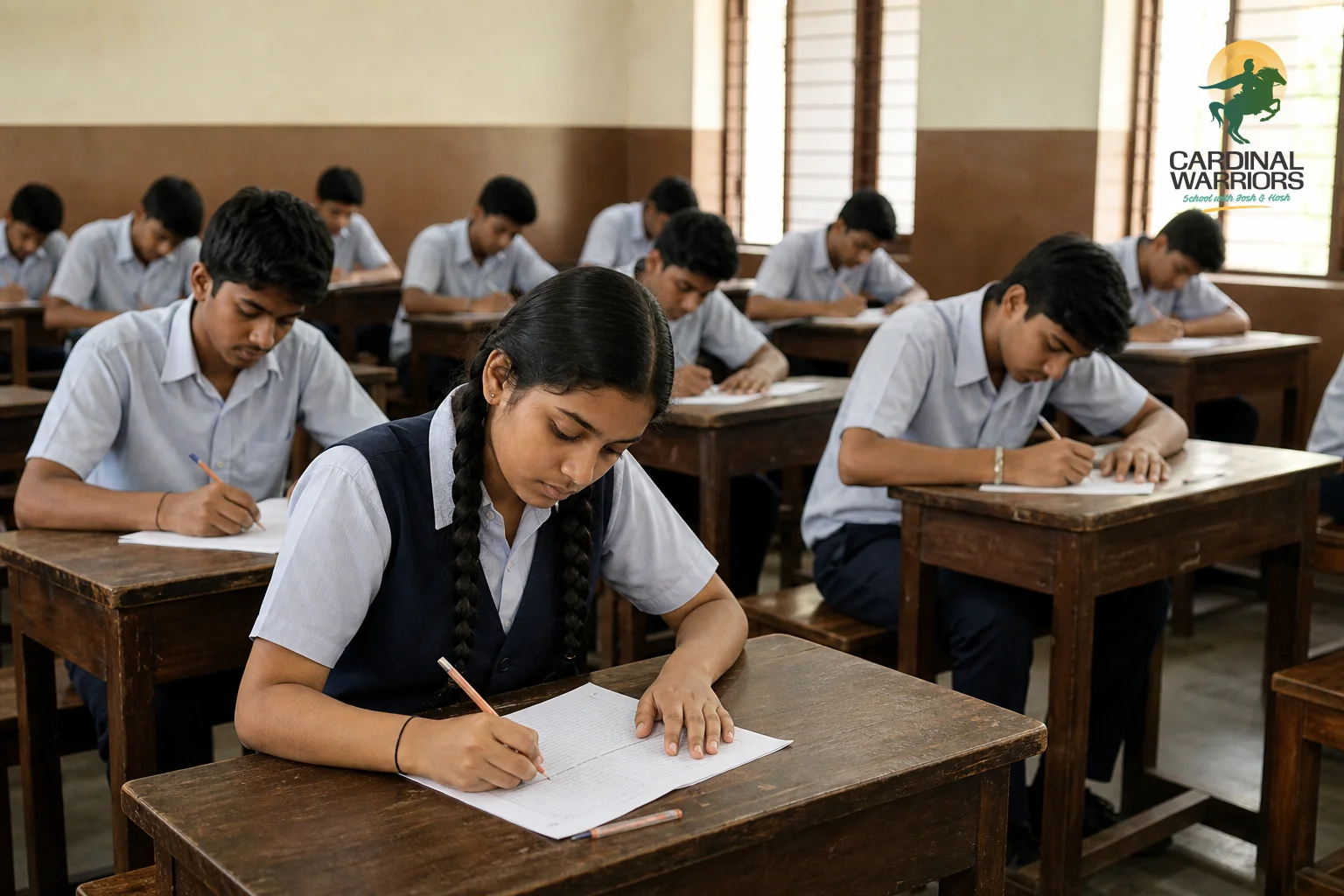
The AISSEE Class 6 paper covers Mathematics, Language, Intelligence and General Knowledge. Our earlier breakdown in AISSEE 2027: Expected Notification Dates and How to Start Preparing in August walks through this syllabus section by section. The Class 9 paper drops the standalone GK section but adds full Science and Social Studies papers, alongside a more advanced English component. In practical terms, a Class 9 aspirant is preparing for something closer to a school board exam layered with reasoning questions, not a simple aptitude test.
This higher load explains why coaching timelines for Class 9 entrants tend to run longer and more intensively than for Class 6 aspirants, even though both groups are chasing the same AISSEE 2027 notification date.
3. Seat Availability and Competition
Here is where the decision tilts hardest toward Class 6. Most Sainik Schools admit their primary intake at Class 6, with seat counts typically in the range of 70 to 100 students per school across the country. Class 9 admission works as lateral entry, filling only the seats vacated by students who left the school, which usually means 10 to 20 seats per school at most. Fewer seats against a similarly large applicant pool means the odds at Class 9 are structurally tougher, independent of how well a child scores.
Families should treat this seat math as the single biggest factor in the decision, ahead of syllabus preference or convenience of timing.
4. Preparation Timeline: What AISSEE 2027 Means for Your Decision
The AISSEE 2027 notification is expected in the September-October 2026 window, with the written exam typically following in January. For a child in Class 4 or 5 in Raipur or Nimora right now, that notification date is roughly 12 to 13 months before exam day. That is enough runway to build Class 6 readiness from scratch if preparation starts in earnest this term.
For a family instead eyeing the Class 9 route, the same notification cycle applies, but the underlying syllabus demands earlier starts. A child currently finishing Class 6 or Class 7 who wants to attempt Class 9 entry in a future cycle needs at least two academic years of steady preparation, not one. Our detailed countdown piece on NDA 2 2026 on 13 September: A Parent’s Six-Week Countdown shows how tight a compressed timeline feels even for older, more self-directed students; the same lesson applies to AISSEE prep started too late.
5. Adjustment to Boarding Life and Discipline
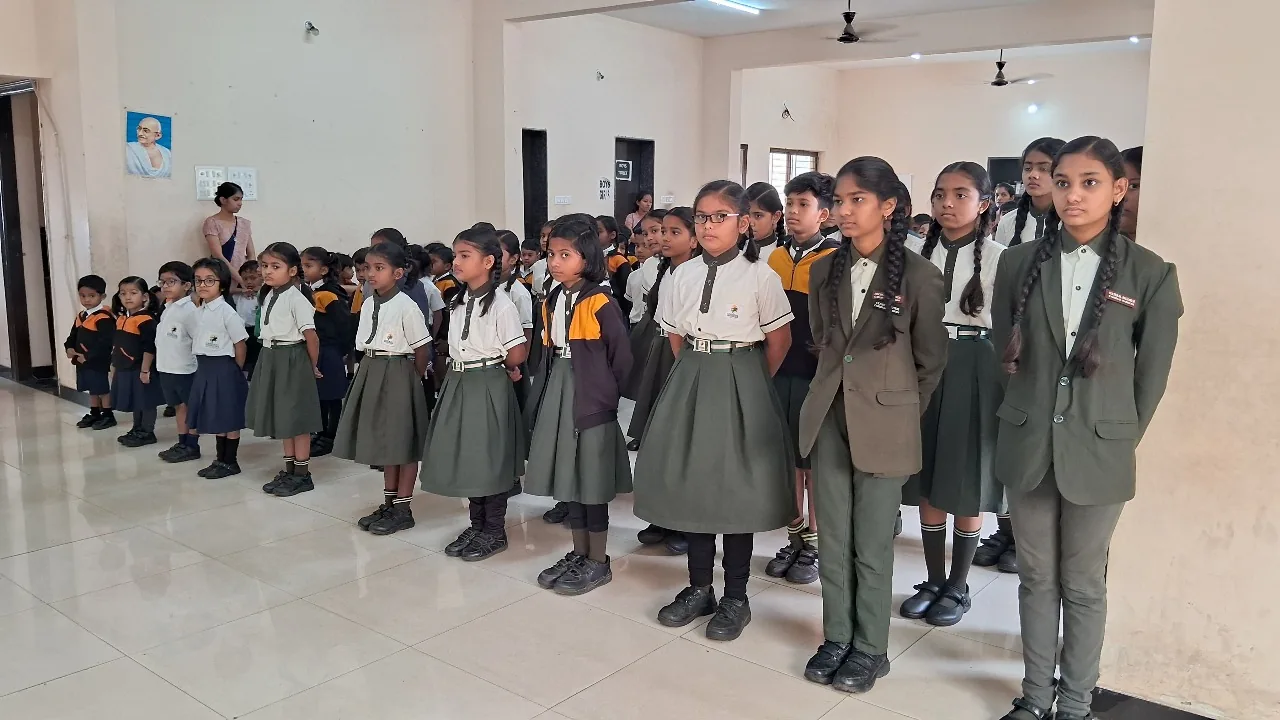
Age also shapes how a child settles into a Sainik School’s residential routine. Children joining at 10 or 11 generally adapt to a fixed wake-up time, communal living and structured drills faster than teenagers, simply because they have fewer competing habits to unlearn. A 14-year-old joining at Class 9 brings more academic independence and self-discipline already in place, but also a bigger adjustment in social routine, since they are entering a peer group that has often lived together since Class 6.
Neither age group is disqualified from adjusting well. The difference is in the shape of the adjustment, not its difficulty.
6. What If Your Child Misses Both Sainik School Windows?
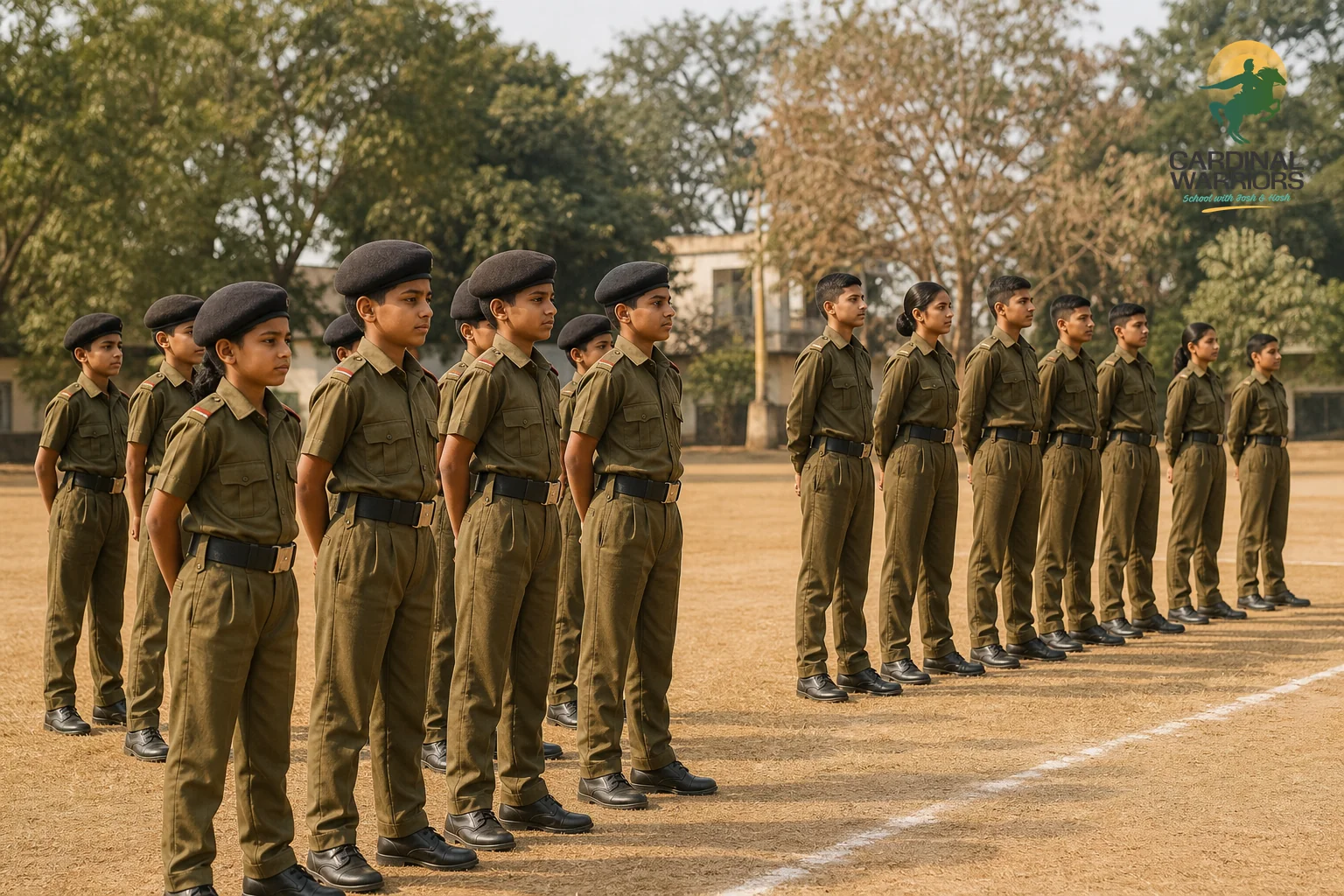
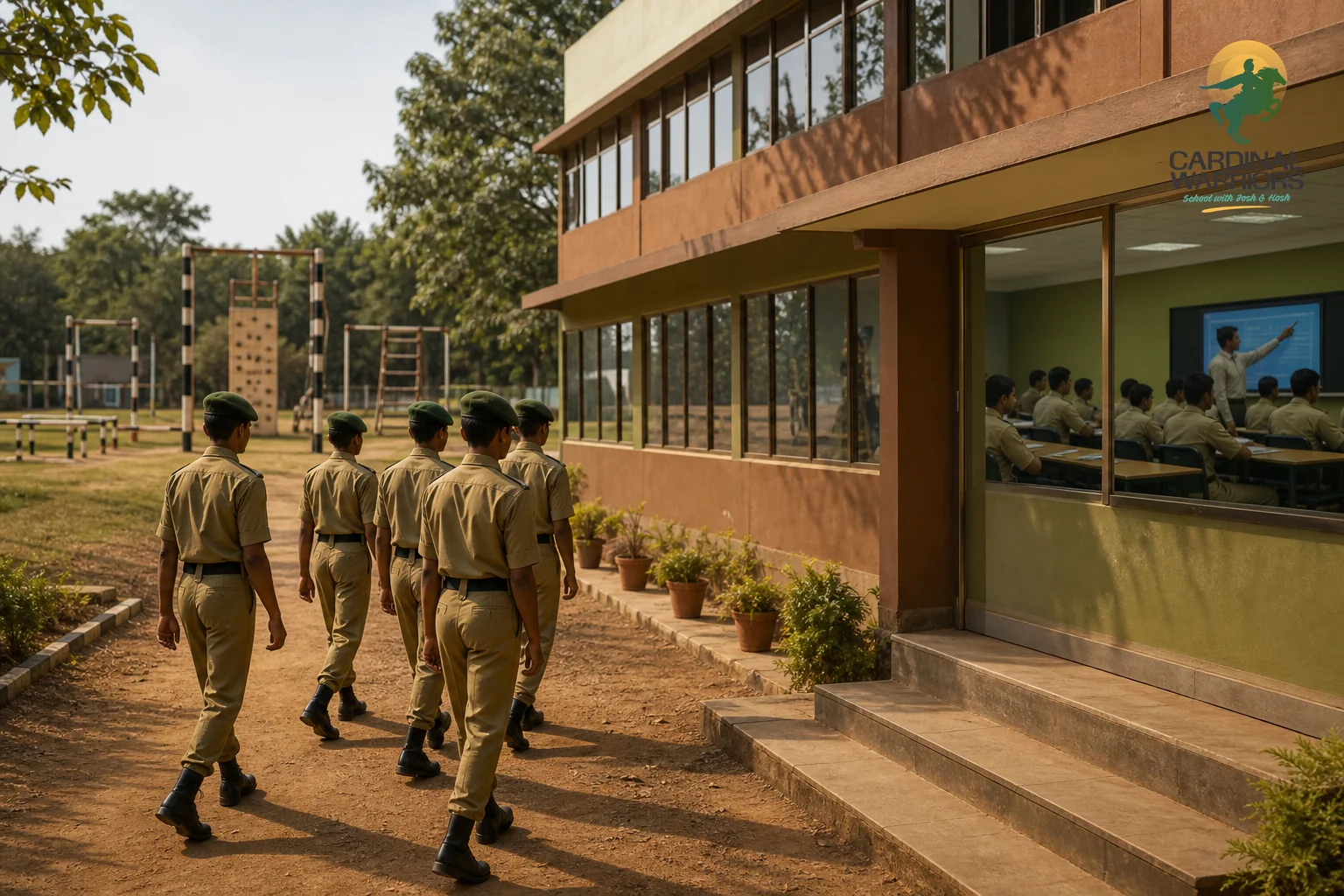
Some children fall outside both eligibility windows by the time a family starts researching seriously, or don’t clear the AISSEE cutoff at either stage. This is a common and solvable situation, not a closed door. Private military schools built specifically for defence-track families, such as Cardinal Warriors on Dhamtari Road in Nimora, Raipur, run CBSE-affiliated academics alongside dedicated RIMC, RMS and NDA preparation, so a child can still build toward the same career outcome through a parallel path.
Our comparison in Sainik School Reservation and Quota Rules, Plainly Explained and the piece on Red Flags to Avoid When Choosing a Military School are useful next reads for families weighing this fallback route seriously rather than as an afterthought.
How Cardinal Warriors in Nimora Supports Either Path
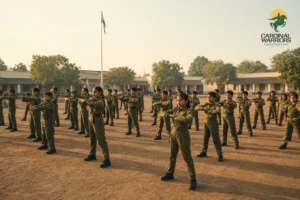
Cardinal Warriors, located in Nimora on Dhamtari Road near Mana, Raipur, runs its METTALS programme, Military Education, Tactical Training, Academic Learning and Sports, for students from pre-primary through higher secondary. For a family still preparing a child for AISSEE Class 6 or Class 9 entry, the school offers integrated AISSEE, RIMC and RMS coaching taught by educators and retired military personnel, so preparation doesn’t sit isolated from daily academics. For a family whose child has already crossed the Sainik School window entirely, the same campus runs integrated NDA preparation and SSB interview guidance straight through senior secondary, addressed in more depth in NDA Eligibility 2026: Age, Class 12 Subjects and Physical Standards.
Daily morning PT and mandatory military training on the 5-acre Nimora campus give both age groups the same structured routine a Sainik School would demand, which matters if AISSEE doesn’t work out on the first attempt and a second attempt is planned for a later cycle. Parents comparing structured routes generally find our piece on Military School vs Doon School: Which Builds Discipline? useful for weighing broader boarding options beyond Sainik School alone.
Frequently Asked Questions
Which is easier, Class 6 or Class 9 Sainik School entry?
Class 6 entry is generally easier on two counts: the syllabus is lighter and the seat count is larger. Class 9 entry tests harder subject material against far fewer available seats, since it fills only lateral vacancies.
Can a child attempt AISSEE at both Class 6 and Class 9?
Yes. A child who does not clear the Class 6 exam, or who was too young at that stage, remains eligible to attempt Class 9 lateral entry later, provided they meet the Class 9 age band at that time.
Does Class 9 Sainik School entry still lead to NDA eligibility?
Yes. Students entering at Class 9 have three to four years inside the Sainik School system before Class 12, which is enough time to prepare for NDA eligibility criteria covered in detail in NDA Eligibility 2026: Age, Class 12 Subjects and Physical Standards.
When is the AISSEE 2027 notification expected?
Based on past cycles, the AISSEE 2027 notification is expected in the September-October 2026 window, with the written exam typically held in January 2027. Families in Raipur and Nimora should use this window as the trigger to finalise coaching plans rather than waiting for the exact date.
What happens if my child doesn’t clear either AISSEE attempt?
Many families in Chhattisgarh pivot to a private military school offering the same discipline and defence-track coaching. Cardinal Warriors in Nimora runs this exact model, combining CBSE academics with RIMC, RMS and NDA preparation for students who take a non-Sainik School route to the same career goal.
If your child is approaching either the Class 6 or Class 9 AISSEE window, the safest next step is a direct conversation about where they currently stand academically and physically, not a guess based on age alone. Read more about how Cardinal Warriors structures its AISSEE, RIMC and NDA coaching tracks, or explore more with us to see how the Nimora campus fits either preparation timeline. For a direct conversation about your child’s specific age and readiness, contact us and speak with our admissions team this week. You can also follow ongoing admission updates and campus activity on Facebook, Instagram and Twitter / X.

You may also like
What Changes When a School Is Run by an Army Veteran

Homesickness in Boarding School: An Honest Look at Month One