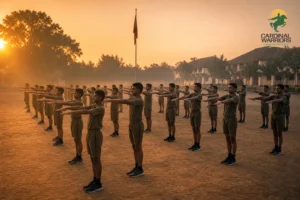

RIMC Entrance Explained: Class 8 Entry, Written Paper and Viva
The RIMC entrance exam class 8 route admits boys and girls aged 11.5 to 13 years into the Rashtriya Indian Military College, Dehradun, through a written paper covering English, Maths and General Knowledge, followed by an interview-style viva voce and a medical check. For a family in Raipur or Nimora, Chhattisgarh, this two-stage process is the earliest structured gateway into a defence career, well before NDA or CDS become relevant.
Key Takeaways
- Age window: Candidates must be between 11.5 and 13 years old on the specified cut-off date, which places most applicants in Class 7 or Class 8.
- Two clear stages: A written examination in English, Mathematics and General Knowledge comes first, followed by a viva voce and medical examination for shortlisted candidates only.
- Different from AISSEE: RIMC has its own separate written paper and interview process; clearing AISSEE for Sainik School does not automatically qualify a child for RIMC.
- Preparation window matters: Because the viva tests personality and general awareness, not just textbook recall, preparation should start at least a year ahead through daily reading, English practice and mock interviews.
- Local access: Families in Nimora and Raipur can access integrated coaching, mock viva sessions with retired officers, and physical training without sending a child outside Chhattisgarh.
RIMC Class 8 Entrance At a Glance
| Aspect | Detail |
|---|---|
| Institution | Rashtriya Indian Military College (RIMC), Dehradun |
| Entry class | Class 8, sometimes called the “junior” entry batch |
| Age limit | 11.5 to 13 years on the notified cut-off date |
| Written paper subjects | English, Mathematics, General Knowledge |
| Selection stages | Written exam → Viva voce (interview) → Medical examination |
| Eligible candidates | Indian citizens, boys and girls, meeting age and academic requirements |
| Related exam for comparison | AISSEE 2027 notification expected September-October 2026 for Sainik School entry |
| Where to prepare in Chhattisgarh | Integrated coaching schools in Raipur and Nimora offering written and viva practice |
What Is RIMC and Why Class 8 Entry Matters
The Rashtriya Indian Military College in Dehradun is not a Sainik School and not a regular boarding school. It is a feeder institution that grooms boys and girls for direct entry to the National Defence Academy after Class 12, giving cadets nearly five years inside a military academic environment before they even sit the NDA exam. That head start is exactly why the rimc entrance exam class 8 window draws so much attention from parents planning a defence career for their child early.
Unlike RMS or Sainik School, which admit at multiple class levels across different states, RIMC runs a single centralised admission cycle per year, with a limited number of seats. A child who clears this exam at 12 or 13 is effectively on a track that runs through RIMC, then NDA, then a service commission, a path many Chhattisgarh families see as a cleaner and earlier alternative to waiting until Class 12 to start defence preparation.
Parents comparing this path with regular schooling often ask what military school education in India actually involves day to day. RIMC sits at the more intensive end of that spectrum, and preparing for it works best alongside a school that already runs on military discipline rather than trying to bolt that structure on separately.
1. Eligibility Criteria for RIMC Class 8 Entry
Before a family invests a year into preparation, the basic eligibility checks deserve a close look:
- Age: The candidate must fall between 11.5 and 13 years on the date specified in the official notification, which usually places them in Class 7 or Class 8 at the time of applying.
- Nationality: Only Indian citizens are eligible.
- Gender: Both boys and girls can apply, following the broader move across defence training institutions toward gender-inclusive intake.
- Academic standing: The child should be studying in a recognised school at the appropriate class level, with no major academic gaps.
- Medical fitness: Basic health standards apply from the outset, though the detailed medical examination happens only after the viva stage.
Families should always verify the exact age brackets and application windows against the current official notification, published through the RIMC official website, before filling any form, since cut-off dates shift slightly each cycle.
2. The Written Examination Pattern
The RIMC written paper tests three subjects: English, Mathematics and General Knowledge. Each carries its own weight, and the exam runs as an objective and short-answer mix designed for a Class 7-8 reading and comprehension level. English sections check grammar, comprehension and vocabulary. Mathematics covers arithmetic, basic algebra and geometry appropriate to the age group. General Knowledge draws from current events, basic science and everyday reasoning.
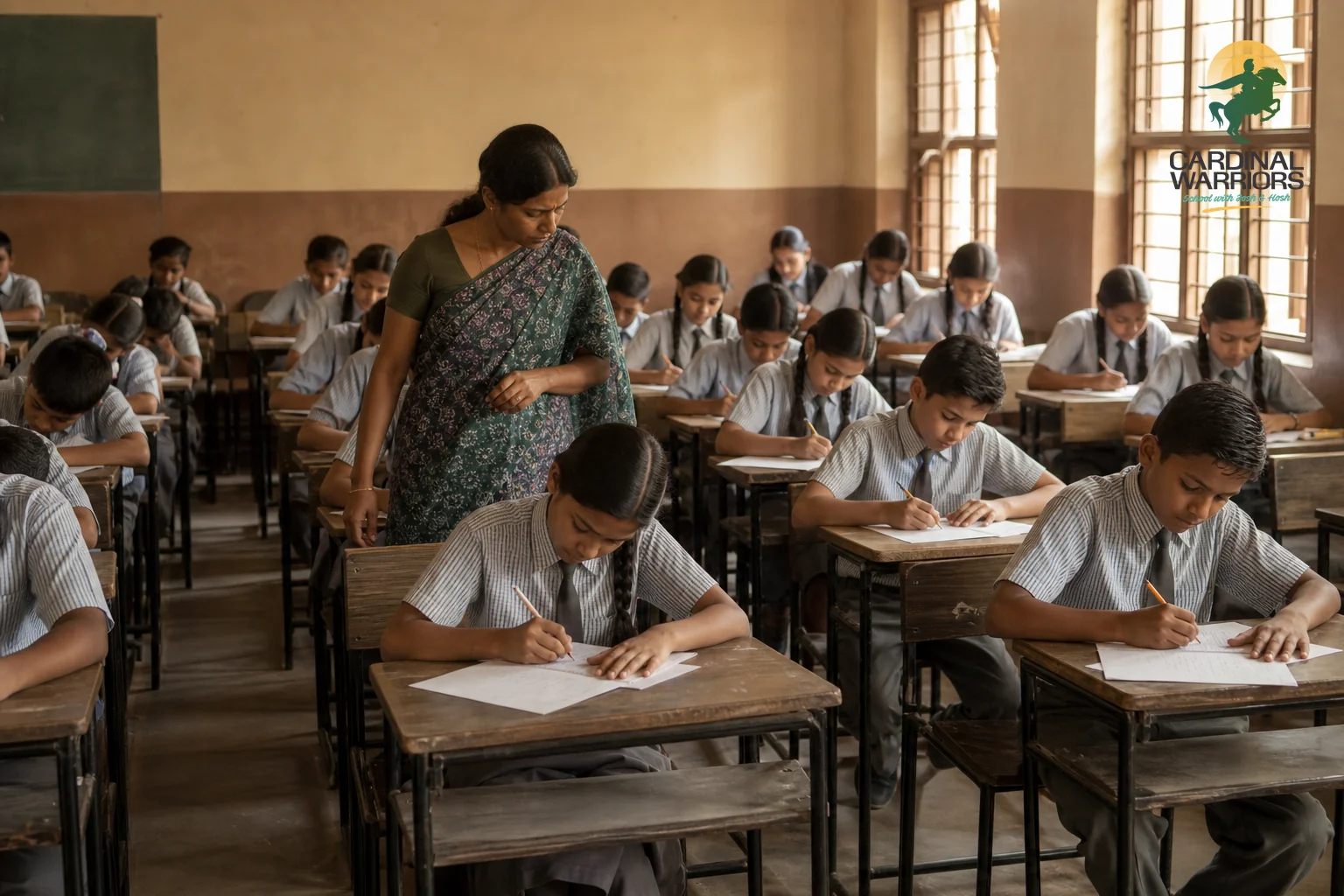
This is a different paper from the AISSEE Class 6 syllabus that Sainik School aspirants study, so a child preparing for both exams needs two separate revision tracks, not one combined syllabus. Parents sometimes assume clearing one automatically helps with the other; the overlap in general reasoning helps, but the subject weightage and question style differ enough that dedicated RIMC practice matters.
A useful habit here is timed practice papers. Because the written stage is only the first filter, spending excess time perfecting every subject at the cost of viva preparation is a common mistake among first-time applicants.
3. The Viva Voce and Interview Stage
Candidates who clear the written paper move to a viva voce, an interview-style assessment closer in spirit to an SSB-style evaluation than a typical school exam. Examiners look for confidence, clarity of speech, general awareness, and how a young candidate handles unscripted questions about family, school, hobbies, and current events.
This stage often surprises parents more than the written paper does, because no amount of textbook memorisation substitutes for a child who can hold a calm, coherent conversation with an unfamiliar adult panel. Reading about how the SSB five-day process evaluates personality at the NDA level gives a useful preview of the qualities examiners at every stage of defence selection tend to value: composure, honesty, and the ability to explain a decision rather than just state it.
A medical examination follows a successful viva, checking height, weight, vision, hearing, and general physical fitness against RIMC’s standards, broadly aligned with the norms published by the National Defence Academy for later stages of a defence career. Families should not leave fitness prep for the final weeks; a child used to regular physical activity walks into this stage with far less anxiety.
4. How to Prepare a Class 7-8 Child from Raipur and Nimora
Preparation for the RIMC entrance exam class 8 route works best when it starts at least twelve months ahead, broken into four consistent habits rather than a last-minute cram:
- Daily English and Maths practice: Thirty to forty minutes each, focused on comprehension speed and mental arithmetic rather than rote formulas.
- A current affairs habit: A short daily newspaper or news-summary reading routine builds the general awareness examiners probe during the viva.
- Mock viva sessions: Practice conversations with retired defence personnel expose a child to unfamiliar adult questioning in a low-stakes setting, which reduces panic on the actual interview day.
- A physical fitness routine: Morning runs, basic calisthenics, and posture correction prepare the child for the medical stage and build the stamina RIMC life demands from day one.
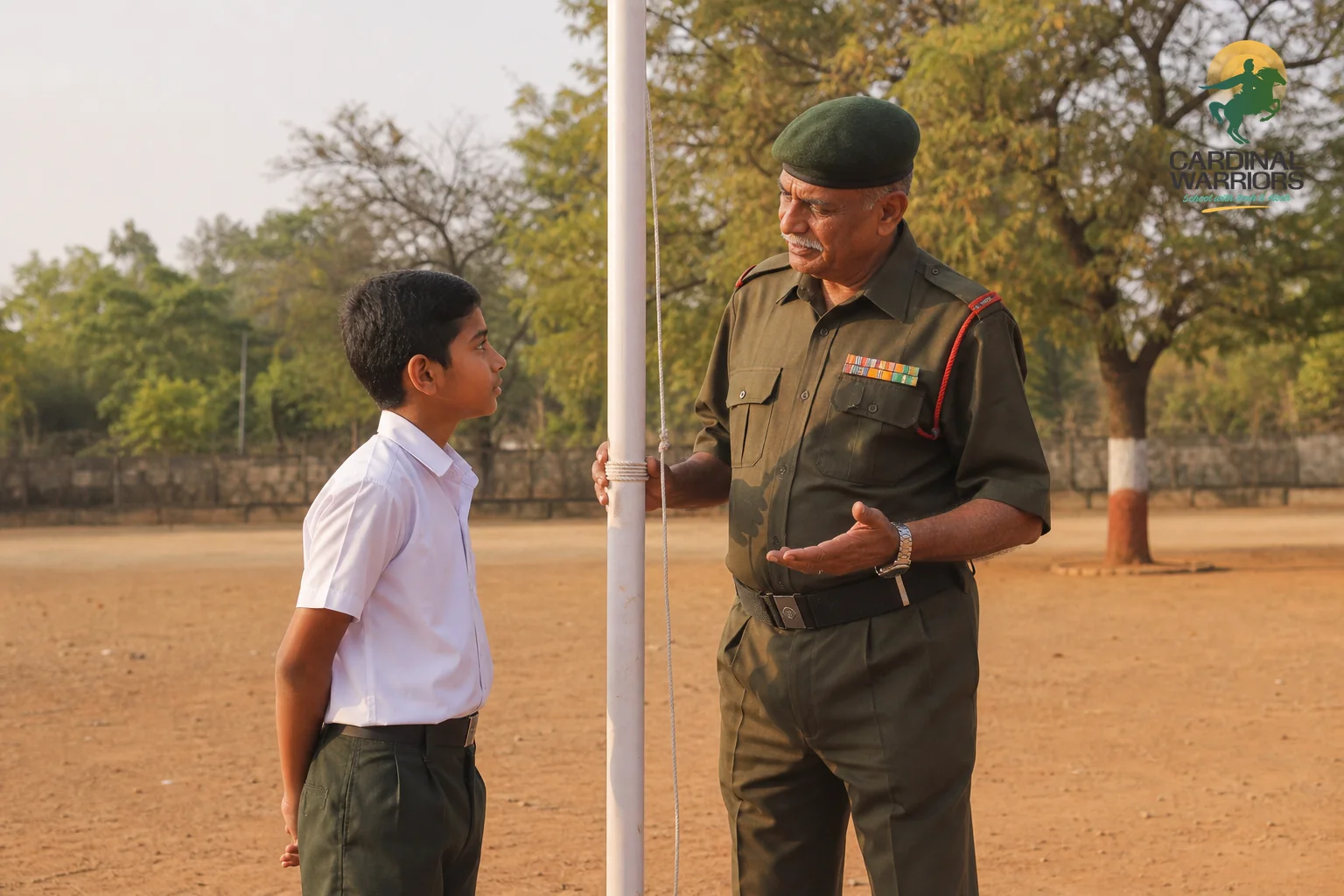
Cardinal Warriors, the residential CBSE school in Nimora on Dhamtari Road, Raipur, runs exactly this kind of structured routine year-round, combining daily physical training with academic coaching and dedicated mock interview sessions guided by retired military educators. Families weighing the best RIMC and RMS prep options in Chhattisgarh often find that a residential setting removes the daily commute friction that eats into a child’s preparation time.
Parents also benefit from checking how military school discipline compares with other boarding models before committing a child’s preparation year to any coaching provider, since not every institute advertising “RIMC coaching” actually runs a structured viva-practice programme.
5. RIMC vs RMS vs Sainik School Entry: What Chhattisgarh Parents Should Know
Families in Raipur frequently confuse RIMC with Rashtriya Military School (RMS) or Sainik School entry, since all three lead toward a defence career. The entry ages, exam styles and outcomes differ enough to warrant a direct comparison.
| Feature | RIMC | RMS | Sainik School (AISSEE) |
|---|---|---|---|
| Entry class | Class 8 | Class 6 and Class 9 | Class 6 and Class 9 |
| Age range | 11.5-13 years | 10-11 years (Class 6) or 13-14 (Class 9) | 10-12 years (Class 6) or 13-15 (Class 9) |
| Exam subjects | English, Maths, GK | Maths, English, GK, Intelligence | Maths, GK, Language, Intelligence |
| Interview stage | Viva voce (SSB-style) | Basic interview and medical | Basic interview and medical |
| Number of institutes | 1 (Dehradun) | Multiple across India | Multiple across India |
| Typical next step | Direct feeder to NDA | Strong NDA/AISSEE prep base | Strong NDA/AISSEE prep base |
Families deciding between these paths may also find it useful to review Sainik School Class 6 or Class 9 entry comparisons before finalising which exam to target for a given child’s age.
6. Building the Preparation Timeline Around NDA 2 2026 and AISSEE 2027
A family with more than one child aspiring for defence careers often needs to plan around several exam calendars at once. The NDA 2 2026 written exam is scheduled for 13 September 2026, a date relevant for an older sibling already past Class 12, while the AISSEE 2027 notification is expected in the September-October 2026 window for a younger child aiming at Sainik School Class 6 or Class 9 entry.
A younger sibling on the RIMC Class 8 track can run alongside both timelines without conflict, since RIMC has its own separate cycle. What matters is that a school supporting the family understands all three calendars and does not let one child’s exam prep crowd out another’s. Reading through the NDA 2 2026 six-week countdown and AISSEE 2027 notification expectations gives a fuller picture of how these overlapping windows fit together for a Chhattisgarh family managing multiple exam preparations at once.
Frequently Asked Questions
When is the RIMC entrance exam held?
RIMC typically runs one admission cycle per year, with notifications released a few months before the written exam. Exact dates change slightly each cycle, so checking the official notification closer to the application period is essential.
Can girls apply for RIMC Class 8 entry?
Yes. RIMC has moved toward gender-inclusive intake, and girls can apply for the Class 8 entry alongside boys, subject to the same age and eligibility criteria.
Is RIMC education free for selected cadets?
RIMC operates on a subsidised fee structure set by the institution. Families should confirm current fee details directly through official RIMC channels rather than relying on informal estimates.
What happens after RIMC?
Cadets who complete their years at RIMC typically move toward the NDA entrance process, carrying forward the academic and physical grounding built during their RIMC years.
How is RIMC different from a regular CBSE school preparing students for NDA?
RIMC is a dedicated central institution with its own admission exam, while a CBSE school with integrated NDA coaching, such as Cardinal Warriors in Nimora, prepares students for NDA directly after Class 12 without requiring a separate RIMC entrance clearance. Both paths lead toward the same eventual goal.
Getting a child ready for the RIMC entrance exam class 8 stage takes more than a stack of guidebooks; it takes daily discipline, honest mock interviews, and a physical routine that starts long before the actual exam date. Cardinal Warriors in Nimora, Raipur, runs this preparation as part of daily campus life rather than a weekend add-on, pairing retired military educators with a full residential structure built for exactly this kind of goal. Read more about how the school prepares defence aspirants, or explore more with us to see the campus and coaching approach in detail. For a direct conversation about admission timelines and preparation schedules, contact us today.

You may also like
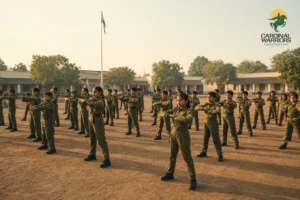
What Changes When a School Is Run by an Army Veteran
Homesickness in Boarding School: An Honest Look at Month One