AISSEE Class 6 Syllabus: Maths, GK, Language and Intelligence
The AISSEE Class 6 syllabus covers four subjects across 300 marks: Mathematics (150), General Knowledge (50), Language (50) and Intelligence (50), all tested through a single 2.5-hour objective paper. For a family in Nimora, Raipur, preparing a ten or eleven-year-old for Sainik School entry, that split matters more than any generalised “study everything” advice, because Maths alone decides half the score.
Key Takeaways
- Four subjects, 300 marks: Mathematics 150, Language 50, GK 50, Intelligence 50, all in one OMR-based paper.
- Maths is the deciding subject: at exactly half the total marks, a weak Maths score is nearly impossible to recover elsewhere.
- GK spans three areas: Science, Social Science and general/current awareness, drawn largely from Class 4 and 5 level NCERT content.
- AISSEE 2027 notification window: expected between September and October 2026, based on past release patterns, with the exam typically held in January.
- Intelligence cannot be crammed: pattern and series questions need weekly practice, not last-month revision.
AISSEE Class 6 Syllabus at a Glance
| Subject | Marks | Approx. Questions | Level Tested |
|---|---|---|---|
| Mathematics | 150 | 50 | Class 4-5 NCERT |
| General Knowledge | 50 | 25 | Science + Social Science + Current Affairs |
| Language (English/Hindi) | 50 | 25 | Comprehension, grammar, vocabulary |
| Intelligence | 50 | 25 | Pattern, series, classification |
| Total | 300 | 125 | 2.5 hours, single sitting |
AISSEE Class 6 Exam Pattern: Marks and Timing
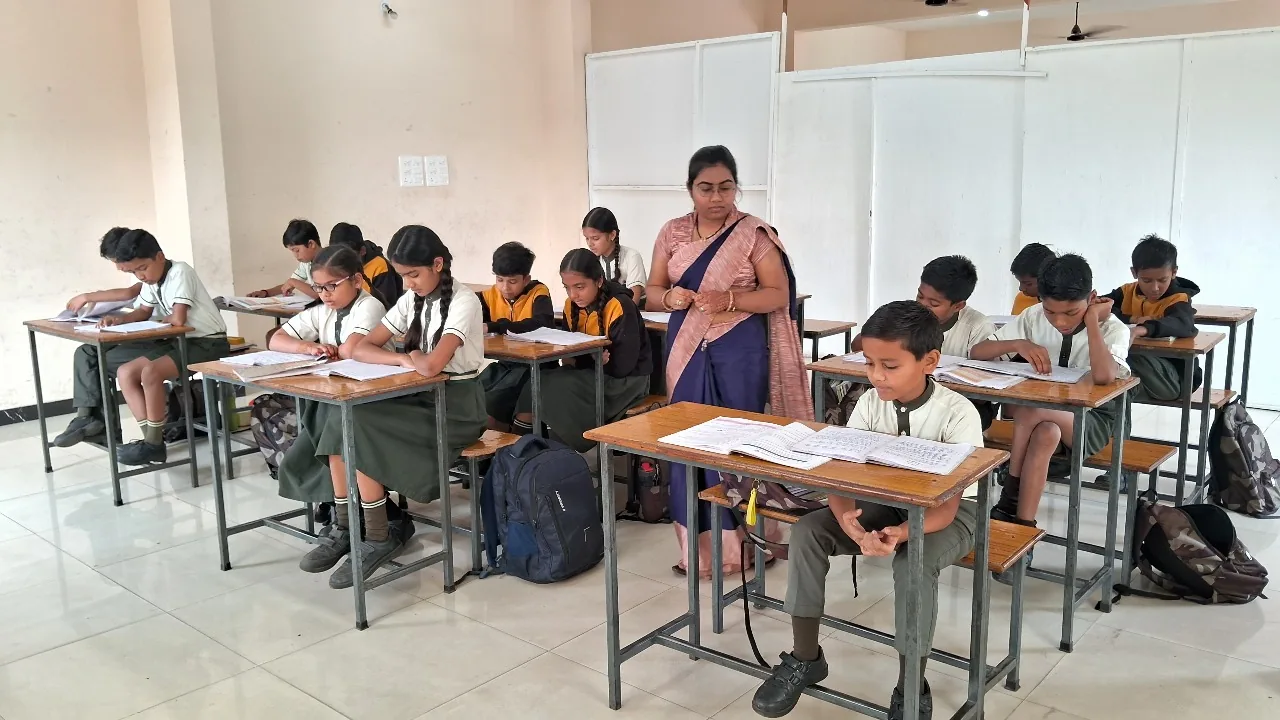
The All India Sainik Schools Entrance Examination for Class 6 is a paper-and-pencil test filled on an OMR sheet. Every question is objective, with four options and one correct answer. There is no negative marking at the Class 6 level, which is a relief for parents worried about a child guessing wrong and losing marks they already earned elsewhere.
Eligibility asks for a child born within the age band set for that admission cycle, generally 10 to 12 years as on the exam year, and currently studying in Class 5. Families in Chhattisgarh applying for a seat in a Sainik School anywhere in the country sit the same national paper, so a child from Raipur competes against applicants from every state, not just the local district.
Because the entire test runs in one 150-minute block, pacing across subjects matters. A child who spends 40 minutes stuck on three Maths sums has already cut into the time meant for GK and Intelligence. Timed mock practice, not just topic revision, is what closes this gap.
Mathematics Syllabus: Where Half the Marks Sit
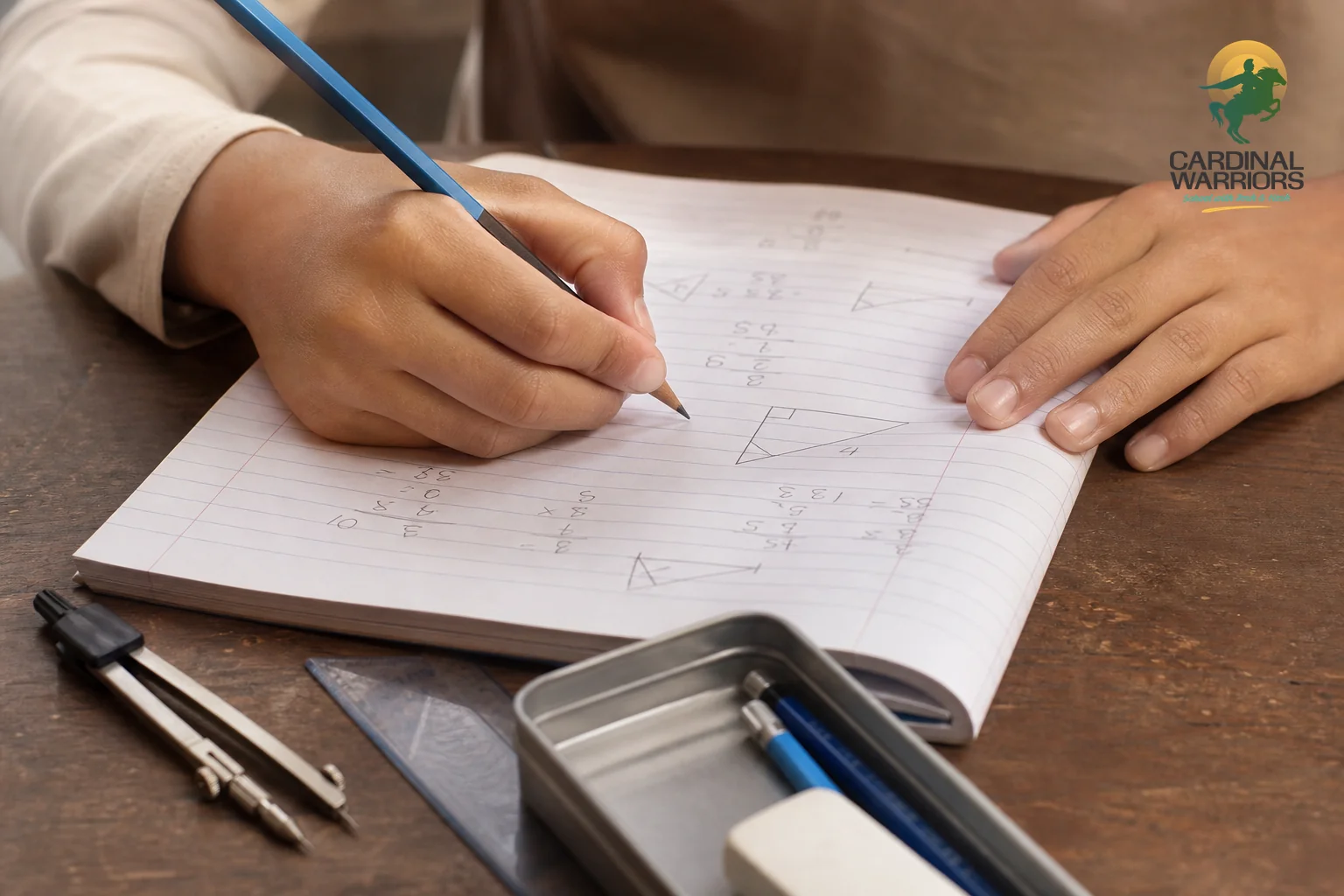
Mathematics for AISSEE Class 6 draws from Class 4 and 5 level topics rather than anything from Class 6 itself, since the exam is meant to test readiness for Class 6, not knowledge already gained there. The core areas are:
- Number system: place value, ordering, factors and multiples, HCF and LCM
- Fractions and decimals: comparison, addition, subtraction, simple conversions
- Basic arithmetic operations: multiplication, division, word problems involving all four operations
- Measurement: length, weight, capacity, time and simple unit conversions
- Geometry: shapes, lines, angles, perimeter and area of simple figures
- Money and profit-loss basics
- Data handling: reading simple bar graphs and tables
Because Mathematics alone is worth as much as GK, Language and Intelligence put together, a child cannot afford to treat it as one subject among four. Most Sainik School coaching plans allocate close to half of total study hours to Maths for exactly this reason. If your child struggles with speed on basic calculations, that gap widens under exam-hall time pressure, so daily timed practice sets matter more here than in any other section.
General Knowledge Syllabus: Science and Social Science Combined
The GK paper blends three strands into one section. Science questions cover living and non-living things, plants, animals, the human body, and basic environmental concepts, all pitched at a Class 4-5 comprehension level. Social Science brings in early history (ancient India, important dynasties, freedom movement basics), geography (states, capitals, rivers, mountains) and civics (local government, fundamental duties in simple terms).
A third, less predictable strand is general and current awareness: national symbols, important days, recent events in sports and government schemes that a Class 5 student would reasonably know from school and news exposure. This part rewards a habit of reading rather than a fixed chapter list, so short daily newspaper summaries or a children’s current affairs digest work better than trying to memorise a syllabus PDF.
Parents comparing this to entrance patterns used elsewhere in the defence education pipeline will notice a similar structure repeats later, in a more advanced form, in the NDA written exam pattern, where General Ability Test questions again mix science, geography and current affairs.
Language Syllabus: English and Hindi Comprehension
The Language section tests comprehension passages, basic grammar (tenses, articles, prepositions, sentence correction) and vocabulary building through synonyms, antonyms and one-word substitutions. Both English and Hindi appear, though the exact split can vary slightly by exam cycle, so a child weak in either language ends up losing marks across the paper, not just in one section.
Reading unfamiliar passages under time pressure is the actual skill being tested, not just grammar rules learned by rote. A child who reads short stories or age-appropriate articles daily, in both languages, builds this comprehension speed naturally, far more effectively than grammar worksheets alone.
Intelligence Test: The Section Parents Overlook
Intelligence questions include number and letter series, pattern completion, classification (finding the odd one out), coding-decoding and simple analogies. This section carries the same 50 marks as GK and Language, yet it is the one most families skip until the final weeks, assuming it needs no preparation because “it’s just logic.”
That assumption costs marks. A child who has never seen a coding-decoding puzzle before exam day loses time figuring out the question format itself, not just solving it. Weekly practice with sample puzzle sets, even 15-20 minutes a day, builds the pattern recognition speed this section actually rewards.
How to Build a Study Plan Around This Syllabus in Nimora, Raipur
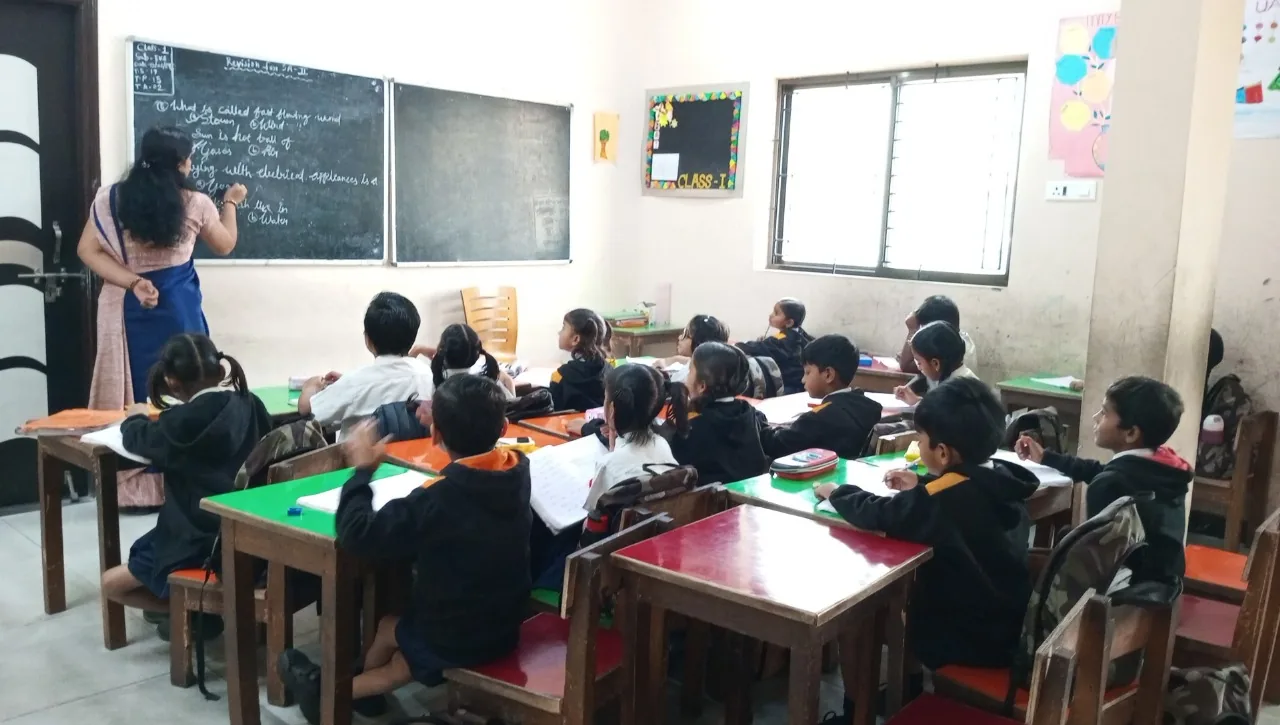
Families across Raipur and wider Chhattisgarh preparing a Class 5 student for Sainik School entry through AISSEE face a specific challenge: regular school continues on its own CBSE or state board schedule, so AISSEE preparation has to fit around it, not replace it. A workable daily plan usually looks like 45 minutes on Maths, 20 minutes on GK, 20 minutes on Language and 15 minutes on Intelligence, six days a week, building up to full-length timed mocks in the final two months before the exam.
This is precisely the gap that integrated coaching inside a residential school is designed to close, since the daily timetable already accounts for AISSEE preparation blocks instead of forcing a tired child into a separate weekend coaching class after a full school day. At Cardinal Warriors in Nimora (Mana, Dhamtari Road), Raipur, this preparation runs alongside the CBSE curriculum rather than competing against it, with subject teachers tracking each child’s weak areas across the four AISSEE sections through the year.
Timing this preparation against the exam calendar also matters. Based on how past cycles have run, the AISSEE 2027 notification is expected to open sometime between September and October 2026, with the written exam itself typically held the following January. Waiting for that official notice before starting any syllabus work leaves barely three to four months to prepare, which is tight for a child who has never attempted a full-length AISSEE paper. Our detailed breakdown of AISSEE 2027 notification dates and how to start preparing in August covers this timeline in more depth. Families also weighing Class 6 against a later Class 9 entry point can compare both routes in Sainik School Class 6 or Class 9 entry: which should you target?
AISSEE Class 6 vs NDA Written Exam: How the Syllabus Differs
Parents sometimes assume the AISSEE syllabus is a smaller version of what their child will eventually face at the NDA level. The two exams sit at very different stages of a defence career pathway, and the table below shows how far apart they actually are.
| Feature | AISSEE Class 6 | NDA Written Exam |
|---|---|---|
| Target age group | 10-12 years | 16.5-19.5 years |
| Total marks | 300 | 900 |
| Subjects | Maths, GK, Language, Intelligence | Mathematics, General Ability Test |
| Negative marking | None | Yes |
| Next stage | Sainik School Class 6 admission | SSB interview |
| Purpose | Entry into military-style schooling | Entry into National Defence Academy |
A child who clears AISSEE Class 6 and joins a Sainik School or a private military-discipline school gets years of structured runway before facing the NDA paper, which our guide on the NDA written exam pattern for 2026 breaks down in full. The NDA 2 2026 written exam is scheduled for 13 September 2026, a useful marker for older siblings or for planning how many years of preparation a Class 6 entrant actually has ahead before reaching that stage themselves.
Frequently Asked Questions
Is there negative marking in the AISSEE Class 6 exam?
No. The AISSEE Class 6 paper does not deduct marks for wrong answers, which means a child should attempt every question rather than leaving doubtful ones blank.
Which books should a child use for AISSEE Class 6 preparation?
NCERT textbooks for Class 4 and 5 in Maths, EVS and Social Studies form the base, supplemented by any AISSEE-specific practice book that includes past-pattern sample papers and Intelligence test puzzles.
How many months of preparation are enough?
Six to eight months of steady, daily practice gives most Class 5 students enough time to cover all four sections and attempt several full-length mock papers before the actual exam.
Does the AISSEE Class 6 syllabus go beyond Class 5 NCERT topics?
Generally no. The syllabus is designed to test readiness for Class 6, so questions stay within Class 4-5 level difficulty, though current affairs and general awareness questions can draw on recent events outside any textbook.
If your child is entering the AISSEE Class 6 preparation window this year, a structured daily routine matters as much as the syllabus itself. At Cardinal Warriors in Nimora, Raipur, Maths, GK, Language and Intelligence practice run inside the regular school day, alongside CBSE academics and daily physical training. Read more about how this integrated preparation works, or explore more with us before the AISSEE 2027 notification opens. To discuss your child’s specific preparation timeline, contact us directly, or follow updates on Facebook and Instagram.

You may also like
What Changes When a School Is Run by an Army Veteran
Homesickness in Boarding School: An Honest Look at Month One