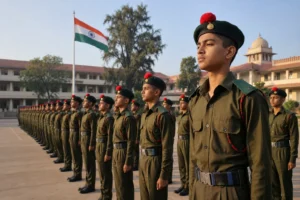

Military School vs Sainik School: Admissions Compared
A Sainik School seat opens up for barely a few dozen children per school each year, while lakhs of applicants sit the AISSEE exam hoping for one of them. That single fact is why so many families end up comparing military school vs Sainik School admission options before their child even finishes Class 5. The two paths look similar from the outside, both promise discipline and a defence-ready future, but they differ sharply in eligibility, cost, coaching depth and how quickly a family can actually get a child admitted.
Key Takeaways
- Exam bottleneck: Sainik Schools admit mainly through the AISSEE exam at Class 6 and Class 9, held once a year, with a narrow application window and heavy competition for every seat.
- Rolling admission advantage: Private residential military schools such as Cardinal Warriors accept students from pre-primary through higher secondary all year, so a missed exam cycle doesn’t mean a missed year.
- Seat scarcity is the real constraint: Sainik Schools admit a fixed, small cohort per entry class each year, and demand from across the country runs far ahead of it.
- Coaching breadth: Sainik Schools focus almost entirely on NDA and defence entry, while private military schools often bundle NDA, RIMC, RMS and SSB prep with NEET, JEE and CA Foundation coaching for students who may not choose the armed forces.
- Decision, not default: Choosing between sainik school vs military school admission routes should depend on your child’s age, exam readiness and whether the family wants a defence-only track or a broader career runway.
Quick Comparison: Military School vs Sainik School
| Factor | Sainik School (government) | Private Military School (e.g., Cardinal Warriors) |
|---|---|---|
| Admission route | AISSEE national exam, once a year | Rolling admission with interview and academic assessment |
| Entry classes | Mainly Class 6 and Class 9 | Pre-primary to Class 12, any academic year |
| Seat availability | Roughly 80-100 seats per school per year, high competition | Broader intake capacity, seats open across grades |
| Board | CBSE | CBSE (Cardinal Warriors: School Code 16180) |
| Coaching focus | NDA-oriented, defence entrance preparation | NDA, RIMC, RMS, SSB, plus NEET, JEE and CA Foundation |
| Co-education | Most Sainik Schools now admit girls in limited numbers, historically boys-only | Co-educational campus by design |
| Fee structure | Government-subsidised, lower fees but limited seats | Private fee structure covering boarding, coaching and training gear; ask the school for current figures |
| Career outcome | Primarily defence services pathway | Defence, medical, engineering or commerce pathways |
Why Parents Are Weighing This Choice Now
Families researching defence-oriented education quickly run into a wall. Sainik Schools are few, their annual intake per entry class is small, and demand runs far ahead of supply in every state. Parents in Raipur, Bilaspur or Durg often discover this the hard way, filling out the AISSEE form only to learn their child is competing within a limited home-state allocation and, in the general merit list, against candidates nationwide.
That scarcity is pushing more families to look at private residential military schools outside their home state as a serious alternative. Boarding options with structured military training, like Cardinal Warriors in Raipur, Chhattisgarh, accept students from anywhere in India and don’t tie admission to a single make-or-break exam date. For a parent whose child turns 11 mid-year or who discovers the discipline gap only in Class 4, that flexibility matters more than proximity to home.
There’s also a practical, everyday concern driving this search: working parents juggling office hours with a child’s homework, screen time and bedtime routine. A residential setup, whether Sainik School or private military school, removes that daily supervision burden. But only one of the two options lets a family act on that need immediately rather than waiting for the next AISSEE cycle. For a deeper look at what a disciplined boarding environment should actually deliver, see what to look for in a disciplined boarding school.
1. Admission Process and Eligibility
Sainik Schools, run under the Sainik Schools Society and the Ministry of Defence framework, admit new students mainly at Class 6 (age 10-11) and Class 9 (age 13-14) through the All India Sainik Schools Entrance Examination (AISSEE). The exam is conducted once a year, usually in December or January, and the application window is short. Miss it, and a family waits another twelve months. Seats are further split by state domicile quotas, so an applicant competes within a fixed home-state allocation as well as the open merit list.
Private military schools work differently. Cardinal Warriors, for example, runs admissions across the academic year and accepts students from pre-primary right through to higher secondary, not just at two entry points. The process typically involves an academic readiness check, a personal interview with parents, and in some cases a brief assessment of the child’s fitness and temperament. There’s no single national exam standing between a family and a seat, which matters if your child is switching schools mid-year or if you only start researching options after the AISSEE window has already closed.
That said, Cardinal Warriors doesn’t ignore the defence entrance path. Its coaching wing prepares students for AISSEE, RIMC and RMS entrance exams directly, so a child who wants a shot at a Sainik School seat later, or at the Rashtriya Indian Military College, still gets structured exam preparation without waiting for that to become the only route in. Families exploring this dual approach can compare specific programs through the best RIMC and RMS prep schools in Chhattisgarh.
- Age flexibility: Private military schools often start military-style discipline as early as pre-primary, well before AISSEE eligibility begins.
- No domicile penalty: Because private schools aren’t bound by state quota systems, a family isn’t disadvantaged the way they might be applying to an out-of-state Sainik School.
- Interview over lottery: Assessment-based admission gives parents more clarity on why a seat was or wasn’t offered, compared to a single exam rank.
2. Fees and Value for Money
Sainik School fees are subsidised, which keeps the headline number attractive. But that lower fee has to be weighed against the odds of actually getting a seat, plus the cost of coaching most families still pay separately to prepare their child for the AISSEE exam itself. Many parents spend two to three years and real money on coaching centers before their child even sits the entrance test, with no guarantee of a seat at the end.
Private military school fees are structured differently. They typically cover boarding, meals, uniforms, training equipment, and bundled coaching for competitive exams, all inside one annual fee rather than a patchwork of tuition, hostel and separate coaching payments. Cardinal Warriors, for instance, folds NDA, RIMC, RMS, NEET, JEE and CA Foundation coaching into its academic structure rather than sending students out to a third-party coaching center after school hours. Before comparing headline numbers between a Sainik School and a private option, ask three questions:
- Does the fee include boarding, or is that billed separately?
- Is competitive exam coaching included, or will you need to pay a coaching institute on top?
- What’s the realistic probability of admission this year, and what’s the cost of the coaching you’ll need while you wait?
For a transparent, line-by-line look at what a private military school actually charges and why, read CBSE military boarding school fees: full breakdown and military school fees in India: what do they cost. Both break down tuition, boarding and training charges so you aren’t comparing a partial Sainik School number against a full private school figure. For exact current figures, it’s best to contact the school directly rather than rely on outdated brochures.
3. Curriculum, Coaching and Career Pathways
Both models follow the CBSE curriculum, so academically the syllabus won’t differ much on paper. The real difference shows up in what happens after 3 PM. Sainik Schools are built almost entirely around producing NDA-ready candidates for the armed forces. That’s a clear, focused goal, and it works well for families certain their child wants a military career.

Cardinal Warriors takes a broader view through its METTALS framework, short for Military Education, Tactical Training, Academic Learning and Sports. Alongside NDA and SSB interview preparation, the school runs integrated coaching for NEET, IIT/JEE and CA Foundation, taught by experienced educators and retired military personnel on the same campus. That matters for a family whose 12-year-old currently wants the army but might, by Class 11, lean toward medicine or engineering instead. Rather than switching schools or adding a separate coaching center, the coaching pathway shifts within the same institution.
Psychometric testing and personalised career counselling add another layer most Sainik Schools don’t formally offer. Instead of assuming every student wants a defence career, Cardinal Warriors assesses aptitude and interest over time, then guides the coaching track accordingly. If you’re trying to work out which coaching combination actually fits your child’s goals, how to choose the right military school for your child walks through the practical questions to ask during a campus visit. Parents specifically weighing SSB readiness can also check the best SSB interview coaching schools in Chhattisgarh for how that preparation is structured.
- Single-track focus: Sainik Schools suit a child with a firm, early decision to pursue the armed forces.
- Multi-track flexibility: Private military schools suit a child whose career interest may still shift between defence, medicine, engineering or commerce.
- On-campus coaching: Bundled coaching removes the after-school commute to a separate tuition center, protecting sleep and rest time.
4. Campus Life, Discipline and Holistic Development
Sainik School campuses run on a well-established routine: early morning parade, physical training, structured study hours and hostel discipline. It’s a proven model, and it produces genuinely disciplined young cadets, historically almost entirely boys, given most Sainik Schools have only recently begun opening limited seats to girls.
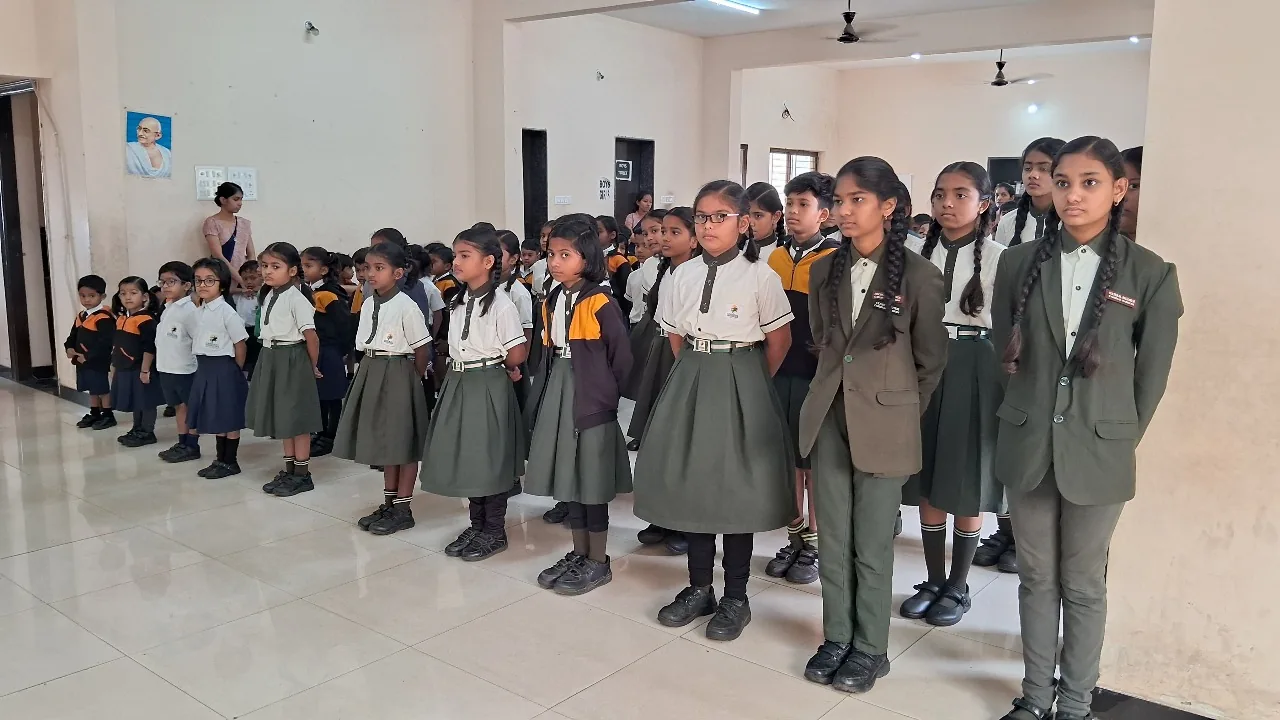
Cardinal Warriors runs a comparable daily rhythm, a mandatory 30-minute morning PT and yoga session, tactical training drills, obstacle courses and squad-post exercises, but layers it with a wider sports program: football, hockey, cricket, basketball, boxing, horse riding, dance and art. A values framework guides behaviour expectations across the campus, aiming to build what the school calls Officer Like Qualities without losing sight of a child’s individual interests outside the parade ground.
One structural difference stands out for families with daughters: Cardinal Warriors is co-educational from the ground up, while most Sainik Schools remain predominantly boys-focused, with girls admitted in far smaller numbers under newer national directives. A family wanting the same military discipline and coaching structure for a daughter has far more room to manoeuvre with a private co-ed institution.
Both models also address a concern many parents raise independently, screen addiction and shrinking attention spans. A structured, supervised residential routine, whether at a Sainik School or a private military school, removes unsupervised phone access and replaces idle hours with physical training, prep and reading. If you want the evidence behind that claim, does military school improve discipline and focus looks at what actually changes in a child’s routine and attention span.
5. Which One Fits Your Child? A Decision Checklist
Neither option is universally better. The right fit depends on your child’s age, temperament and how clear the career goal already is. Run through these questions before you commit to an admission process:
- Is your child already past Class 9? If so, a Sainik School’s main entry points have likely closed; a private military school with rolling admission may be the only residential option left.
- Is the career goal locked to defence services only? If yes, a Sainik School’s focused NDA pipeline is a strong, well-tested choice, provided you clear the seat competition.
- Could your child’s interest shift toward NEET, JEE or commerce? A private military school with bundled multi-stream coaching avoids a mid-way school change.
- Do you have a daughter who wants this environment? Co-educational private military schools currently offer more consistent access than most Sainik Schools.
- Can you wait a full year for the next AISSEE cycle? If your child is ready now, a rolling-admission school avoids a lost academic year.
Once you’ve answered these, visit campuses in person rather than relying only on a prospectus. Ask to see a normal Tuesday, not just a curated open day. Speak with current parents if possible, and check how coaching batches are actually timetabled around academics. For a broader checklist covering both models, Sainik School vs military school in Chhattisgarh and military school vs Doon School: which builds discipline offer useful side comparisons for families still weighing regional versus national options. Parents wanting a broader primer on the sector can also start with what is military school education in India.
Frequently Asked Questions
Can a student from any district apply to a Sainik School?
Yes. Sainik Schools accept applications from across their home state and, through the AISSEE general merit list, from other states too. However, state domicile quotas mean the seats reserved for home-state residents are limited, and competition remains intense every year. You can check current details on the Sainik School Society’s admission portal.
Can a student join a private military school in another state?
Yes. Private residential military schools, including Cardinal Warriors in Raipur, Chhattisgarh, accept students from any state. Since admission isn’t tied to state quotas or a single national exam, this is often a faster route for families who can’t secure a Sainik School seat.
Which offers stronger NDA preparation, Sainik School or a private military school?
Sainik Schools have a long, established record of preparing cadets for NDA entry, since that’s their primary purpose. Private military schools with dedicated NDA coaching wings, retired military faculty and SSB interview preparation, like Cardinal Warriors, can offer comparable structured preparation, often alongside additional coaching streams a Sainik School doesn’t provide.
Do private military schools admit girls, unlike most Sainik Schools?
Most private military schools, including Cardinal Warriors, are co-educational by design and admit girls at every grade level. Most Sainik Schools historically admitted only boys and have only recently begun opening a small number of seats to girls under newer national policy.
What is the minimum age to start at a military-discipline school?
Sainik Schools generally start admission at Class 6, around age 10-11. Private military schools like Cardinal Warriors accept children from the pre-primary level, allowing routine and discipline to build gradually from a much younger age.
If you’re still weighing sainik school vs military school admission routes, the most useful next step isn’t another brochure comparison, it’s a campus visit. See the routine, meet the faculty, and ask direct questions about coaching batches, boarding conditions and how career counselling actually works day to day. Read more about Cardinal Warriors’ approach to see how the METTALS framework and integrated NDA, NEET, JEE and CA Foundation coaching come together on one campus, or explore more with us to understand admission timelines that don’t depend on a single national exam date. For direct questions about eligibility, fees or a campus visit, you can contact us to speak with the admissions team. You can also follow ongoing campus updates and cadet activities on Facebook, Instagram and Twitter/X before you make your final decision.

You may also like
Military School vs Regular School in Chhattisgarh