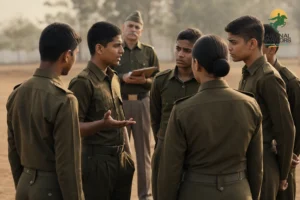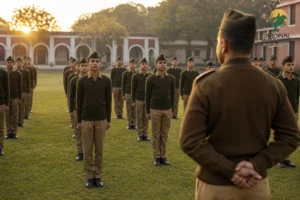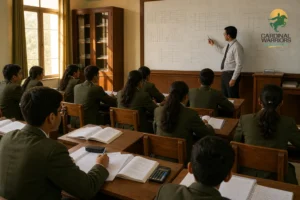

Best AISSEE Preparation School in Chhattisgarh 2026
A father in Bilaspur once drove three hours to a coaching center on a Sunday, only to watch his son sit through a two-hour AISSEE class after an already exhausting school week. That single Sunday convinced him weekend tuition alone would not get his son into a Sainik School. Families searching for a genuine AISSEE preparation school in Chhattisgarh are increasingly finding that the answer isn’t another evening batch, but a structured, residential CBSE-military school like Cardinal Warriors in Raipur, where exam coaching, physical training and daily discipline run together, not in separate, disconnected time slots.
Key Takeaways
- AISSEE has two entry points: Class 6 (age 10-12) and Class 9 (age 13-15), each testing Maths, Language, Intelligence and General Knowledge under strict timing.
- Weekend coaching centers rarely include physical training, yet the Sainik School selection process and later life at these schools demand real physical readiness.
- A full-time integrated school builds habit through repetition — daily PT, structured study blocks and mock tests reinforce each other instead of competing for a tired child’s evening hours.
- Cardinal Warriors ladders students beyond AISSEE into RIMC, RMS and eventually NDA preparation, so the foundation built in Class 6 or 9 keeps paying off through Class 12.
- Residential schooling solves the supervision gap for working parents and removes daily mobile-phone distraction that quietly derails exam preparation at home.
At a Glance: AISSEE Preparation Snapshot
| Aspect | Details |
|---|---|
| Entry classes | Class 6 and Class 9 |
| Typical age limits | 10-12 years (Class 6), 13-15 years (Class 9) |
| Exam subjects | Mathematics, Language (English/Hindi), Intelligence, General Knowledge/General Science |
| Selection stages | Written exam, document verification, medical fitness check |
| Where Cardinal Warriors is based | Nimora, Mana-Dhamtari Road, Raipur, Chhattisgarh |
| School board | CBSE-affiliated, School Code 16180 |
| Coaching programs offered alongside AISSEE | RIMC, RMS, NDA, SSB interview prep, NEET, IIT/JEE, CA Foundation |
| Campus size | 5-acre residential campus with boarding, labs, library and sports facilities |
What Is the AISSEE and Why Chhattisgarh Parents Are Looking Beyond Local Coaching
The All India Sainik Schools Entrance Exam, or AISSEE, is the national test that decides admission into Sainik Schools and the newer category of Sainik Schools set up in partnership with private trusts across India, a system administered under the Ministry of Education. Chhattisgarh has long produced strong defence aspirants, from Raipur to Bilaspur to Durg, but the state’s coaching landscape is still mostly built around evening tuition centers that drill maths and reasoning without touching the physical or psychological preparation Sainik Schools actually look for.
That gap matters more than most parents realize. A written exam is only the first filter. Selected candidates still face document verification and a medical fitness test, and once inside a Sainik School, daily life runs on physical training, drill and discipline from day one. A student who has only ever practiced multiple-choice questions in a coaching hall walks in unprepared for that shift. This is precisely why an increasing number of Chhattisgarh families are enrolling children in military school education in India that combines full CBSE academics with daily physical and character training, rather than treating AISSEE prep as a side activity bolted onto a regular school routine.
1. Understand the AISSEE Exam Pattern and Eligibility Before You Choose a School
Before comparing schools, parents need a clear picture of what the exam actually demands. AISSEE Class 6 entry is generally open to boys and girls aged roughly 10 to 12 years, while Class 9 lateral entry suits students aged 13 to 15. The exam paper is divided into sections covering Mathematics, Language, Intelligence and General Knowledge (with General Science added at the Class 9 level), each carrying different weightage and strict time limits that catch unprepared students off guard.
Beyond the paper, candidates who clear the written cut-off go through document verification and a medical examination that checks vision, hearing, height-weight ratios and overall fitness. Reservation categories exist for defence personnel’s wards, and for girls, since Sainik Schools have expanded co-educational intake in recent years, a shift documented by the National Testing Agency’s AISSEE notifications. A school that only teaches to the written paper leaves families exposed on the medical and readiness side, which is where an integrated approach starts to show its value.
Parents comparing pathways often ask how AISSEE preparation differs from RIMC and RMS preparation, since all three lead toward a defence-oriented education but test students at different ages with different formats. Getting this distinction right early saves years of misdirected coaching.
2. Why a Full-Time Integrated School Beats Weekend AISSEE Coaching
Most AISSEE coaching available locally runs as an add-on: two or three evenings a week, sometimes a weekend batch, layered on top of an already full school day. Children arrive tired, sit through another hour of instruction, and are expected to retain reasoning and maths concepts that require calm, alert minds. Working parents often cannot supervise homework or revision on top of their own schedules, and that supervision gap is exactly where preparation quietly falls apart.
A full-time integrated school removes that conflict entirely. Instead of competing for a child’s limited evening energy, AISSEE preparation becomes part of the daily timetable, alongside physical training, meals and rest, all under one roof. Repetition, not cramming, is what actually builds exam readiness, and repetition only works when a child’s whole day supports it instead of fighting against it. This structural difference is also why so many parents researching how to choose the right military school for their child eventually move away from local tuition-only models altogether.
There’s also the distraction problem few coaching centers address directly. A child studying at home in the evening usually has a phone within reach. At a residential school built around structured routine, that constant pull toward screens and social media simply isn’t part of the day, which lets focus rebuild the way it should.
3. What an Integrated Military-Discipline School Adds to AISSEE Coaching
Cardinal Warriors runs its programs through what it calls the METTALS approach: Military Education, Tactical Training, Academic Learning and Sports, woven into a single daily rhythm rather than kept in separate silos. For an AISSEE aspirant, that means mornings often start with 30 minutes of PT or yoga, followed by CBSE academic blocks, then dedicated coaching sessions for the entrance exam’s specific subjects, and time on obstacle courses or squad drills that mirror the physical culture of a Sainik School.
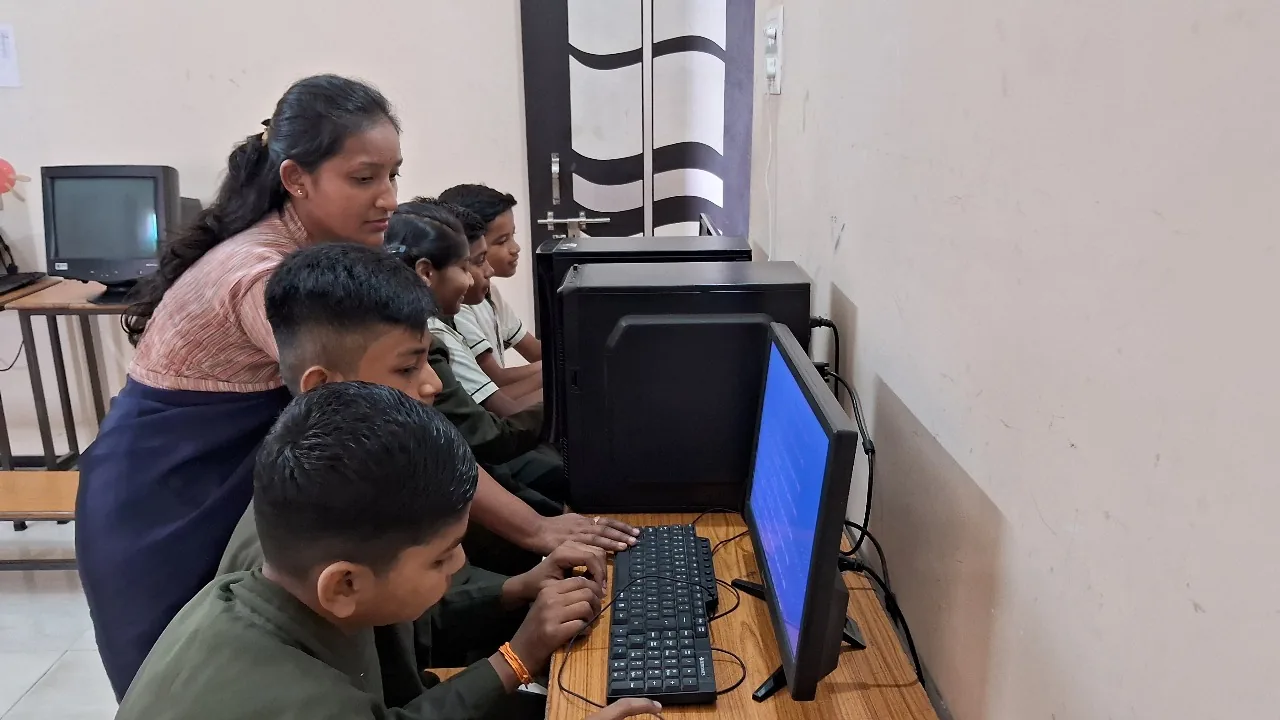
Faculty at the school include experienced educators alongside retired military personnel, who bring a lived understanding of what selection boards and Sainik School life actually expect from a young cadet. That mentorship extends into psychometric testing and personalised career counseling, helping identify whether a child’s aptitude and temperament suit Sainik School life, or whether a related path like RMS or NDA prep might fit better a few years down the line.
An underlying values framework runs beneath all of this, aiming to build what the institution calls Officer Like Qualities, essentially the blend of leadership, integrity and composure that SSB interviews and Sainik School interviews both look for. Parents weighing whether this kind of environment genuinely changes outcomes often start by reading about whether military school improves discipline and focus, since AISSEE success depends as much on temperament as on test scores.
4. The Coaching Process: From Enrollment to Exam Day
A structured AISSEE preparation program typically begins with a diagnostic assessment when a student joins, mapping current strengths in maths, language and reasoning against the exam’s actual difficulty level. From there, subject teachers build a foundation plan, often working backward from the exam date rather than a generic syllabus pace.
- Foundation building: Core concepts in Mathematics, English/Hindi comprehension, Intelligence (pattern and logic questions), and General Knowledge are taught in graded stages matched to Class 6 or Class 9 entry requirements.
- Mock tests and timing drills: Regular full-length mock exams under timed conditions train students to manage the exam’s strict pace, not just know the content.
- Physical and medical readiness: Ongoing PT, sports and health monitoring keep a child within the fitness range Sainik Schools expect at the medical stage.
- Interview and confidence building: Even before AISSEE candidates reach any interview stage, schools built around SSB-style mentoring introduce group discussions, public speaking and situational tasks early, so composure under pressure becomes a habit rather than a last-minute skill.
Families who want a closer look at how interview readiness is built into daily school life can review this guide on Sainik School versus military school preparation in Chhattisgarh, which breaks down how the two systems complement rather than compete with each other.
5. AISSEE vs RIMC/RMS vs NDA Preparation: Knowing the Difference
Parents new to defence-track education often mix up AISSEE, RIMC, RMS and NDA, assuming any one coaching program covers all four. Each targets a different age group and a different gateway into the armed forces, and preparation strategies shift accordingly.
| Exam | Entry Class/Age | Core Focus | Leads Toward |
|---|---|---|---|
| AISSEE | Class 6 (age 10-12) and Class 9 (age 13-15) | Maths, Language, Intelligence, GK/GS | Sainik School admission |
| RIMC | Class 8 entry, around age 11.5-13 | English, Maths, GK plus interview and psychological screening | Rashtriya Indian Military College, Dehradun |
| RMS | Class 6 and Class 9 | Similar academic pattern with strong physical fitness weightage | Rashtriya Military Schools |
| NDA | After Class 12, age 16.5-19.5 | Maths, English, GK plus SSB interview and physical tests | National Defence Academy |
What makes an integrated school valuable is the ladder effect. A student who clears AISSEE and joins a Sainik School has one path forward, but a student who prepares at a school offering continuous coaching can pivot toward RMS, RIMC, or later NDA and SSB preparation without starting from zero each time. Cardinal Warriors designs its NDA coaching track to pick up exactly where AISSEE-level discipline and academic foundation leave off, so years of preparation compound instead of resetting.
6. What Families Should Expect From Residential Life
Moving a child from a day school into full-time residential schooling is a real decision, not a small one, and it deserves a clear picture of daily life rather than just admission brochures. At Cardinal Warriors, boarding is built around a 5-acre campus with smart classrooms, science and computer labs, a library holding more than 3,000 books, and full sports facilities, all designed so a child’s day has structure from morning PT through evening study hours.
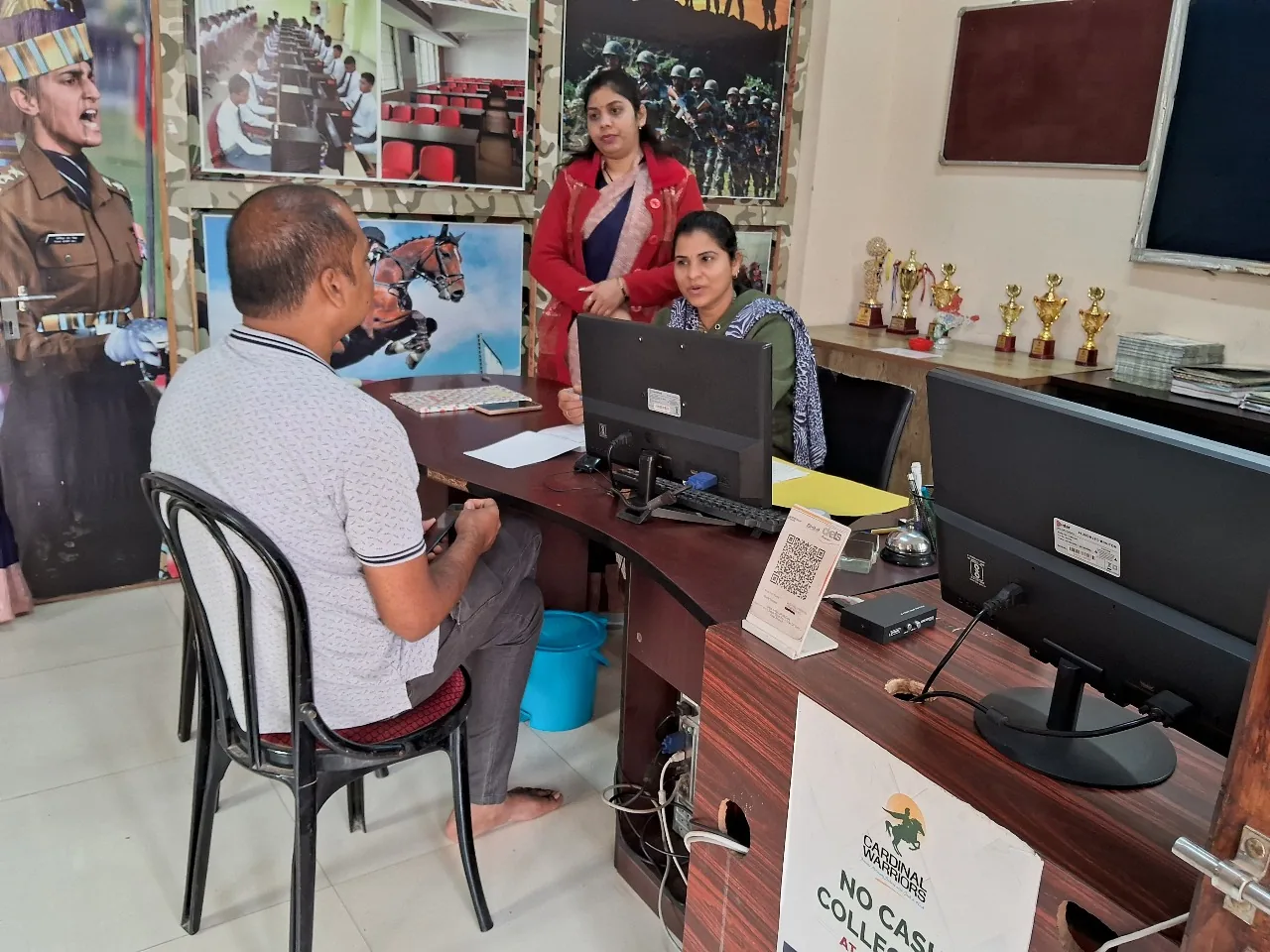
Distance is a legitimate concern for parents living outside Raipur, and any residential school worth choosing should have a clear communication policy: scheduled calls, defined visiting days, and transparent updates on academic and physical progress. Safety infrastructure, medical readiness on campus, and a genuine, not just promotional, focus on holistic development are what actually separate a good residential option from a risky one. Parents researching this decision in depth should read what to look for in a disciplined boarding school before finalizing any admission, regardless of which state they’re applying from.
It also helps to understand how this compares with more traditional elite boarding institutions. Families weighing a military-focused residential school against a legacy boarding school model can review this comparison of military school versus Doon School for discipline to see where the priorities diverge.
7. Fees, Admission Process and What to Budget
Budgeting for a residential AISSEE preparation school involves more line items than a local coaching center, since tuition, boarding, meals, uniforms and training equipment are typically bundled together rather than billed separately. Admission usually opens well ahead of the AISSEE notification cycle, since schools need time to run diagnostic assessments and build a personalised study plan before the exam window arrives.
Cardinal Warriors follows an online-only fee collection policy, with no cash accepted on campus, which gives parents a transparent, traceable payment trail rather than informal cash arrangements common at smaller coaching setups. Documents typically required include birth certificate, previous school records, address proof and medical certificates, similar to what AISSEE itself will later require at the verification stage.
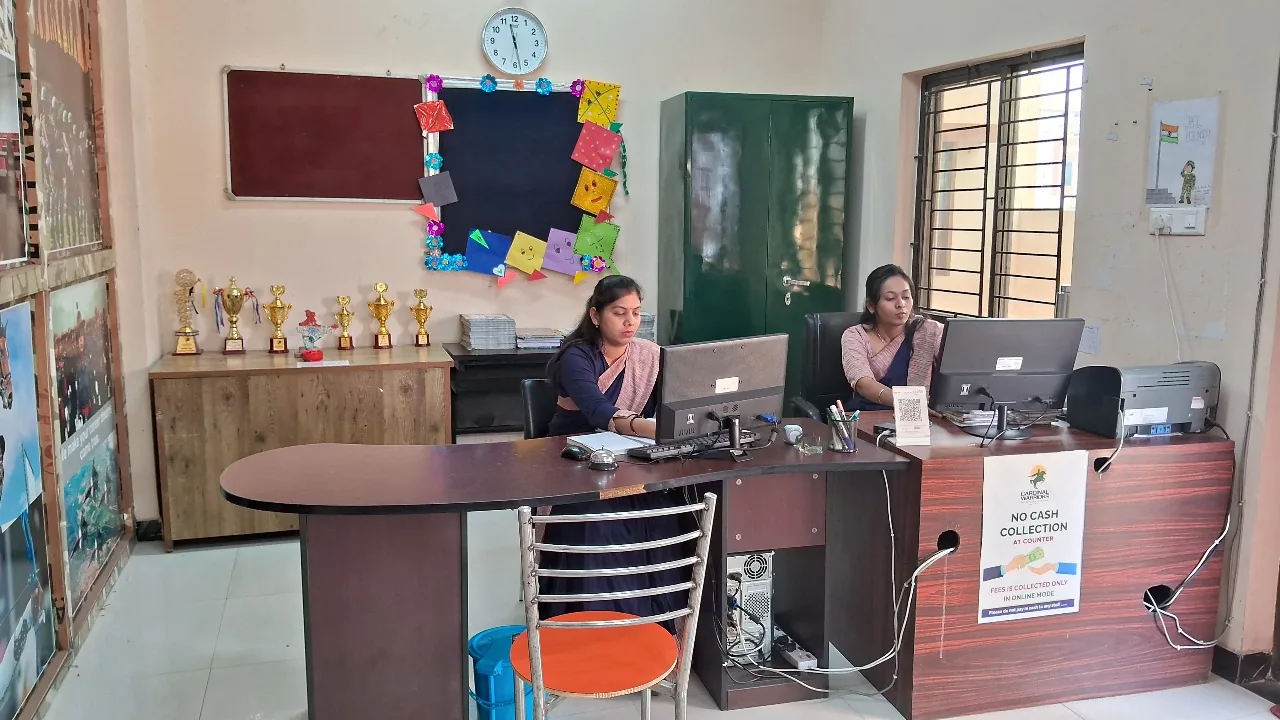
Because fee structures vary by class, boarding type and program combination, families comparing costs across residential military schools should review this detailed CBSE military boarding school fee breakdown or the broader guide to military school fees in India before applying, so there are no surprises once admission is confirmed. For exact figures for the current academic year, it’s best to contact the school directly.
8. Choosing the Right AISSEE Preparation School: A Checklist for Parents
Not every school claiming AISSEE coaching delivers the same depth of preparation. Parents evaluating options, whether a local tuition centre or a residential school, should look for these markers before committing:
- Faculty with real defence or Sainik School background: Retired military personnel bring insight no textbook can replicate, especially around physical standards and interview expectations.
- Daily physical training infrastructure: Obstacle courses, drill grounds and sports facilities, not just a classroom with extra maths worksheets.
- Transparent results and process: A school should be able to explain its coaching methodology clearly, not just cite vague success claims.
- Medical and safety readiness: On-campus medical support matters for both AISSEE’s own medical screening stage and everyday residential safety.
- A character-building framework, not just exam drilling: Programs built around values, leadership and discipline prepare a child for life inside a Sainik School, not just the entrance test.
- Clear fee transparency: Written, itemized fee structures with digital payment options, avoiding informal cash-based arrangements.
Parents who want a structured way to weigh these factors against their specific priorities can use this detailed guide on how to choose a military school for your child as a working checklist during campus visits and admission interviews.
Frequently Asked Questions
Can a student from outside Raipur join a residential school for AISSEE preparation?
Yes. Residential CBSE-military schools like Cardinal Warriors accept students from across Chhattisgarh and the rest of India, and boarding facilities are designed specifically for families living away from Raipur who want full-time, supervised preparation rather than local weekend coaching alone.
What age should my child start preparing for AISSEE?
Preparation ideally starts one to two years before the intended entry class, so a child aiming for Class 6 entry benefits from starting around Class 4, while a Class 9 aspirant should begin foundation work by Class 7. Earlier exposure to structured routine and physical training also builds the stamina Sainik School life demands later.
Is AISSEE preparation different from RIMC, RMS or NDA coaching?
Yes, each exam targets a different age group and tests slightly different skills, though all reward the same underlying discipline and academic foundation. An integrated school lets a student’s AISSEE-stage preparation feed directly into RIMC, RMS or later NDA coaching instead of starting over.
How much physical training is actually involved at this stage?
Daily physical training, typically including 30 minutes of PT or yoga plus structured sports and drill sessions, runs alongside academics from the day a student enrolls, not just in the weeks before the exam or medical screening.
What happens if my child doesn’t clear AISSEE on the first attempt?
Because AISSEE has both Class 6 and Class 9 entry points, a student who doesn’t clear the exam at one stage still has a second opportunity later. Continuing at an integrated school in the meantime means the academic and physical foundation keeps strengthening rather than lapsing between attempts.
Take the Next Step Toward a Structured Defence-Track Education
Choosing the right preparation environment often matters more than any single coaching batch, because AISSEE rewards consistency, discipline and physical readiness built over months, not crammed in the final weeks. For families exploring a genuine AISSEE preparation school option beyond local tuition centers, a residential CBSE-military school built specifically around defence-track coaching offers a structure that weekend classes simply cannot replicate.
Cardinal Warriors welcomes families from across Chhattisgarh and India to explore its campus, meet its faculty of educators and retired military personnel, and understand exactly how its integrated approach prepares students for AISSEE, RIMC, RMS and beyond. Read more about the school’s story and vision, or explore more with us to see how boarding admissions work. For direct questions on eligibility, fees or the admission timeline, contact the admissions team today. You can also follow the school’s day-to-day campus life on Facebook, Instagram and Twitter/X to see cadets in training before you visit in person.

You may also like