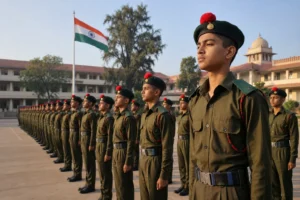
Military School vs Regular School in Chhattisgarh
A businessman in Bilaspur once split his son’s report card into two piles: one for marks, one for everything else. The marks pile was thick. The other pile, covering discipline, focus, physical fitness, and leadership, was almost empty. That gap is what pushes many Chhattisgarh families to ask a hard question every admission season: should we stick with a regular school, or move our child into a CBSE military school built around structure and character?
This comparison of CBSE military school vs regular school in Chhattisgarh is written for exactly that family. Whether you live in Raipur, Bilaspur, Durg, Bhilai, or across the border in Madhya Pradesh, Odisha, or Jharkhand, the decision affects more than just where your child studies for the next ten years. It shapes habits, confidence, and career direction. We will walk through discipline, academics, fitness, character, and career preparation, and show where a school like Cardinal Warriors in Raipur differs from a conventional CBSE school down the road.
What Sets a CBSE Military School Apart From a Regular School
Both a regular CBSE school and a CBSE-integrated military school follow the same board syllabus set by the Central Board of Secondary Education. That part is identical on paper. The difference lies in everything wrapped around the syllabus.
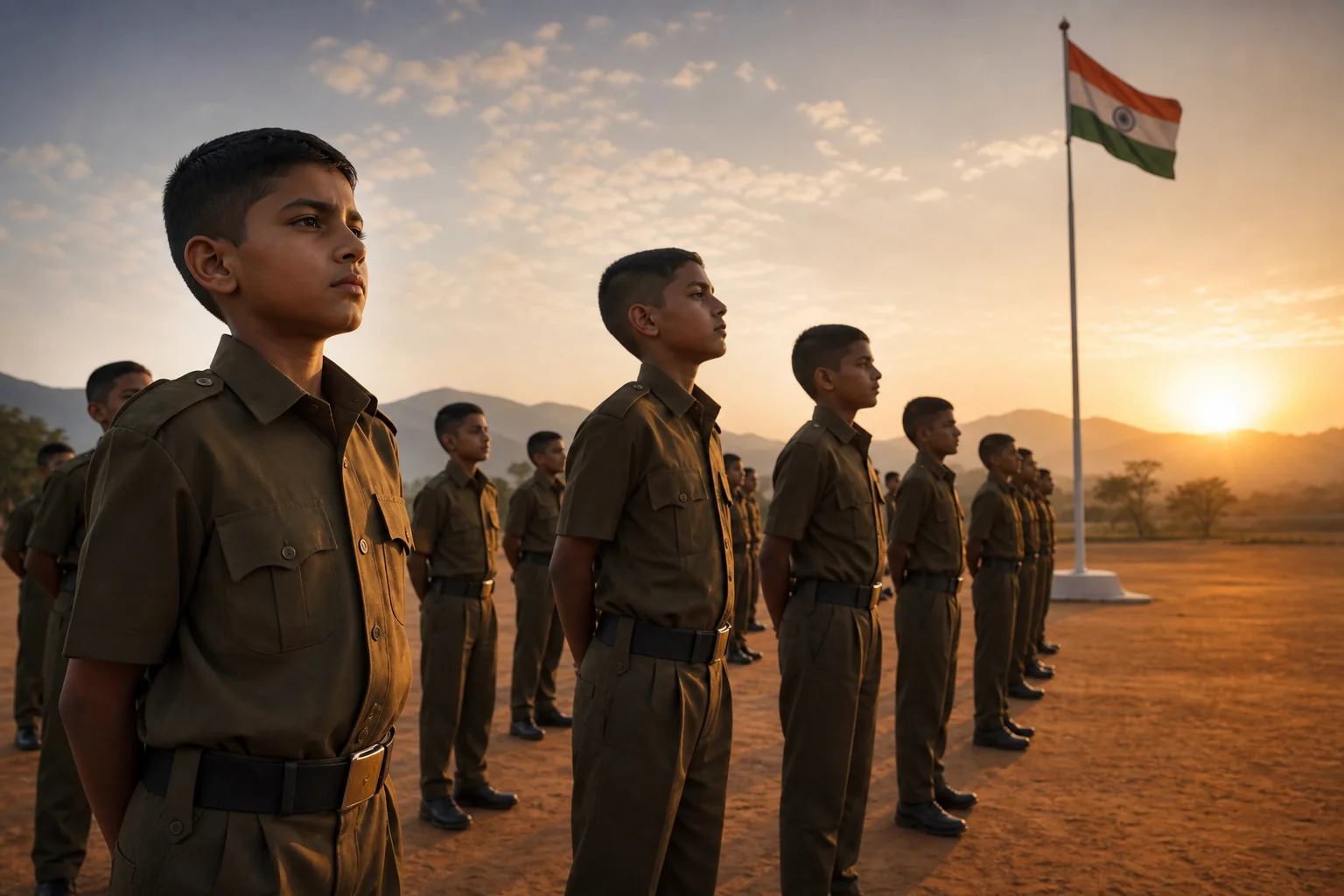
A regular school in Chhattisgarh typically runs a school day from around 8 AM to 2 or 3 PM, focused almost entirely on classroom teaching, homework, and periodic exams. Co-curricular activities exist, but they are often limited to an annual sports day or a cultural function. A CBSE military school like Cardinal Warriors, founded by Army veteran Major Pravin Singh (Retd.), runs a full day that starts before sunrise with physical training, continues through academics on the same CBSE curriculum, and closes with drills, mentorship sessions, or moral education classes. The school describes this balance of energy and discipline as “Josh With Hosh,” meaning passion guided by wisdom and self-control.
In short, a regular school prepares a student for exams. A military school prepares a student for exams, physical fitness tests, leadership roles, and often a defence or competitive career path, all at once. If you want a deeper breakdown of how this education model works, our earlier guide on what military school education in India actually involves covers the full framework.
Discipline and Daily Routine: The Biggest Difference Parents Notice
Ask any parent who has toured both types of schools, and discipline is usually the first thing they mention. A regular school enforces classroom rules and uniform checks, but the day is largely unsupervised once the student leaves the gate. Homework happens at home, often with a phone within reach.
Military schools remove that ambiguity. The day is structured hour by hour: wake-up drills, physical training, study halls, prep time, and lights out, all supervised by staff trained in discipline-based routines. This directly answers a concern many Chhattisgarh parents raise: does military school improve child discipline and focus, especially when mobile phones and constant distraction are eating into study time at home?
At Cardinal Warriors, this structure isn’t about punishment. It’s about building habits that stick long after the child leaves school. A student who wakes at 5 AM for years develops a different relationship with time than one who has never had to. Parents dealing with working schedules that leave little room for supervision often find this structured environment solves a problem regular day schools cannot.
- Regular school: Discipline mostly limited to classroom hours; homework supervision depends on parents.
- Military school: Discipline built into every part of the day, including hostel life, meals, and free time.
- Impact on focus: Reduced screen time and structured routines typically improve attention span and study consistency.
Academic Outcomes: CBSE Curriculum in Both Settings
Because both school types follow the CBSE board, the syllabus content for Class 10 and Class 12 boards is not different. What differs is how academics are supported and what happens after the textbook is closed.
Regular schools generally leave competitive exam preparation, whether for NEET, JEE, NDA, or CA Foundation, to outside coaching centers. Parents in Chhattisgarh, Madhya Pradesh, and neighbouring states often end up paying separately for school fees and coaching fees, while also managing travel time between the two. This split arrangement can wear down a student, especially in Classes 11 and 12 when board exam pressure and entrance exam prep collide.
A CBSE military school with integrated coaching removes that split. Cardinal Warriors builds NDA, NEET, JEE, and CA Foundation preparation directly into the academic calendar, alongside dedicated guidance for RIMC, RMS, and AISSEE entrance exams. Students preparing for defence academies also get structured SSB interview coaching as part of the same campus life, not as a separate weekend activity. If your child is set on a defence career path, our detailed look at the best NDA coaching schools in Chhattisgarh explains how this integration plays out year by year.
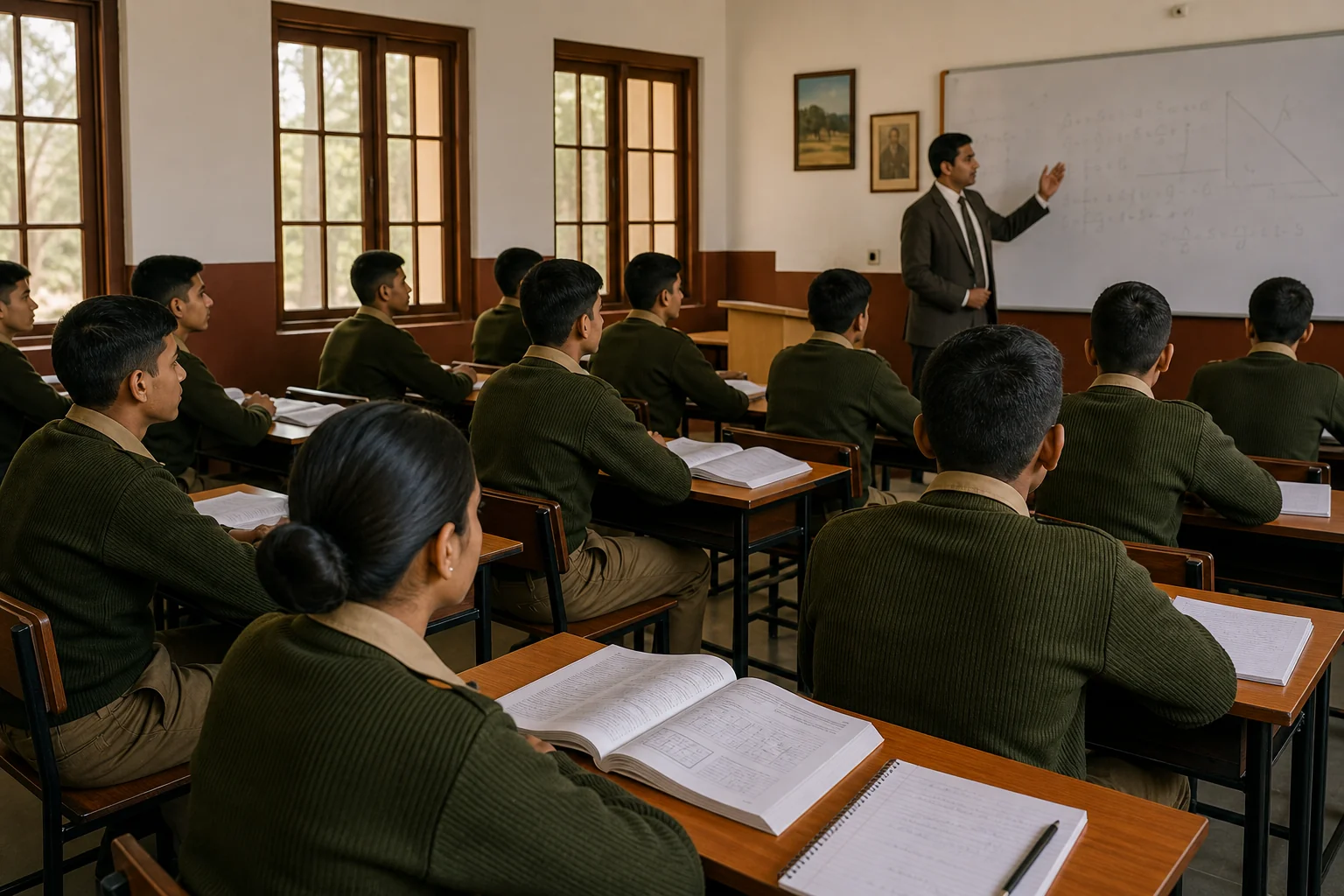
For families in Madhya Pradesh weighing similar choices, this integrated model also applies to NEET and JEE coaching pathways, since Cardinal Warriors draws boarding students from across central India, not only Chhattisgarh.
Physical Fitness and Health: Beyond the Classroom
Regular schools usually offer physical education for one or two periods a week, often reduced further during exam seasons. That’s rarely enough to build the stamina, strength, and body discipline that competitive defence exams demand.
Military schools treat fitness as a daily, non-negotiable part of the routine. Cardinal Warriors students go through structured physical training, obstacle courses, drills, and organized sports every single day, not as an elective but as a core part of the timetable. This matters practically: NDA and SSB selection processes include strict physical benchmarks, and students who have trained for years have a natural advantage over those cramming fitness routines in the final months before an exam.
Beyond exam readiness, daily physical activity builds long-term health habits, better sleep patterns, and higher energy levels for academic work too. A tired, sedentary student concentrates less well in class. A physically active one, generally, focuses better and recovers faster from stress, something increasingly relevant given how much screen time is competing for a child’s attention today.
Character Building and Leadership Development
This is where the gap between the two school types often becomes most visible over time. Regular schools may appoint a head boy or head girl, or run occasional student council elections, but structured leadership training is rare. Character education, when it exists, is usually confined to a moral science period or an assembly speech.
Military schools build leadership into the daily structure. Senior cadets mentor juniors. Students rotate through responsibilities like leading formations, managing hostel duties, or coordinating drills. Mistakes are corrected through accountability, not just scolding. Cardinal Warriors frames this through its philosophy of “Josh With Hosh,” where enthusiasm is paired with wisdom and self-control, rather than either quality standing alone.
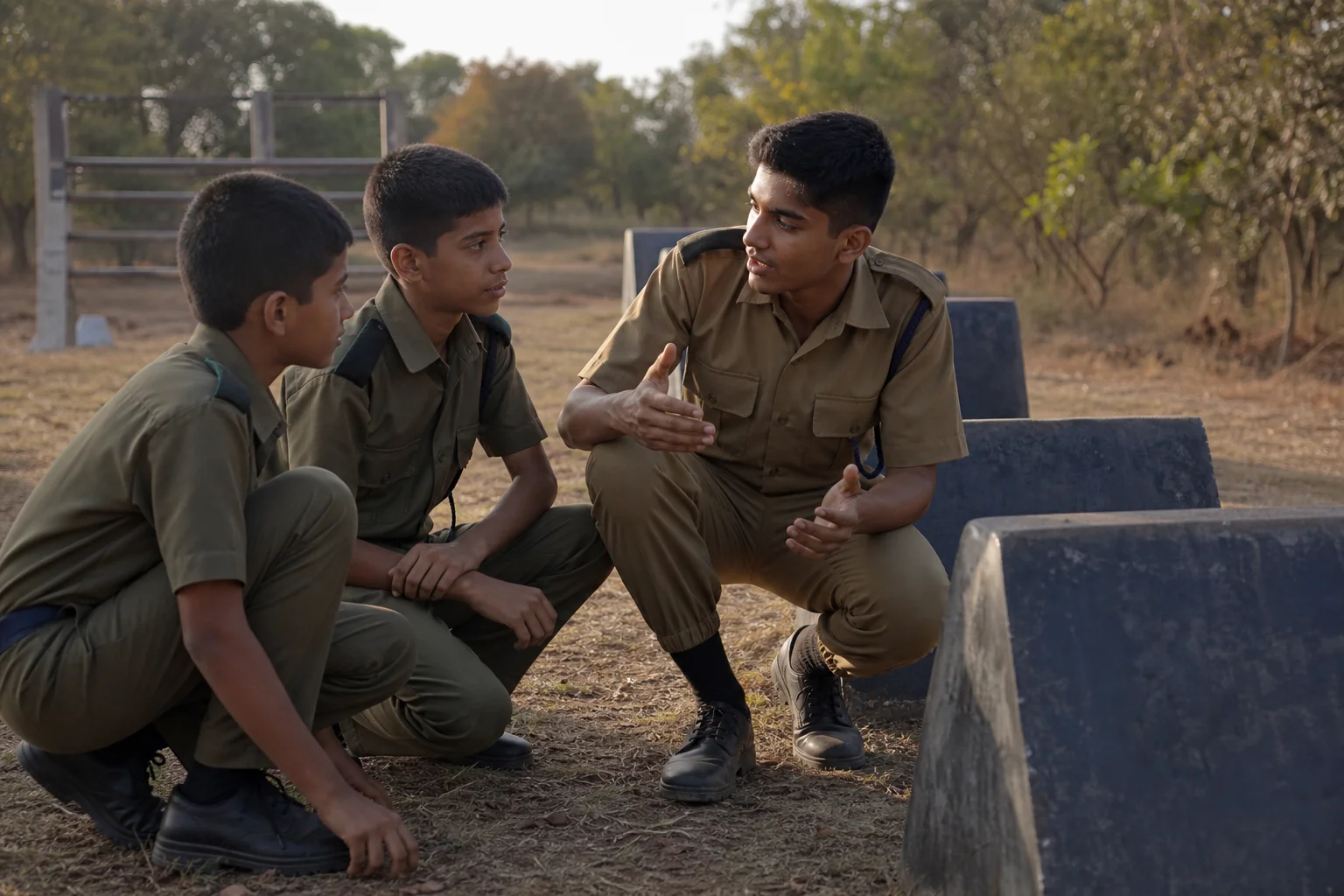
Parents often ask whether this really shapes a child’s personality or is just structured routine. Our earlier piece on how to choose the right military school for your child goes deeper into what genuine character-building programs look like versus surface-level discipline drills. The short answer: consistent responsibility, repeated over years, tends to shape character far more reliably than occasional lectures.
Career Preparation: Defence, Medical, Engineering and Beyond
A regular school leaves career direction largely to the family and outside counsellors. A military school like Cardinal Warriors treats career preparation as part of the curriculum itself, starting years before board exams.
Students interested in the armed forces get structured coaching toward NDA, RIMC, and RMS entrance exams, plus SSB interview preparation that covers psychological tests, group discussions, and personal interviews, not just written exams. This is a major differentiator from a regular school, where a student aiming for NDA typically has to seek private coaching independently, often starting late and without consistent mentorship.
For students not headed toward defence careers, the same disciplined structure supports NEET, JEE, and CA Foundation preparation. The military routine of early mornings, focused study blocks, and reduced distraction tends to benefit any competitive exam track, medical, engineering, or commerce. This is particularly relevant for families across Chhattisgarh, Madhya Pradesh, and Odisha comparing boarding options where academic coaching and career guidance sit under one roof instead of three separate institutions.
CBSE Military School vs Regular School in Chhattisgarh: Side-by-Side Comparison
Here is a direct comparison Chhattisgarh parents can use when evaluating both options, including how it stacks up against a Sainik School, since many families weigh all three together.
- Discipline: Regular school – classroom-only; Military school – full-day structured routine with supervised hostel life.
- Academics: Regular school – CBSE syllabus only; Military school – CBSE syllabus plus integrated NDA/NEET/JEE/CA coaching.
- Physical fitness: Regular school – one to two PE periods weekly; Military school – daily PT, drills, and sports.
- Character building: Regular school – occasional moral science classes; Military school – structured leadership roles and mentorship.
- Career guidance: Regular school – external counselling, usually late-stage; Military school – defence and competitive exam preparation built into the school years.
- Safety and supervision: Regular school – daytime only, home supervision needed after hours; Military school – 24-hour supervised boarding environment.
- Admission approach: Sainik Schools follow a centralized AISSEE process with limited seats; private military schools like Cardinal Warriors offer more flexible, rolling admissions alongside broader career-track coaching.
Families who want a more detailed breakdown of Sainik School specifically versus a private military institution should read our comparison on Sainik School vs military school in Chhattisgarh, which covers admission timelines, seat availability, and fee differences in more depth.
It’s also worth noting how this compares with elite legacy institutions outside the state. A school like Doon School emphasizes an elite boarding tradition and general leadership training, but does not center its curriculum around defence career coaching the way a dedicated military school does. If discipline specifically is your priority, our article on the best boarding schools with military training in Chhattisgarh lays out that distinction clearly.
How to Decide: Questions Every Chhattisgarh Parent Should Ask
No single school type suits every child. Before choosing between a regular school and a CBSE military school, ask these questions honestly:
- Does my child respond well to structure, or do they need more flexibility to explore interests? Some children thrive under routine; others need room to experiment before committing.
- Is my child (or am I, as a parent) leaning toward a defence, medical, or engineering career? If yes, integrated coaching saves years of separate tuition arrangements.
- Do I have the time to supervise homework, screen time, and daily routines at home? Working parents often find boarding structure fills a real supervision gap.
- What is my budget, and how does it compare across school types? Costs vary significantly; our guide on military school fees in India breaks down tuition, hostel, and other charges so you can compare against a regular school’s total annual cost, including outside coaching fees.
- How safe and well-supervised is the campus? Whichever school you choose, verify staff-to-student ratios, medical facilities, and grievance systems before enrolling your child in any boarding environment.
A regular school may still be the right fit if your child needs a flexible pace, lives close to a strong local school, or you prefer daily contact over boarding life. A CBSE military school like Cardinal Warriors tends to make more sense when you want disciplined routine, integrated career coaching, and a structured environment your child can grow into over several years, without juggling separate coaching institutes.
Frequently Asked Questions
Is a CBSE military school better than a regular school for academics?
Both follow the same CBSE syllabus, so board exam content is identical. The difference is in support: military schools typically integrate competitive exam coaching (NDA, NEET, JEE, CA Foundation) directly into the school routine, while regular schools generally require separate outside coaching.
Does military school suit every child?
Not automatically. Children who respond well to structure, routine, and physical activity tend to adapt quickly. Parents should visit the campus, speak with staff, and understand daily schedules before enrolling, since boarding life is a significant shift from a regular day school.
What is the difference between military school and Sainik School in Chhattisgarh?
Sainik Schools are government-affiliated institutions with centralized AISSEE admissions and limited seats, focused primarily on preparing students for the NDA. Private military schools like Cardinal Warriors offer more flexible admissions, a broader mix of career coaching including NEET, JEE, and CA Foundation, and often more individual attention due to smaller batch sizes.
How much does a military school in Chhattisgarh cost compared to a regular school?
Military school fees usually include tuition, boarding, uniforms, and training costs bundled together, which can appear higher upfront than a regular day school’s tuition alone. However, once you add outside coaching fees that regular school families often pay separately for NDA, NEET, or JEE preparation, the total cost gap narrows considerably. Contact the school directly for current fee structures, as costs vary by grade and program.
Making the Right Choice for Your Child’s Future
Choosing between a regular school and a CBSE military school in Chhattisgarh isn’t really about picking a better report card. It’s about deciding what kind of adult your child grows into: one who has only faced textbooks, or one who has also faced early mornings, physical challenges, leadership responsibility, and a clear career direction.
If your family is weighing this decision for the coming academic year, Cardinal Warriors in Raipur welcomes a closer look at how discipline, academics, and career preparation come together on one campus. Read more about our approach and campus life to see how it compares with what your child currently experiences, or explore more with us to understand our admissions process for classes ranging from pre-school through higher secondary. For direct questions about fees, hostel facilities, or defence career coaching, you can contact us to speak with our admissions team.
You can also follow updates on cadet life, campus events, and admission announcements through our Facebook, Instagram, and Twitter / X pages. Whatever you decide, make it an informed choice, because the school your child walks into today shapes the discipline, confidence, and direction they carry for the rest of their life.

You may also like

Military School vs Sainik School: Admissions Compared