

Military School Fees in India: What Do They Cost?
A father in Bilaspur once called three schools in one afternoon, asking each the same question: “What will my son’s education actually cost me every year?” Two schools quoted only tuition. The third, a private military school, sent him a full sheet listing hostel charges, uniform kits, coaching fees, and exam charges separately. That third call is the reason this guide exists. Understanding military school fees in India per year means looking past the headline number and asking what it actually includes.
For parents in Raipur and across Chhattisgarh weighing a disciplined, career-focused education for their child, fee clarity matters as much as campus visits. This guide breaks down what military and defence-oriented boarding schools typically charge, what drives the price up or down, and how to budget for the real, total cost rather than just the advertised tuition.
Understanding Military School Fees in India: The Big Picture
Military-style schooling in India spans a wide spectrum. On one end sit government-run Sainik Schools, which are subsidised and charge a fraction of what private institutions do, but admit only a small number of students each year through a national entrance exam. On the other end are legacy boarding institutions like The Doon School or Welham Boys’ School, where annual costs run into several lakhs of rupees, often without any defence-specific coaching built in.
In between, private military schools such as Cardinal Warriors in Raipur combine CBSE academics, military discipline, and integrated coaching for NDA, NEET, JEE, and SSB interviews under one fee structure. This middle ground tends to appeal to parents who want the structure of a military environment and the career preparation of a coaching institute, without the exclusivity pricing of century-old boarding schools.
Before comparing numbers, it helps to accept one fact: no two schools price things the same way. Some quote an “all-inclusive” annual fee. Others itemise tuition, hostel, and activities separately, then add coaching as an optional extra. The only way to compare fairly is to ask for a full annual breakdown, not a single headline figure.
1. Break Down the Core Fee Components
Every military-oriented school, whether government-run or private, generally bills parents across five broad categories. Knowing these in advance stops budget surprises mid-year.
- Tuition fees: Covers classroom instruction, CBSE curriculum delivery, and academic staff salaries. This is usually the largest recurring cost and varies by grade level, rising as students move into senior secondary classes.
- Hostel or boarding charges: Includes lodging, meals, laundry, and round-the-clock supervision. This is billed separately from tuition and is often quoted per term or per year.
- Uniform and kit costs: Military schools require specific uniforms, drill kits, PT gear, and sometimes ceremonial dress for parades. Expect this as a one-time or annual charge depending on growth-related replacements.
- Activity and training fees: Covers physical training equipment, sports gear, drill instruction, adventure activities like trekking or obstacle courses, and sometimes horse-riding or shooting range access where available.
- Admission and registration charges: A one-time fee paid at entry, separate from the recurring annual fee, which covers processing, assessment, and enrollment paperwork.
Some schools also add a refundable caution deposit, examination fees for board exams, and transport charges for day scholars. Ask specifically whether coaching programs like NDA or NEET/JEE preparation are bundled into tuition or charged as a separate module, since this single line item can shift the total by a significant margin.
2. Compare Fee Ranges Across School Types
Because “military school” covers such different institutions, it helps to see how the four broad categories typically compare on price and access.
- Sainik Schools: Government-aided and among the most affordable options, with annual fees generally in the lower range once subsidies are applied. Seats are limited and allotted through the All India Sainik Schools Entrance Examination (AISSEE), making admission highly competitive rather than open enrollment.
- Rashtriya Military Schools (RMS): Also government-supported, RMS institutions charge modest fees similar to Sainik Schools but focus specifically on preparing boys for entry into the National Defence Academy and other officer-entry schemes.
- Private military schools: Institutions like Cardinal Warriors charge market-rate tuition comparable to a good private CBSE school, with the added cost of boarding, military training infrastructure, and integrated competitive exam coaching. Admissions are more accessible than Sainik Schools, and the fee structure typically reflects the broader range of career coaching offered under one roof.
- Elite legacy boarding schools: Institutions such as The Doon School or Welham Boys’ School sit at the premium end, with fees driven by heritage, extensive campus infrastructure, and low student-to-teacher ratios, though they do not typically include defence-specific coaching like NDA or SSB preparation.
If you are weighing a military school in Raipur, Chhattisgarh against a Sainik School seat or a legacy boarding institution, the real comparison should be cost per outcome, not cost alone. A lower headline fee at a Sainik School comes with fierce entrance competition and fewer seats, while a private military school offers more predictable admission with a broader range of career pathways under one fee structure.
3. Key Factors That Affect the Final Price
Two schools can look similar on paper and still charge very differently. These are the variables that actually move the number.
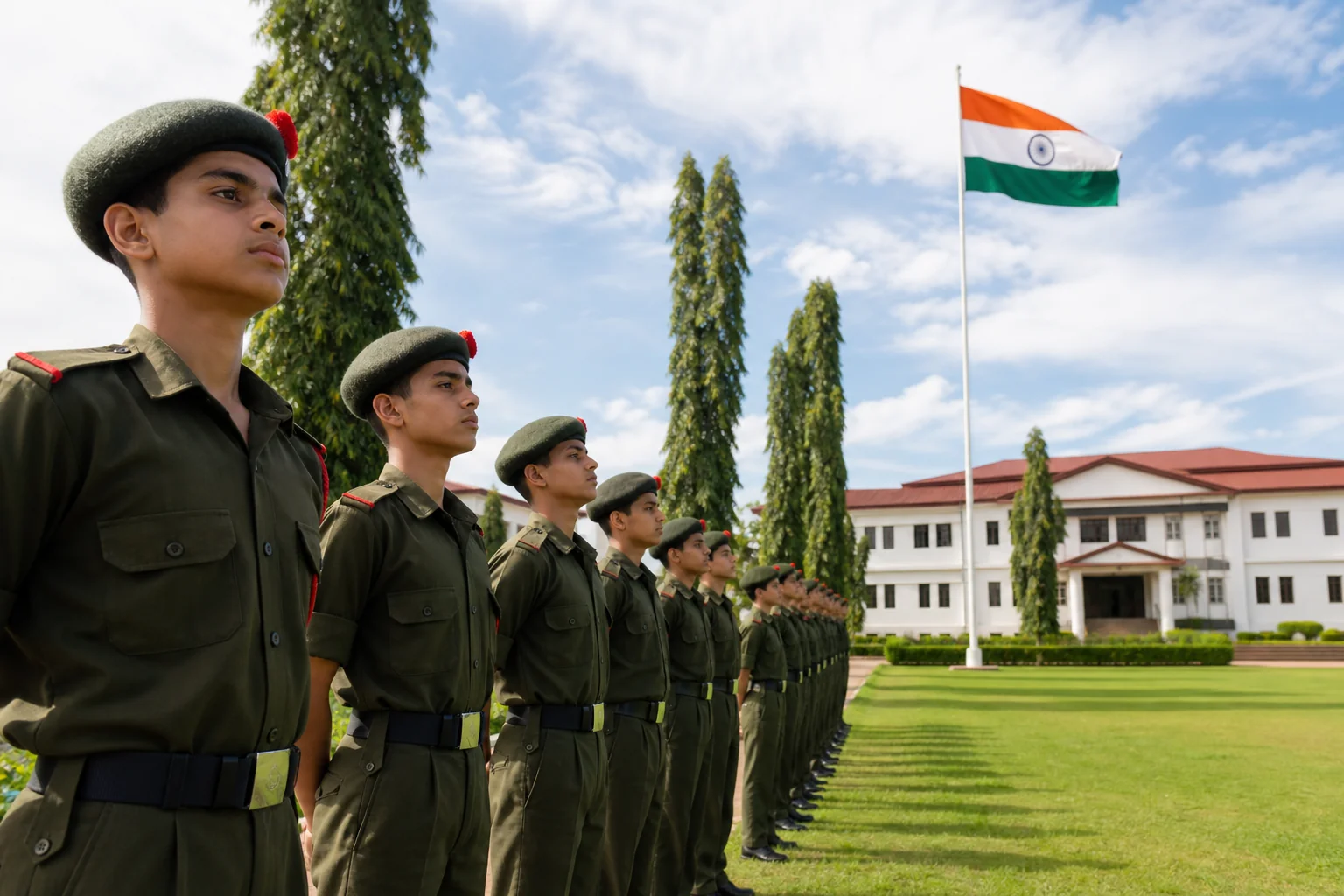
Boarding vs Day-Scholar Status
Boarding students pay for lodging, meals, and supervision on top of tuition, which typically adds a substantial amount to the annual bill compared to day scholars who commute from home. Families in and around Raipur sometimes start with day-scholar enrollment and move to boarding later as the child adapts to structured campus life.
Coaching Programs Bundled In
Schools offering integrated preparation for NDA, NEET, JEE, SSB interviews, RIMC, RMS, or CA Foundation typically charge more than a school offering plain CBSE academics. The trade-off is that parents avoid paying separately for outside coaching institutes, which often cost as much or more when purchased independently.
Campus Facilities and Infrastructure
Shooting ranges, obstacle courses, medical facilities, hostel quality, and security infrastructure all factor into the fee. A campus with dedicated drill grounds and modern dormitories will price differently from one with basic facilities.
Grade Level and Academic Stream
Fees generally increase as a student progresses from primary to senior secondary school, reflecting added subject specialisation, laboratory access, and exam-focused coaching in Classes 11 and 12.
Regional Demand and Location
Schools in cities with strong demand for defence-oriented education, including Raipur and other parts of Chhattisgarh, may price differently from similar institutions in smaller towns, based on infrastructure costs and local competition among schools.
4. What Boarding vs Day-Scholar Costs Really Look Like
For many parents, the boarding decision is less about cost and more about lifestyle. Working parents who cannot supervise homework, screen time, or physical training every day often find that the boarding premium is worth paying for a structured, mobile-free environment.
Day-scholar fees typically cover tuition, activity charges, and sometimes transport, while excluding meals and lodging. Boarding fees add hostel charges that cover three meals a day, laundry, dormitory maintenance, and supervised study hours in the evening. Some schools bill hostel charges per term, others annually, so always ask whether the quoted figure is for the full year or a single semester.
For families based outside Raipur who want their child in a Chhattisgarh-based military school without daily commuting, boarding is generally the practical choice. It also directly addresses a concern many parents raise: reducing mobile phone addiction and unsupervised screen time by placing the child in a structured, routine-driven residential environment with defined study, drill, and rest hours.
A realistic budget accounts not just for what boarding costs, but for what it replaces: private tutoring, coaching institute fees, and the time a working parent would otherwise spend supervising homework and discipline at home.
5. Understanding Coaching Program Costs (NDA, NEET, JEE, SSB)
Coaching is often the single biggest variable in a military school’s total annual cost, and it is also where parents get the most long-term value if they choose correctly.

NDA and RIMC/RMS Preparation
Schools offering structured NDA coaching alongside regular academics typically build physical training, written exam preparation, and interview readiness into the daily schedule rather than treating it as an evening add-on. The same applies to RIMC and RMS entrance preparation, which usually begins at a younger age and continues through middle school.
NEET and JEE Integrated Coaching
For students who may pivot toward medical or engineering careers instead of the armed forces, integrated NEET and JEE coaching within the school day removes the need for a separate external coaching institute, which in many cities costs a considerable amount on its own when purchased outside school hours.
SSB Interview Guidance
Services Selection Board interview coaching is a specialised, often overlooked cost. It covers psychological testing practice, group discussion training, and personal interview simulations, generally introduced in senior secondary years as students approach NDA or CDS eligibility.
CA Foundation Classes
For families considering a commerce-oriented path rather than defence or medical careers, CA Foundation coaching integrated into senior secondary years offers another specialised track, again avoiding the cost of a separate coaching institute.
When you evaluate schools, ask directly whether these programs are included in the standard annual fee or billed as optional modules. This single question often explains why two schools with similar base tuition end up with very different total annual costs.
6. How to Budget Realistically for a Military School Education
Once you understand the components and the variables, budgeting becomes a matter of asking the right questions rather than guessing at a number.
- Request an itemised fee sheet, not a single combined figure. Ask the admissions office to separate tuition, hostel, uniform, activities, and coaching charges line by line.
- Ask about annual fee increases. Most schools revise fees yearly by a modest percentage; know this in advance so it does not surprise you at renewal time.
- Separate one-time costs from recurring costs. Admission fees, initial uniform kits, and security deposits are usually paid once, while tuition and hostel fees recur annually or per term.
- Compare value, not just price. A school charging a bit more but including NDA, NEET, or SSB coaching, safety infrastructure, and holistic development programs may cost less overall than paying separately for school, tutoring, and outside coaching.
- Visit the campus and ask direct questions about hostel supervision, meal quality, medical facilities, and how coaching is scheduled around academics.
If you are still comparing options such as the best military school in Raipur, Chhattisgarh against a Sainik School or a legacy boarding institution, remember that fee comparison only tells part of the story. Character building, discipline, safety, and long-term career preparation are the outcomes parents are actually paying for, and they deserve equal weight in the decision.
Frequently Asked Questions About Military School Fees in India
Are Sainik Schools cheaper than private military schools?
Generally yes. Sainik Schools are government-subsidised and charge lower annual fees, but admission is limited and highly competitive through the AISSEE entrance exam. Private military schools charge market-rate fees but offer easier admission and often a broader range of integrated career coaching.
Do military school fees include coaching for NDA, NEET, or JEE?
It depends on the school. Some private military schools, including those with an integrated career-preparation model, build this coaching into the standard curriculum. Others charge it as a separate module. Always confirm this before enrolling, since it significantly affects the true annual cost.
Is boarding compulsory at a military school?
Not always. Many private military schools, including those in Chhattisgarh, offer both boarding and day-scholar options, letting parents choose based on distance, the child’s age, and family preference for daily supervision versus a fully residential, structured routine.
How much do uniforms and training kits cost separately?
Uniform and kit costs vary by school and typically cover regular uniforms, PT gear, drill equipment, and sometimes ceremonial dress. These are usually billed as a one-time or annual charge separate from tuition, so ask for this figure specifically when comparing schools.
Are scholarships or fee concessions available?
Some schools offer merit-based or need-based fee concessions, particularly for children of defence personnel or academically strong candidates. Contact the school’s admissions office directly to ask about current scholarship policies and eligibility criteria.
Making the Investment Count
Fees are only half the story. What matters more is whether the environment builds the discipline, focus, and character a parent is hoping for. A school that combines CBSE academics with military training, structured coaching for NDA, NEET, JEE, and SSB, and genuine attention to each child’s growth offers something a fee sheet alone cannot capture: a foundation for the years ahead.
At Cardinal Warriors in Raipur, founded by Army veteran Major Pravin Singh (Retd.), the “Josh With Hosh” philosophy blends academic rigor with the discipline of military training, so every rupee spent works toward both character and career readiness. If you are ready to see the full fee breakdown and understand exactly what your child’s education will include, read more about our programs and admissions process, or contact us directly to discuss your child’s fit and get accurate, current fee details for the coming academic year.
You can also explore more with us to see how our campus, coaching tracks, and boarding facilities come together, and follow our updates on Facebook, Instagram, and Twitter / X for admission announcements and campus life. Choosing the right school is a decision that shapes your child’s next decade. Start the conversation with us today.

You may also like

SSB Interview Coaching: What Parents Should Know