What Is Military School Education in India?
A ten-year-old in Bhilai once asked his mother a simple question after watching a Republic Day parade on television: “Why do those cadets walk like that, all together, like one person?” His mother didn’t have a clean answer. Two years later, she found one, at a school gate in Raipur, where rows of children marched to a whistle before breakfast. That gate belonged to a military school, and it changed how she thought about her son’s education entirely.
If you are a parent in Chhattisgarh, or anywhere in India, wondering what is military school education in India and whether it fits your child, you are not alone. Search interest in this model has grown steadily as parents look beyond conventional classrooms for something more structured. This guide breaks down exactly what military school education means, how it runs day to day, and what it prepares a child for, using real examples from institutions like Cardinal Warriors in Raipur.
What Does Military School Education Actually Mean in India?
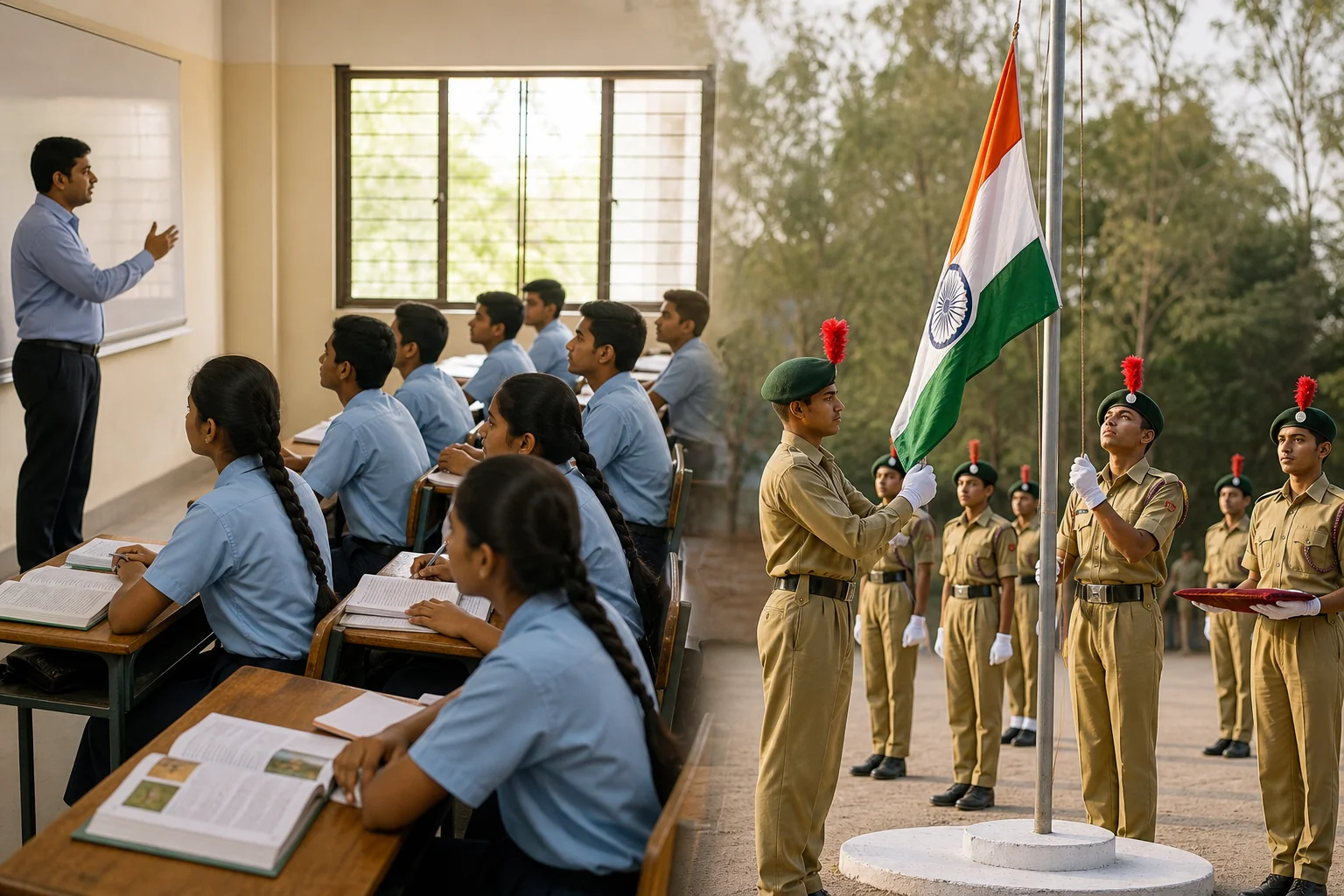
Military school education in India refers to a schooling model that combines a standard academic curriculum, usually CBSE-affiliated, with structured military-style training. This includes physical fitness routines, drill and parade, uniform discipline, hostel living, and leadership exercises modeled loosely on cadet training used in defence academies.
It is important to clear up one common misunderstanding first. Enrolling a child in a military school does not mean they are joining the Army, Navy, or Air Force. There is no military rank, no service obligation, and no weapons training for young students. What they receive instead is an education system built around routine, accountability, and physical resilience, alongside regular subjects like Mathematics, Science, English, and Social Studies.
In India, this space includes a few distinct categories:
- Sainik Schools — government-run schools under the Sainik Schools Society, entry through AISSEE
- Rashtriya Military Schools (RMS) — Ministry of Defence institutions with their own entrance exam
- Rashtriya Indian Military College (RIMC), an elite, highly selective institution with very limited seats
- Private military schools, CBSE-affiliated institutions like Cardinal Warriors that combine military discipline with broader career coaching
Raipur, Chhattisgarh has quietly become one of the notable hubs for this style of education, drawing families from across Madhya Pradesh, Odisha, Jharkhand, and beyond who want a boarding option that goes past academics alone. Cardinal Warriors, founded by Army Veteran Major Pravin Singh (Retd.), is one example of how this model has evolved into something broader than defence-only preparation. You can read more about military school options in Raipur if you’re comparing institutions in the region.
How Military School Education Differs From a Regular CBSE School
Here’s where parents often get confused. A CBSE military school still follows the same CBSE syllabus and board exam pattern as any regular school. Your child sits the same Class 10 and Class 12 board exams as students anywhere else in India. The syllabus for Maths or Chemistry does not change because a school has “military” in its name.
What changes is everything around that syllabus: the daily structure, the physical demands, the hostel environment, and the value system woven into everyday school life. A regular school ends at 2 or 3 PM and hands the child back to the family. A military boarding school manages the full day, from wake-up call to lights out, building habits that a regular school simply doesn’t have the time or mandate to build.
Regular CBSE School vs CBSE Military School
- Curriculum: Both follow CBSE, but military schools add drill, PT, and leadership modules alongside it
- Daily structure: Regular schools run 6-7 hours; military schools structure the full 24-hour day, including hostel life
- Physical training: Occasional sports periods vs daily structured PT, obstacle training, and endurance building
- Discipline system: General classroom rules vs uniform codes, rank structures among students, and accountability drills
- Career guidance: General counseling vs dedicated NDA, RIMC, RMS, and SSB interview coaching built into the curriculum
- Supervision: Limited after school hours vs round-the-clock supervised routine, useful for working parents
If you’re weighing this decision against a traditional day school in Chhattisgarh, our detailed comparison on Sainik School vs military school in Chhattisgarh covers how government and private options stack up on cost, admission process, and outcomes.
A Day in the Life: What a Typical Schedule Looks Like
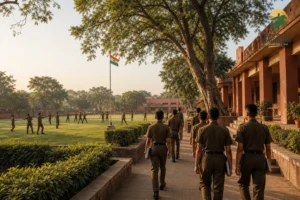
Parents often picture military school as harsh or joyless. In practice, a well-run institution balances intensity with rest, play, and academic focus. Here is roughly how a day unfolds at a CBSE-integrated military school like Cardinal Warriors:
- 5:30, 6:00 AM: Wake-up call, followed by physical training and drill on the parade ground
- 6:30, 7:30 AM: Bath, uniform inspection, breakfast
- 8:00 AM, 1:30 PM: Regular CBSE academic periods, same subjects as any school
- 1:30, 2:30 PM: Lunch and short rest
- 2:30, 4:30 PM: Tutorials, coaching sessions (NDA, NEET, JEE, or CA Foundation depending on stream), or remedial classes
- 4:30, 6:30 PM: Sports, games, or specialized fitness training
- 7:00, 8:00 PM: Dinner and leisure or club activities
- 8:00, 9:30 PM: Supervised self-study and prep period
- 10:00 PM: Lights out
This structure looks demanding on paper, but the goal is not exhaustion. It’s rhythm. Children raised on unpredictable schedules and constant screen access often struggle with focus. A fixed routine, repeated daily, removes the friction of decision fatigue and builds a habit of discipline that follows the child well past graduation.
The Four Pillars: Academics, Physical Training, Discipline, and Character
Cardinal Warriors describes its guiding approach as blending enthusiasm and energy with wisdom and good sense, an idea that captures what military school education is actually trying to build in a child. Four pillars typically define the model.
Academic Rigor
The CBSE curriculum is delivered with the same seriousness as any strong day school, often with smaller batch sizes and closer teacher attention because the school also manages the hostel environment. Board exam performance, competitive exam readiness, and subject clarity remain non-negotiable goals.
Physical Training
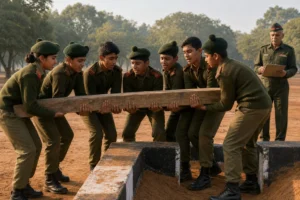
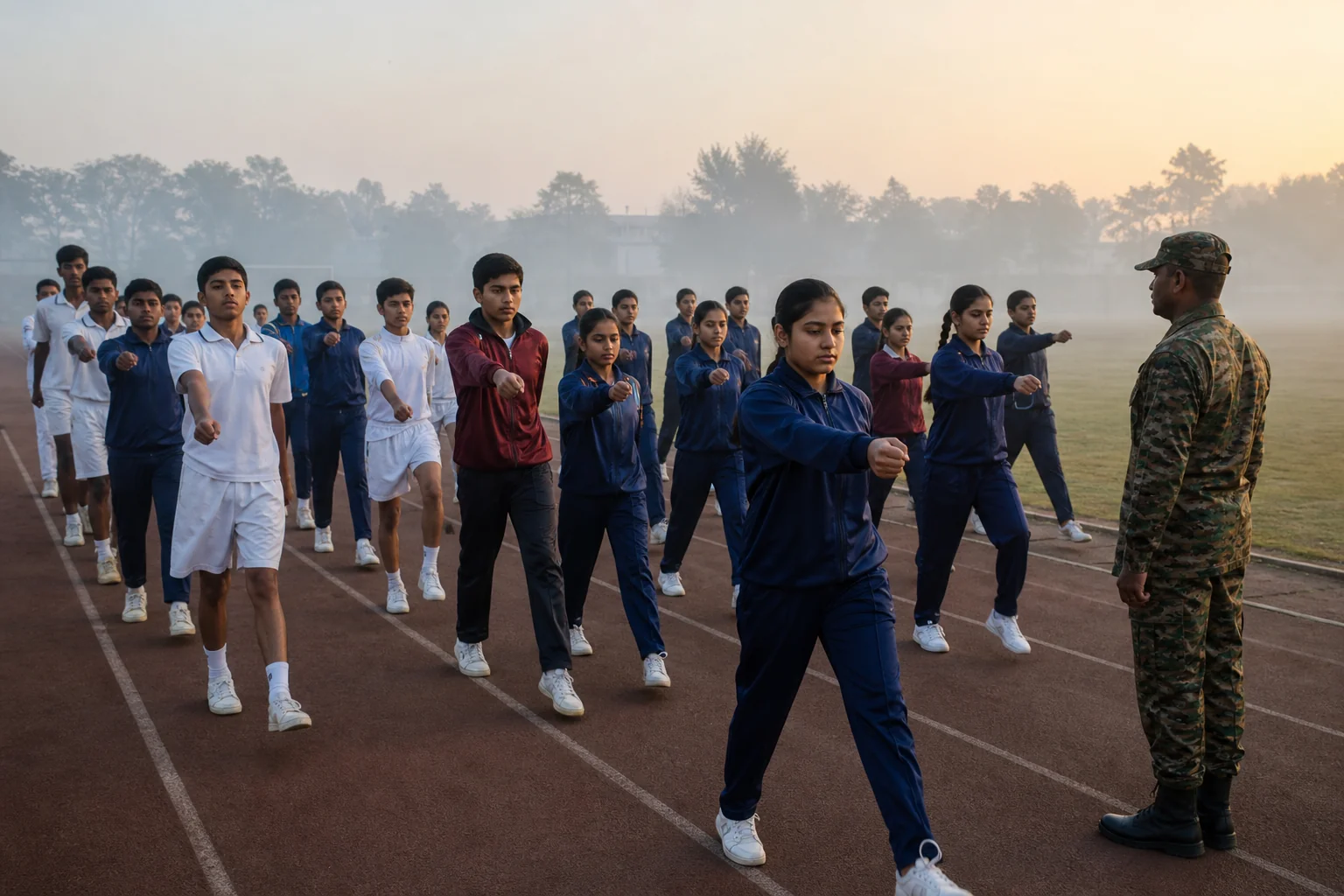
Daily PT, drill, obstacle courses, and sports build stamina and body awareness early. This isn’t just about fitness for its own sake. Physical training under structured supervision has been linked to better concentration and lower anxiety in school-age children, a connection increasingly recognized in India’s National Education Policy 2020, which emphasizes physical education as core to holistic development, not an extracurricular afterthought.
Discipline
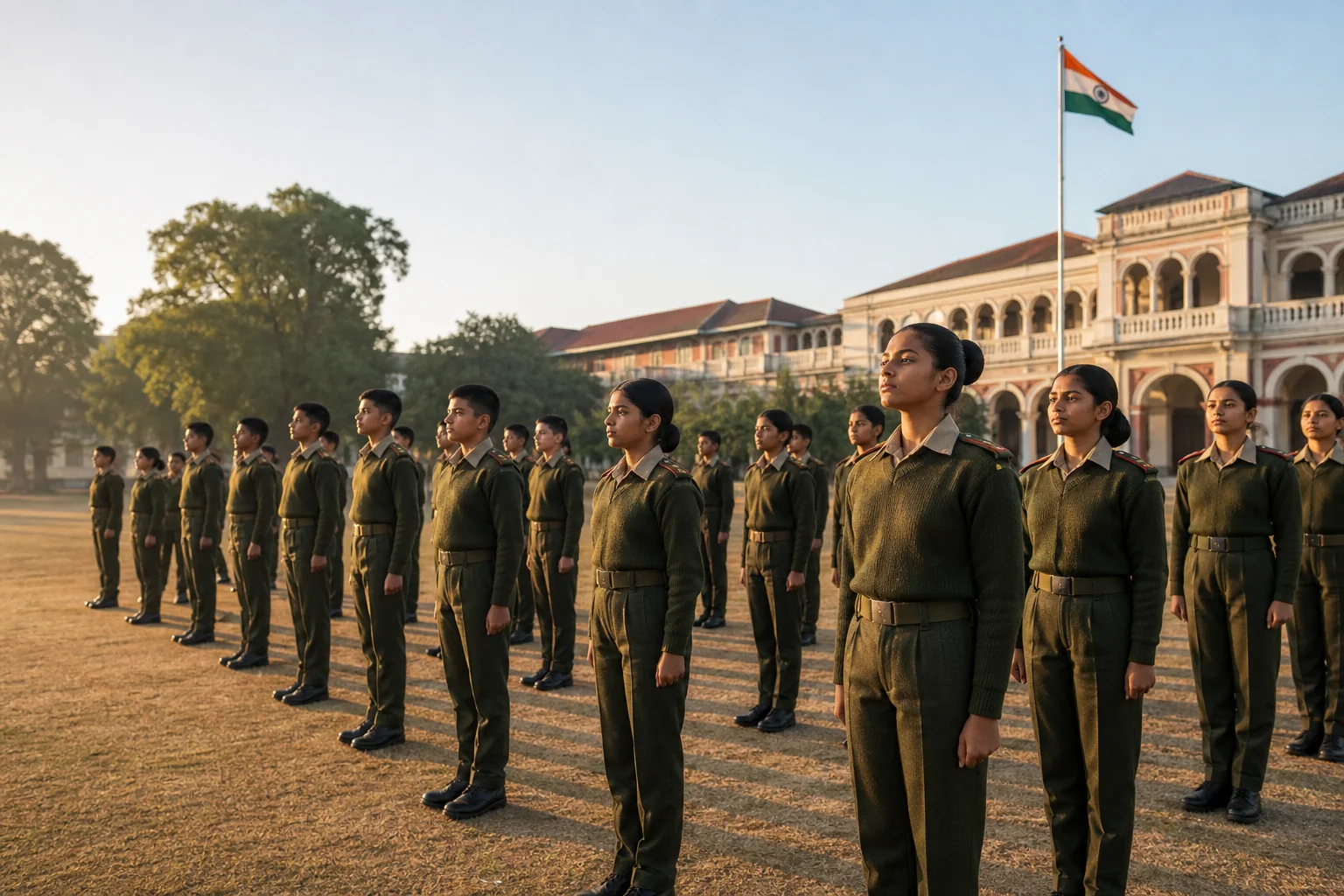
Uniform codes, timed routines, rank-based responsibilities among senior students, and consistent accountability form the backbone of daily life. A student who forgets a task doesn’t just get a warning; they learn to own the consequence and correct it, a pattern that mirrors real leadership training used in institutions like the National Defence Academy.
Character Building
Moral education, mentorship from veteran faculty, and leadership responsibilities (leading a group of juniors, managing a hostel wing, organizing an event) teach values that a 40-minute classroom period cannot. Many parents specifically choose this model because they want their child exposed to figures like Major Pravin Singh (Retd.), whose own service background lends the character-building program real credibility rather than borrowed language.
Career Paths That Open Up After Military School Education
One of the biggest reasons parents choose this model is the direct line it draws toward specific careers, particularly for families in Chhattisgarh and Madhya Pradesh who don’t have easy access to specialized coaching centers.
- NDA (National Defence Academy): Structured NDA coaching integrated into the school schedule, rather than as a separate evening tuition after an already long school day
- RIMC and RMS: Dedicated preparation for the Rashtriya Indian Military College and Rashtriya Military Schools entrance exams, both of which test physical fitness alongside academics
- AISSEE: Guidance for students also applying to Sainik Schools through the All India Sainik Schools Entrance Examination
- SSB Interview coaching: Personality and leadership assessment preparation, a stage where many otherwise qualified candidates fail simply due to lack of exposure
- NEET and JEE: For students who decide against a defence career, the same disciplined routine supports medical and engineering entrance preparation
- CA Foundation: Commerce-track students get structured coaching toward chartered accountancy, showing the model isn’t limited to defence-only outcomes
This is a meaningful difference between a private military school and a purely government-run one. Sainik Schools and RMS are excellent at what they do, but they are largely defence-focused by design. A private institution like Cardinal Warriors can adapt its coaching bandwidth toward NEET, JEE, or commerce streams for students who change direction, without asking the family to switch schools entirely. For a full cost picture of what this integrated model involves, see our breakdown of military school fees in India.
Types of Military-Style Schools in India: Knowing the Difference
Parents researching this topic often encounter four names that get used loosely and interchangeably. They are not the same.
- Sainik Schools: 33+ government schools across India under the Ministry of Defence umbrella, entry via AISSEE, primarily aimed at feeding NDA
- Rashtriya Military Schools (RMS): Five institutions (Ajmer, Belgaum, Bangalore, Chail, Dholpur) with their own entrance test, also feeding into NDA
- RIMC: A single, highly selective institution in Dehradun, entry through a separate written exam and interview, extremely limited seats
- Private military schools: CBSE-affiliated institutions like Cardinal Warriors in Raipur, offering more flexible admission cycles, smaller batches, and coaching that extends beyond defence careers to NEET, JEE, and commerce
Each path has trade-offs in cost, seat availability, and rigidity of the defence-only focus. If you’re deciding between the government route and a private school, our comparison guide on Sainik School vs military school in Chhattisgarh walks through admission timelines and outcomes in detail.
Does Military School Really Build Discipline and Character?
This is the question every parent eventually asks, often after watching a child struggle with focus at home, glued to a phone screen instead of homework. The honest answer is that a school alone cannot fix a child’s character. But structure changes behavior faster than lectures do.
Here is the mechanism, in plain terms:
- Fixed routines remove decision fatigue. A child who wakes at the same time, trains at the same time, and studies at the same time every day stops negotiating with themselves about whether to do it.
- Peer accountability matters more than adult scolding. When a student’s dorm-mates depend on them being on time for morning formation, social pressure does what a parent’s reminder often can’t.
- Physical fatigue reduces restlessness. A child who has run, drilled, and played sport by 5 PM has less pent-up energy driving distraction later in the evening.
- Screen limits are structural, not just rules. Boarding life naturally reduces access to phones and unsupervised screen time, addressing a concern many working parents raise directly.
- Mentorship from veteran faculty carries weight. A retired officer teaching leadership isn’t reciting a textbook; the authority feels earned, and children respond to that differently than to generic moral science lessons.
For working parents who simply don’t have the bandwidth to supervise homework, screen time, and routine every single evening, this structured environment functions as a second, dependable layer of supervision, not a replacement for parenting, but a strong support system for it.
What to Consider Before Choosing a Military School for Your Child
Not every child needs this model, and not every family is ready for boarding life. Before enrolling, weigh these factors honestly.
- Age and readiness: Most institutions accept students from primary years through higher secondary, but boarding life suits children who show some independence already, not necessarily maturity, just a willingness to adapt
- Fees and total cost: Boarding, uniform, coaching modules, and academics are usually bundled; always ask for a full annual breakdown rather than just tuition, since military school fees in India vary significantly between government and private institutions
- Location and accessibility: Raipur’s connectivity by rail and air makes it a practical choice for families across central and eastern India, not just within Chhattisgarh
- Safety and campus infrastructure: Ask about medical facilities, staff-to-student ratios in hostels, and how the school handles homesickness in younger children
- Balance of academics and training: A good school should never let physical training crowd out board exam preparation; ask to see recent CBSE results alongside the training schedule
- Career alignment: If your child is uncertain about a defence career, choose a school with broader coaching options (NEET, JEE, CA Foundation) rather than one built exclusively around NDA
The Central Board of Secondary Education maintains affiliation records for verified schools, a useful first check before shortlisting any institution, private or government.
Frequently Asked Questions About Military School Education in India
Is military school only for children who want to join the Army?
No. While many students do pursue NDA, RIMC, or RMS pathways afterward, military schools also prepare students for NEET, JEE, CA Foundation, and general higher education. The discipline and structure benefit any career path, not just defence services.
What academic board do Indian military schools follow?
Most private military schools, including Cardinal Warriors, are CBSE-affiliated. Sainik Schools and Rashtriya Military Schools also follow CBSE, ensuring students can appear for standard board exams and apply to any college afterward.
Is military school tougher than a regular school?
The daily routine is more structured and physically demanding, yes. But “tougher” often means more supported rather than more stressful. Students get dedicated coaching, closer supervision, and built-in fitness training that a regular day school schedule simply doesn’t accommodate.
What is the minimum age to join a military school in India?
This varies by institution. Many private military schools accept students from the pre-primary or primary level, while Sainik Schools and RMS typically start admission around Class 6 or Class 9 through entrance exams like AISSEE.
Can girls join military schools in India?
Yes. Sainik Schools opened admission to girls nationally in 2021, and private military schools like Cardinal Warriors welcome both boys and girls into their CBSE and defence-coaching programs.
How is a military school different from Doon School or other elite boarding schools?
Elite boarding schools like Doon School emphasize holistic development and leadership through a broader liberal arts lens, often at a premium price point. Military schools focus specifically on structured discipline, physical training, and defence career preparation, often at a more accessible cost. If you’re weighing this specific comparison, it’s worth reviewing outcomes and daily structure side by side before deciding.
Making the Right Choice for Your Child’s Future
Military school education in India isn’t about turning a child into a soldier. It’s about giving them a structured environment where academics, physical fitness, discipline, and character grow together, under the guidance of people who have lived that discipline themselves. For families in Raipur, Chhattisgarh, and across central India, that combination is increasingly hard to find in a conventional day school setup.
If your child shows interest in structure, leadership, or a defence career, or if you simply want a school that manages the full day rather than just the classroom hours, it’s worth seeing the model firsthand. Read more about how Cardinal Warriors brings this philosophy to life for students from pre-school through higher secondary. You can also explore more with us to understand admissions, campus life, and coaching programs in detail, or simply contact us to speak with the admissions team about whether this year’s intake is the right fit for your child. Follow updates on Facebook, Instagram, and Twitter / X to see campus life and student achievements as they happen.

You may also like

Military School With NEET JEE Coaching in Chhattisgarh