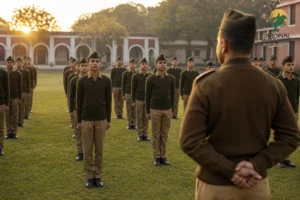
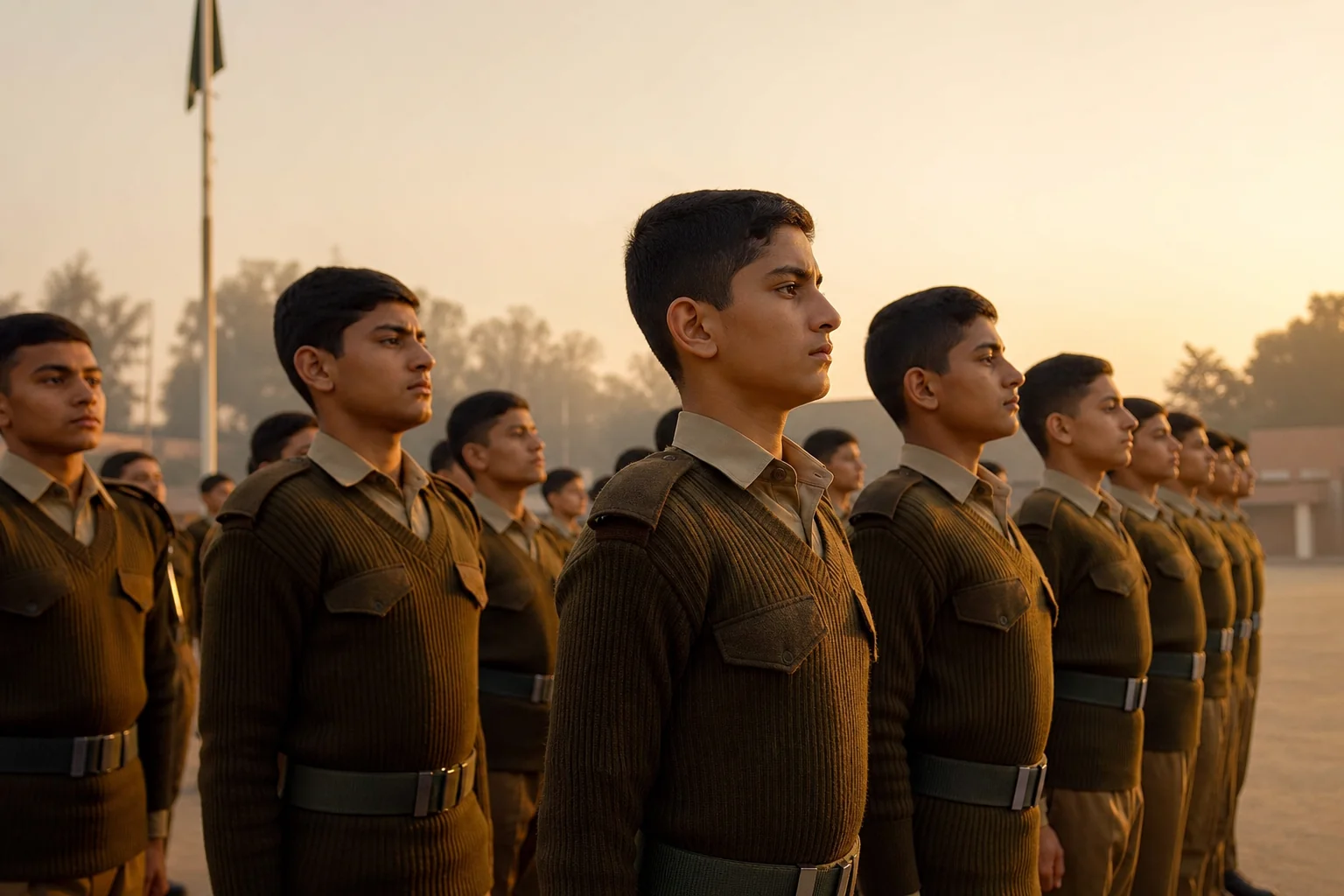
What to Look for in a Disciplined Boarding School?
A father in Korba once stood on a school parade ground during a visit and asked a question that stumped the admissions counselor: “What happens here at six in the morning, when there are no parents watching and no camera crew filming for the prospectus?” The counselor gave a vague answer about “holistic values.” He walked out and never applied. Two schools later, he found one where a staff member simply pointed to a wall clock and read out the exact minute-by-minute routine of a cadet’s day. That was the moment he knew he had found real structure, not just a marketing pitch.
This is the exact challenge facing parents across Chhattisgarh and beyond when they try to figure out what to look for in a boarding school for discipline. Nearly every school claims to build character. Far fewer can actually show you how. Brochures are full of words like “values,” “leadership,” and “holistic growth,” but very few institutions can walk you through the concrete systems, routines, and supervision that turn those words into daily habits.
This guide breaks down exactly what separates a genuinely disciplined boarding school from one that only sounds disciplined on paper. We will cover training programs, safety standards, faculty backgrounds, academic-to-character balance, and the red flags that should make you pause before signing an admission form. Whether you are looking in Raipur, Bilaspur, Durg, or anywhere else in Chhattisgarh, the same checklist applies.
1. Look at the Daily Routine, Not Just the Prospectus
Discipline is not a personality trait a school hands out in an assembly speech. It is built through repetition. A child who wakes at the same time, exercises at the same time, studies at the same time, and sleeps at the same time for months on end develops discipline almost automatically. This is why the single most useful question a parent can ask is simple: “Can you show me the actual daily schedule, hour by hour?”
A school with genuine discipline culture will answer this without hesitation. You should expect to hear specifics: wake-up time, physical training slot, breakfast, class hours, prep or study hall, evening activities, dinner, and lights out. If the answer is vague, or if staff redirect you back to values and mission statements instead of the clock, treat that as a warning sign.
- Ask to see the schedule posted somewhere on campus, not just described verbally.
- Ask what happens if a student breaks the routine, and whether the consequence is consistent or arbitrary.
- Ask how weekends and holidays are structured, since unstructured time is where habits often fall apart.
If you want a deeper walkthrough of how to evaluate an entire institution rather than just its routine, our guide on how to choose the right military school for your child expands on this with a full evaluation framework.
2. Check for Structured Military or Physical Training Programs
There is a real difference between a school that offers one physical education period a week and a school built around structured training. Genuine military-style discipline programs include daily drill practice, physical fitness routines, obstacle courses, and parade formation, run by instructors who actually know how to teach it, not just supervise a playground.
These programs matter for more than fitness. Drill and parade discipline teach a child to follow instructions precisely, move as part of a team, and accept correction without taking it personally. For families with an eye on defence careers, this training also lays the groundwork for future NDA, RIMC, and RMS preparation. You can read more about how this pathway works in our breakdown of what military school education in India actually involves.
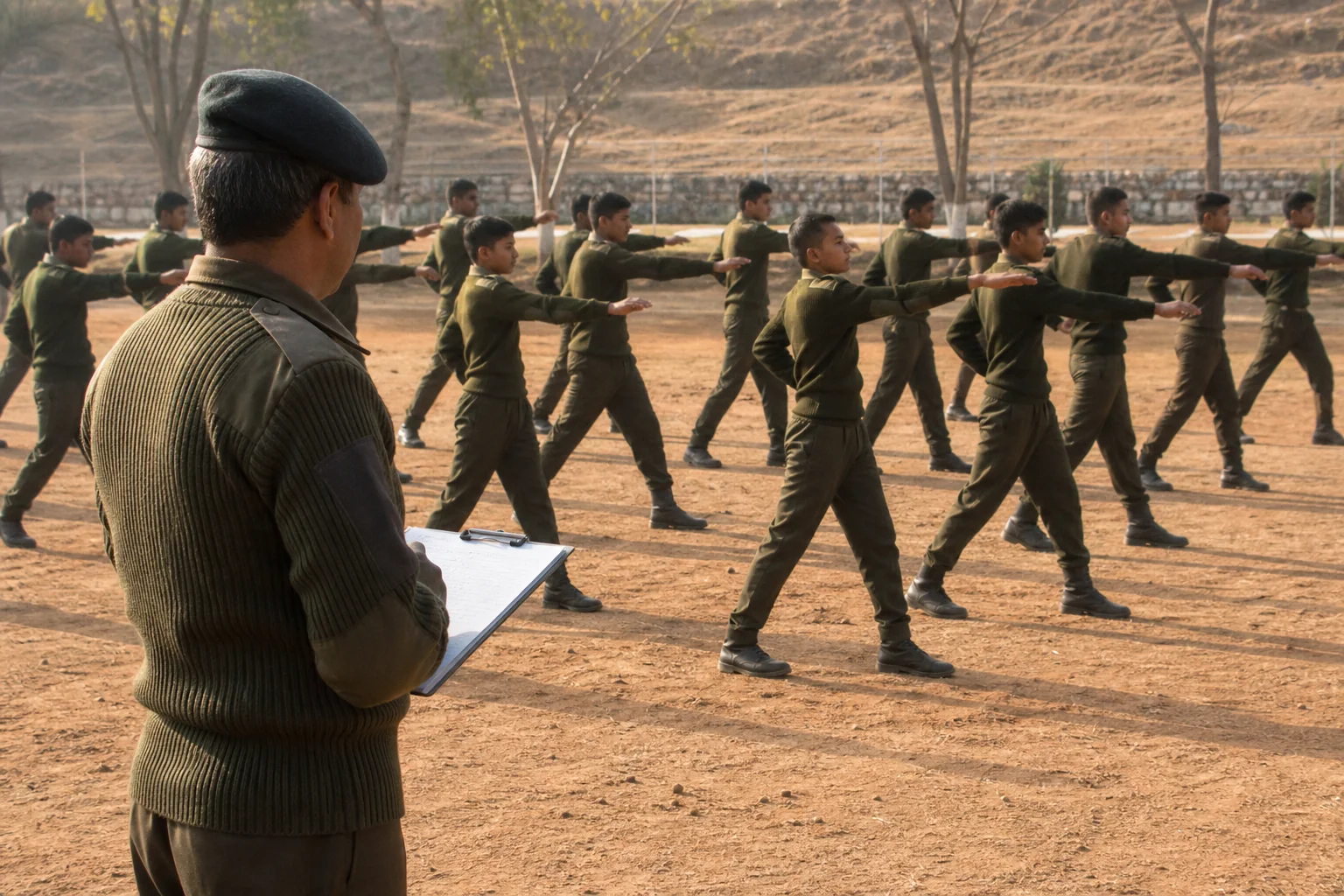
When you visit a campus, ask to see the actual training ground, not just photographs of it. A school serious about discipline will have visible infrastructure: a parade ground, PT equipment, an obstacle course, and instructors present during your visit, not just in promotional material. If the “training program” only exists in the brochure and nowhere on the physical campus, that tells you everything you need to know.
3. Verify Campus Safety and Supervision Standards
Discipline and safety are two sides of the same coin. A school cannot build structured habits in children if the campus itself lacks basic supervision. This is especially important for boarding schools, where children are away from parents for extended stretches, sometimes for the first time in their lives.
At minimum, ask about these specific safety measures during your visit:
- CCTV coverage across hostel corridors, common areas, and entry points, with a clear policy on who monitors the footage.
- Warden-to-student ratio in hostels, especially for younger children.
- On-campus medical facility or a tie-up with a nearby hospital, along with a clear emergency protocol.
- Anti-ragging and grievance redressal policy, ideally something you can see in writing, not just hear described.
- Parent communication protocol, meaning how often and through what channel you will hear about your child’s wellbeing, academics, and behavior.
Safety evaluation deserves its own careful process, and we have covered it in detail in our dedicated resource on evaluating a boarding school before enrollment. Do not skip this step simply because a school has an impressive parade ground. Structure without safety is not something any parent should accept.
4. Examine Faculty Credentials and Mentor Backgrounds
A disciplined culture is only as strong as the people enforcing and modeling it every day. Ask specifically who runs the physical training and drill sessions. Are they retired defence personnel, certified physical instructors, or simply teachers assigned the task with no specialized background? The distinction matters enormously, because discipline training taught by someone who has actually lived it carries a different weight than discipline taught from a manual.
This is one reason founder and leadership credibility matters so much when you compare schools. A school founded and guided by an Army veteran, for instance, tends to build training programs rooted in lived military experience rather than borrowed templates. Beyond the trainers, ask about the teacher-to-student ratio for academics, and whether the school employs counselors trained to support children emotionally, not just academically or physically.
A school that can name its trainers’ backgrounds, show their certifications, and introduce you to them during a campus visit is signaling something important: its discipline culture is built on real expertise, not marketing language.
Parents evaluating multiple options in Chhattisgarh often ask how a structured military school stacks up against traditional Sainik Schools in terms of staffing and mentorship style. Our comparison in Sainik School vs military school in Chhattisgarh walks through exactly this distinction.
5. Assess the Balance Between Academics and Co-Curricular Discipline
Discipline should never come at the cost of academics, and academics should never exist in isolation from character-building. The strongest boarding schools integrate CBSE academics with structured physical training, moral education, and career-focused coaching, so that a child’s day moves seamlessly between a classroom, a training ground, and a study hall without one crowding out the other.
Look specifically at how a school handles career preparation tracks. Does it offer structured guidance for NDA, NEET, JEE, SSB interviews, or CA Foundation alongside regular schooling, or does it treat these as an afterthought? A well-designed program treats competitive exam coaching as part of the same disciplined framework that governs the rest of the day, rather than a separate coaching class bolted on after hours.

This balance also matters for a problem many parents describe quietly: mobile phone addiction and constant digital distraction. A tightly structured day, with clear blocks for study, training, sport, and rest, naturally reduces idle time that would otherwise go to a screen. Structured co-curricular life, not lectures about discipline, is often what actually pulls a distracted child back toward focus. If you want to understand this connection in more depth, our article on whether military school improves discipline and focus looks at this exact question.
6. Compare Discipline Models: Military School vs Traditional Boarding School
Not every boarding school builds discipline the same way. Some rely on a military-style structured routine, others on old-world boarding traditions, and some on the Sainik School model funded and regulated by the government. Understanding these differences helps you match the right environment to your child’s temperament and your family’s goals.
| Discipline Model | Daily Structure | Physical Training Focus | Career Pathway Support | Best Suited For |
|---|---|---|---|---|
| Private Military School (structured discipline model) | Fixed hour-by-hour routine, PT and drill daily | High: drill, parade, obstacle training, fitness testing | NDA, RIMC, RMS, SSB, NEET, JEE, CA Foundation integrated | Families wanting structured discipline plus flexible career-focused coaching |
| Sainik School | Structured, government-regulated routine | Moderate to high, focused on defence entry | Primarily NDA and defence services | Families targeting defence careers specifically, willing to compete for limited seats |
| Traditional Elite Boarding School (Doon-style) | Structured but less military-specific | Low to moderate: sports and games, not drill-based | General higher education, not defence-focused | Families prioritizing legacy, networking, and broad-based liberal education |
| Regular CBSE Boarding School | Loosely structured, varies by school | Minimal, standard PE periods only | General academic coaching, exam-specific coaching often outsourced | Families prioritizing academics alone over structured discipline |
If your priority is discipline built through daily structure, paired with genuine career preparation, a private military school model tends to offer the most complete package. For a side-by-side look at how this compares specifically against the Doon School style of boarding education, see our detailed piece on the best boarding schools with military training in Chhattisgarh.
7. Red Flags That Signal Weak or Fake Discipline Culture
Some schools use the language of discipline without the substance. Learning to spot the gap early can save your family a difficult and expensive transfer later. Watch for these warning signs during your evaluation process:
- Vague answers about the daily schedule. If staff cannot describe a typical day in specific hours and activities, the structure likely does not exist consistently.
- No visible training infrastructure. A parade ground, PT equipment, or obstacle course that only appears in photographs and not on the actual campus tour is a serious concern.
- Reluctance to let you speak with current parents or see attrition data. Schools confident in their culture rarely hide this information.
- Discipline enforced through punishment rather than routine. A school that leans on fear, shouting, or arbitrary penalties instead of consistent structure is building compliance, not character.
- No clear grievance or safety escalation process. If you ask what happens when something goes wrong and get a shrug instead of a policy, walk away.
We go into much greater depth on this topic, including specific questions to ask admissions staff directly, in our dedicated post on red flags to avoid when choosing a military school. It is worth reading before you finalize any shortlist.
8. Questions to Ask Before You Enroll Your Child
Bring a written checklist to every campus visit. Verbal reassurances fade quickly once you are back home comparing three or four schools from memory. Here is a practical set of questions to ask at every institution you consider:
- Can you walk me through a typical day, hour by hour, from wake-up to lights out?
- Who leads physical training and drill, and what is their background?
- What is the hostel warden-to-student ratio, and how is night supervision handled?
- What medical facilities exist on campus, and how are emergencies handled?
- What competitive exam coaching is available, and is it integrated into the school day or offered separately?
- How does the school communicate with parents about academic and behavioral progress?
- What is the school’s approach to correcting misbehavior: is it consistent, or does it vary by staff member?
- Can I speak with a current parent or visit during a normal school day, not just an open house?
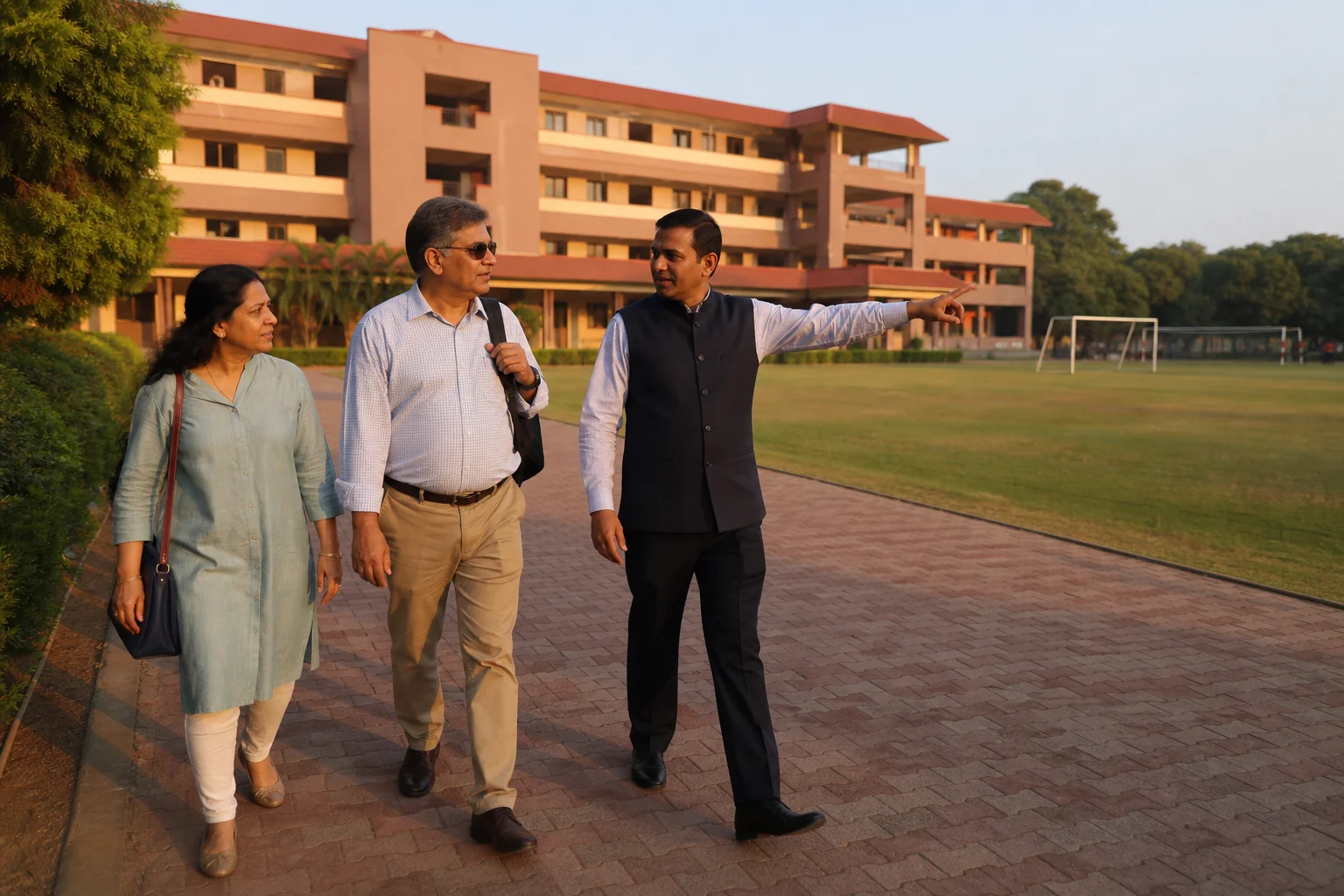
A confident, well-run school will welcome every one of these questions. If you notice hesitation, deflection, or answers that only repeat brochure language, treat that as useful information in itself. For a deeper dive into total costs alongside these evaluation criteria, our guide on military school fees in India and what they actually cost can help you plan your budget alongside your safety and discipline checklist.
Frequently Asked Questions
Does military-style discipline suit every child?
Most children benefit from structure, though the intensity that suits them can vary. A well-run school adapts its approach for younger students while maintaining consistent routines, rather than applying identical intensity across every age group. Speak with the school about how they adjust training and expectations by grade level before enrolling a younger child.
What age is ideal to start a structured boarding environment?
Many families in Chhattisgarh begin as early as primary school, since younger children often adapt to routine faster and with less resistance. Others wait until middle school when independence and academic pressure both increase. There is no single correct age, but earlier exposure to structure tends to make the transition smoother.
How is real discipline different from strictness or punishment?
Discipline is a system of consistent habits reinforced daily: fixed wake times, structured study, physical training, and clear expectations. Strictness or punishment, on the other hand, relies on fear and inconsistent consequences. A genuinely disciplined school builds routine into the environment itself, so good behavior becomes automatic rather than something extracted through threats.
Is Chhattisgarh a good location to evaluate these schools?
Raipur and the wider Chhattisgarh region have become an active hub for private military-style boarding schools, Sainik Schools, and CBSE institutions with defence-career coaching. This concentration gives parents from across central and eastern India a genuine range of options to compare directly, often within a single visit itinerary. Families travel from Bilaspur, Durg, Bhilai, and neighboring states specifically to tour these campuses.
According to the Ministry of Education, Government of India, structured co-curricular and physical education frameworks are increasingly emphasized in national education policy, reflecting a broader recognition that discipline and character development belong alongside academics. Independent research bodies, including work referenced by established overviews of military school education models, also point to structured routine as a consistent factor in character and leadership development among boarding students.
Making the Final Decision With Confidence
Choosing a boarding school for discipline is not about finding the strictest institution or the one with the most impressive-sounding brochure. It is about finding a school where structure is visible, consistent, and built by people who understand it firsthand. Check the daily routine. Verify the training infrastructure. Confirm the safety systems. Ask about faculty backgrounds. Look at how academics and character-building actually fit together, not just how they are described on a website.
Cardinal Warriors was founded on exactly this principle by Major Pravin Singh (Retd.), an Army veteran who built the school’s core philosophy around lived military discipline rather than borrowed slogans. The campus in Raipur, Chhattisgarh integrates CBSE academics with daily physical training, structured routine, and specialized coaching for NDA, NEET, JEE, SSB interviews, RIMC, RMS, and CA Foundation, all under consistent supervision designed to keep every child safe, focused, and growing.
If you are ready to see this structure firsthand, take the next step and read more about our approach to discipline and holistic development, or explore more with us to understand how our daily routine, training programs, and academic tracks come together on campus. For direct answers to your specific questions about admissions, safety, or fees, you can contact us and speak with our team today. You can also follow our campus life and training updates on Facebook, Instagram, and Twitter / X as you continue your research.

You may also like
SSB Interview Coaching: What Parents Should Know