Is Military School Good for Character Building?
A mother in Raipur once asked her son’s class teacher a question that had nothing to do with marks: “Does he stand up for what’s right when nobody’s watching him?” The teacher paused, because it wasn’t a question she was trained to answer. That gap, between what schools measure and what parents actually want for their children, is exactly why so many families start researching whether military school is good for child character building instead of settling for another year of routine schooling.
It’s a fair question, and a loaded one. Some parents picture rigid discipline that crushes a child’s spirit. Others picture confident young leaders who can think clearly under pressure. The truth sits somewhere between the two extremes, and it depends heavily on how a specific school runs its program. This post answers the question directly, section by section, the way a worried parent in Chhattisgarh would want it answered: honestly, with evidence, and without glossing over the hard parts.
What Parents Really Mean When They Ask This Question
When parents ask if military school builds character, they are rarely asking about marching drills. They’re asking something closer to: will my child come out of this more responsible, more honest, and more capable of handling life’s setbacks? Or will they just learn to follow orders without learning to think for themselves?
That distinction matters. Discipline is the ability to follow a structure. Character is what a child does when the structure isn’t there to enforce it, when no teacher is watching, when a friend pressures them to cheat, or when a task feels too hard to finish. A school can produce disciplined children who fold the moment supervision disappears. A good military school aims for something deeper: internalized values that hold up under real-life pressure.
Parents also carry specific worries into this decision. Many have watched their child lose hours to mobile phones, lose focus in a crowded classroom, or drift without any clear sense of purpose. Others simply want their child prepared for a defence career and assume the discipline will come as a side benefit. Both groups are asking the same underlying question in different words, and this post is built to answer it for each of them.
Is Military School Good for Child Character Building? The Short Answer
Yes, when the program is structured correctly, military school is good for a child’s character building because it combines routine, responsibility, physical challenge, and mentorship in a way ordinary classrooms rarely attempt. The key phrase is “structured correctly.” A school that only enforces rules without explaining their purpose builds compliance, not character. A school that pairs discipline with guidance, reflection, and real responsibility builds young people who carry those habits home.
At Cardinal Warriors in Raipur, this idea shapes what the school calls its Josh With Hosh approach to daily mentorship. “Josh” is the energy, drive, and enthusiasm every child naturally has. “Hosh” is the awareness, judgment, and self-control that turns raw energy into good decisions. A school that only builds josh raises reckless, overconfident children. A school that only builds hosh raises cautious, joyless ones. Character grows in the space where both meet, and that balance is what parents should actually look for when comparing schools, not just how strict the timetable looks on paper.
How Daily Military Routine Shapes Values, Not Just Habits
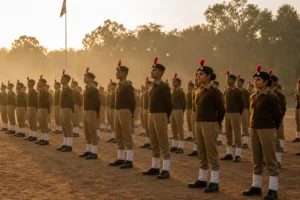
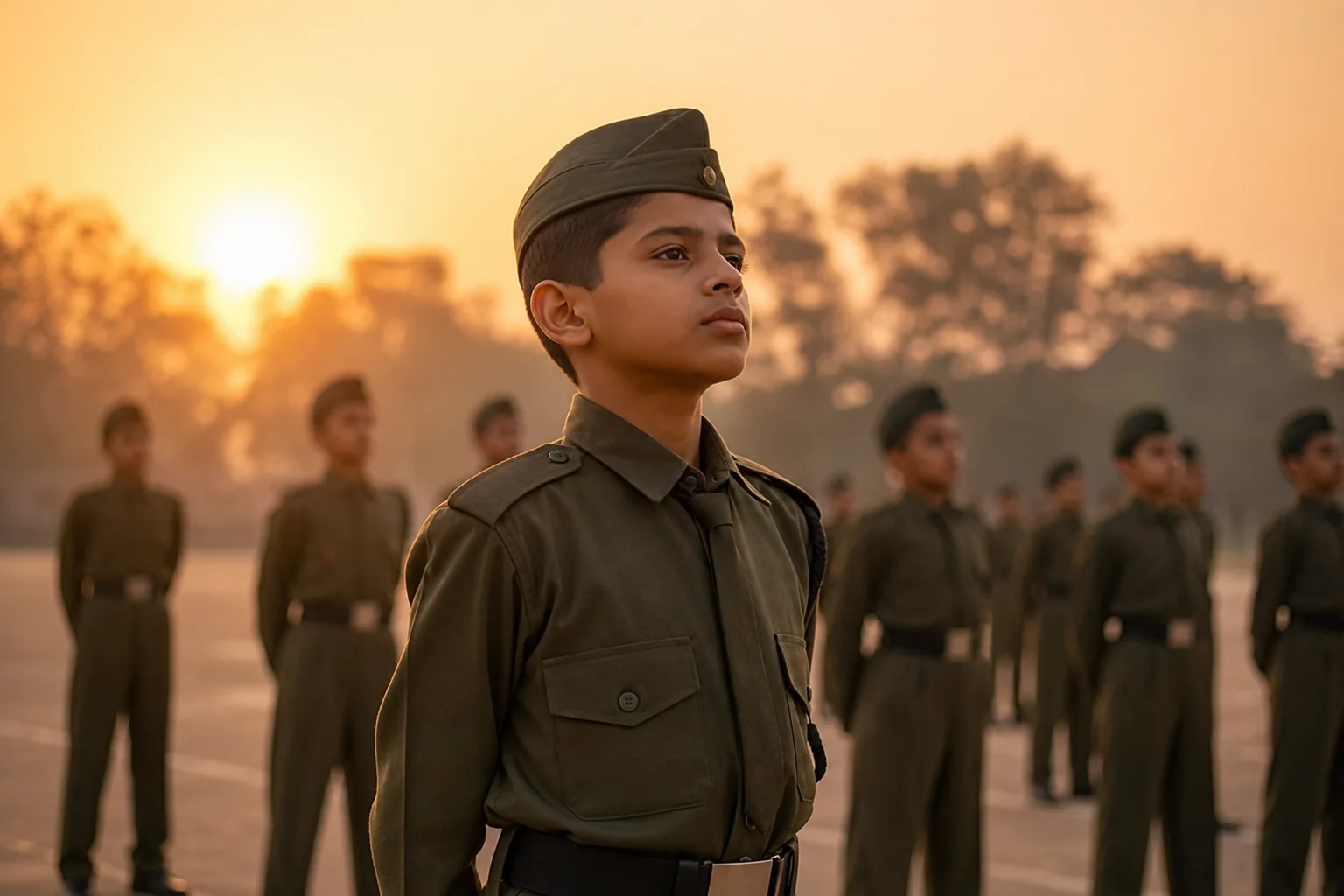
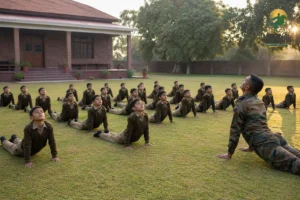
A typical day at a private military school starts before sunrise: wake-up drill, physical training, inspection, breakfast, academics, sports, prep hours, and lights out at a fixed time. On the surface, this looks like nothing more than a rigid schedule. Underneath, each of these repeated actions is quietly teaching a moral lesson.
- Wake-up drills and inspection teach accountability. A child learns that a messy bed or an untucked shirt has a consequence today, not someday, which builds the habit of owning small responsibilities immediately.
- Fixed study and sleep hours counter one of the biggest modern challenges parents raise with us: mobile addiction and constant distraction. Removing unstructured screen time and replacing it with purposeful blocks gives a child’s attention span room to rebuild itself.
- Shared chores and mess duties teach that no task is beneath anyone, an early and durable lesson in humility.
- Group meals and dormitory living force children to negotiate, share, and resolve small conflicts without a parent stepping in to referee.
Parents who worry their child “can’t focus for twenty minutes without reaching for a phone” often see the most dramatic shift here. Removing the constant option to disengage doesn’t just improve concentration, it rebuilds a child’s sense of ownership over their own day. For families evaluating this shift more closely, our earlier piece on whether military school improves discipline and focus breaks down the classroom-level evidence in more detail.
Leadership Training: Turning Followers Into Decision-Makers
Character building isn’t complete without giving a child real responsibility, not just rules to follow. This is where leadership training separates a strong military school from a merely strict one. Cadets rotate through positions of responsibility: leading a squad during drill, organizing a dormitory task, or representing their house in a competition. Each role forces a child to make a decision, live with the outcome, and adjust.
Group tasks modeled on SSB-style assessments add another layer. A child might be given an obstacle to solve as a team with limited time and no adult stepping in to direct traffic. These exercises are uncomfortable by design. They expose who takes initiative, who waits to be told what to do, and who panics under pressure, and then they give the child a mentor to help them grow past that starting point. Students planning a defence career benefit doubly here, since these same skills are assessed directly in board interviews. Our guide on the best SSB interview coaching schools in Chhattisgarh covers how this leadership groundwork feeds directly into interview readiness.
What matters for character, though, isn’t the eventual defence application. It’s that a ten- or twelve-year-old who has led a team through a failed attempt and a successful retry carries that experience into every future group project, job, and relationship.
Physical Fitness as a Character Tool, Not Just a Body-Building Exercise
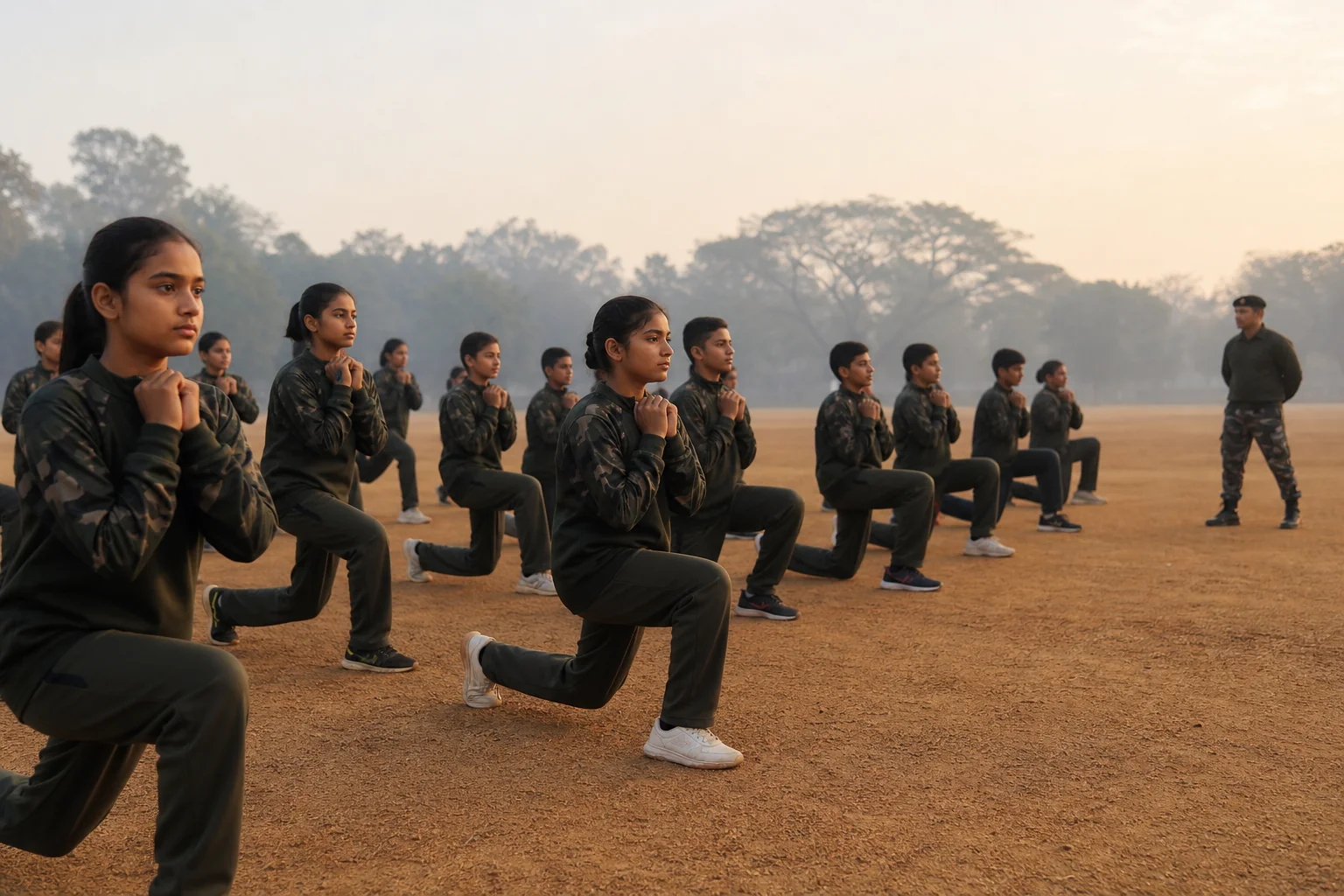
Obstacle courses, endurance runs, and rope climbs look like fitness training from the outside. From the inside, they are one of the most honest character labs a child will ever experience. A wall either gets climbed or it doesn’t. A run either gets finished or it doesn’t. There’s no way to talk your way past a physical obstacle, which makes it one of the few places in a child’s life where effort and outcome are directly, visibly connected.
This matters because failure at a physical task is low-stakes and highly instructive. A child who falls off the rope on the first attempt and climbs it on the fifth learns something that no lecture on perseverance can replicate: that struggling in front of others is not shameful, and that getting back up is a skill, not a personality trait. Over months, this cycle builds what psychologists call grit, and what most parents simply recognize as a child who no longer gives up the moment something feels difficult.
Compare this to a sedentary academic-only routine, where the physical body rarely gets tested and resilience has to be taught in the abstract, through stories and worksheets rather than lived experience. Neither approach is wrong, but one produces character lessons a child feels in their muscles and remembers for years. The Khelo India initiative under the Ministry of Youth Affairs and Sports has made similar arguments at a national level, linking early physical training to broader developmental outcomes in children.
Moral Education and the Josh With Hosh Approach
Discipline without moral grounding can tip into rigidity, and this is the exact fear many parents raise before enrolling their child. Cardinal Warriors addresses this directly through structured moral education woven into daily mentorship, not just a separate “values class” on the timetable.
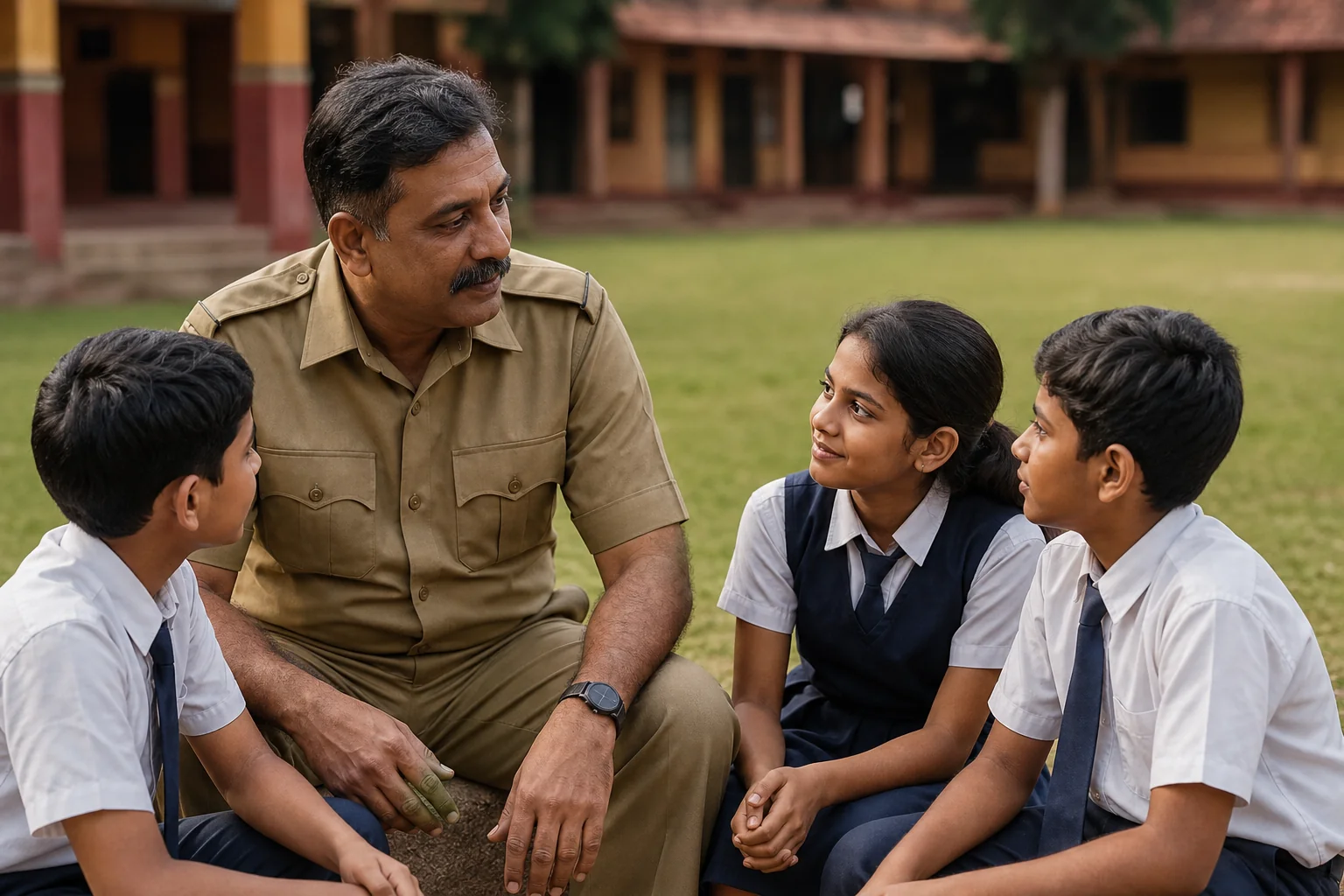
The Josh With Hosh philosophy, shaped by founder Major Pravin Singh (Retd.), an Army veteran, treats energy and wisdom as two halves of the same skill. A cadet full of josh but no hosh might charge into a decision without thinking it through. A cadet full of hosh but no josh might overthink every step and never act. Character, in this framework, is the ongoing practice of pairing the two, and mentors are trained to coach both sides rather than reward blind obedience alone.
This is also where moral education happens in practice: through debriefs after a failed task, quiet conversations after a conflict between cadets, and mentors modeling calm judgment instead of shouting authority. It’s a meaningfully different approach from the “harsh drill sergeant” image many parents carry from films, and it’s worth understanding before ruling out military schooling based on that stereotype alone.
Addressing the “Too Harsh” Concern: Is Military School Emotionally Safe for Children?
This is the question underneath most of the others, and it deserves a direct answer. A well-run military school is not about punishment for its own sake. It’s about consistent, predictable structure delivered by trained mentors who understand child development, not adults simply enforcing rules for compliance.
Here’s what emotionally safe discipline actually looks like in practice:
- Age-appropriate expectations. A six-year-old and a fifteen-year-old are held to very different standards; structure scales with maturity, not a single harsh standard for everyone.
- Mentorship over shouting. Correction happens through conversation and consequence, not humiliation in front of peers.
- Access to counseling and pastoral care. Homesickness, anxiety, and adjustment struggles are treated as normal parts of the transition, not weaknesses to be ignored.
- Transparent communication with parents. Families should be able to see, ask about, and understand exactly what happens on campus, especially in the early morning hours before visiting hours begin.
The National Commission for Protection of Child Rights (NCPCR) publishes clear guidelines on child safety and well-being in residential institutions, and it’s reasonable for parents to ask any boarding school how it aligns with those standards. If you’re weighing this concern seriously, it’s worth reading our detailed breakdown on what to look for in a disciplined boarding school, which lists specific questions to ask during a campus visit. A school that welcomes those questions openly is usually the one worth trusting with your child.
Military School vs Regular School vs Sainik School: Character-Building Comparison
Parents rarely compare just one option. Most are weighing a private military school against a regular CBSE school, a government Sainik School, or an elite boarding school in the Doon School mold. Here’s how these options typically compare on the specific dimensions that build character, not just academics.
| Character-Building Dimension | Private Military School (e.g., Cardinal Warriors) | Government Sainik School | Regular CBSE Day School | Elite Boarding School (Doon-style) |
|---|---|---|---|---|
| Daily structure & routine | High: fixed drills, PT, study hours | High: similar military-style routine | Low: routine ends when school day ends | Moderate to high: structured but less military-specific |
| Leadership opportunities | Frequent, integrated into daily cadet roles | Frequent, cadet-style | Occasional, mostly through prefect roles | Frequent, through houses and clubs |
| Physical resilience training | Daily PT, obstacle courses, endurance drills | Daily PT, similar to military schools | Limited, typically a few periods a week | Regular sports, less military-specific |
| Career-linked coaching (NDA, SSB, NEET, JEE) | Integrated on campus alongside academics | Focused mainly on NDA/defence entry | Usually outsourced to external tuitions | Rare, academics-focused only |
| Class size & personal mentorship | Smaller batches, closer mentor contact | Larger batches, limited individual attention | Varies widely by school | Smaller batches, high individual attention |
| Admissions flexibility | Private, flexible entry points across levels | Government exam-based, fixed intake years | Open admissions, minimal screening | Private, selective and limited seats |
For families still deciding between these paths, two of our detailed comparisons go further: Sainik School vs Military School in Chhattisgarh and Military School vs Doon School: Which Builds Discipline?. Both dig into cost, admissions process, and outcomes beyond just the character-building lens covered here.
Signs Your Child Is Building Real Character, Not Just Following Rules
Report cards won’t show this progress, so parents need to know what to watch for during holidays and phone calls. Genuine character growth tends to show up in specific, observable ways:
- Initiative without reminders. The child starts tasks on their own instead of waiting to be told twice.
- Honesty when no one is checking. They admit a mistake before being caught, rather than hiding it.
- Calmer reaction to failure. A poor test score or a lost match gets processed and moved past, rather than triggering a meltdown or excuses.
- Empathy toward younger or weaker peers. Older cadets naturally help juniors instead of mocking their struggles.
- Willingness to take responsibility for a group outcome. They stop blaming teammates and start asking what they could have done differently.
If these signs are showing up gradually over a term or two, the structure is working the way it’s meant to. If a child instead seems more anxious, withdrawn, or afraid of making mistakes, that’s a signal worth raising directly with the school’s mentors, not a reason to assume all military schools are the same.
How Cardinal Warriors in Raipur Builds Character Alongside Academics
Cardinal Warriors, based in Raipur, Chhattisgarh, was founded by Major Pravin Singh (Retd.), an Army veteran who built the school around one core belief: discipline and academics should never compete with each other, they should reinforce each other. The school runs a full CBSE-integrated curriculum from pre-school through higher secondary, alongside specialized coaching for NDA, NEET, JEE, SSB interviews, RIMC, RMS, AISSEE, and CA Foundation, all under one roof, on one campus near Raipur.
This integration matters for character building specifically. A child doesn’t have to choose between a disciplined military-style routine and strong academic preparation, or juggle a separate coaching center after school hours with no energy left. Everything, from early morning PT to evening study blocks to leadership drills, is designed around the same Josh With Hosh approach, so the lessons reinforce each other instead of competing for a child’s attention.
Parents evaluating schools for the first time often find it useful to start with a broader checklist before narrowing down to a specific campus. Our guides on what to look for in a disciplined boarding school and how to choose the right military school for your child walk through admissions criteria, campus visits, and questions worth asking before you commit. If cost planning is part of your decision, our breakdown of military school fees in India is a useful companion read.
Frequently Asked Questions
At what age should character building start in military school?
Most families see the strongest results when structured routines begin between ages 8 and 12, while habits are still forming and before major exam pressure sets in. That said, character education continues meaningfully through the higher secondary years too, especially when paired with leadership roles and exam-linked coaching like NDA or SSB preparation.
Does military school suit sensitive or introverted children?
Often, yes, with the right pacing. Introverted children sometimes gain the most from structured leadership roles, because the routine itself removes the social guesswork of “when should I speak up.” Good mentors adjust intensity for a child’s temperament rather than applying one standard to everyone, which is why a campus visit and conversation with the school’s counseling team matters before enrollment.
How is character building actually assessed at a school like this?
Unlike academic marks, character growth is tracked informally through mentor observations, leadership role performance, peer feedback in group tasks, and behavior during unsupervised routine activities like dormitory management and mess duties. Parents should ask schools directly how this is documented and communicated during term reports.
Is military school only useful for children aiming for a defence career?
No. While programs like NDA and SSB coaching support defence aspirants directly, the underlying character skills, discipline, leadership, resilience, and focus, transfer directly to any career path, including medicine, engineering, and civil services. Many families choose this path purely for the structure and values, independent of a defence career goal.
What’s the difference between military school discipline and harsh punishment?
Discipline is consistent, explained, and paired with mentorship; punishment for its own sake is arbitrary and fear-based. A quality school will always be able to explain the reasoning behind a rule and will pair correction with guidance, not humiliation. If a school can’t answer that question clearly during a visit, treat it as a red flag.
Character is not built in a single dramatic moment. It’s built in a thousand small, repeated choices, made under structure, guided by mentorship, and tested by real challenge. That is the quiet promise behind every well-run military school.
If you’re weighing whether a structured, values-driven environment is right for your child, the best next step is seeing it firsthand rather than deciding from a brochure alone. Read more about Cardinal Warriors’ approach to character building and how the Josh With Hosh approach shapes daily life on campus in Raipur. You’re also welcome to explore more with us before making a decision, or contact us directly to schedule a campus visit and speak with our mentors about your child’s specific temperament and needs. For daily glimpses of cadet life, follow along on Facebook, Instagram, and Twitter / X. Real character building starts with one honest conversation, and that conversation is worth having before the next admission cycle closes.

You may also like
What Age Is Best to Join a Military School?