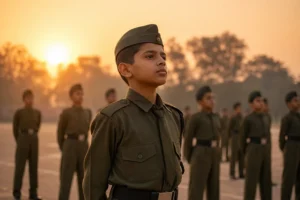
Does Military School Improve Discipline & Focus?
A mother in Rajnandgaon once described her ten-year-old son this way: “He’s smart, but he can’t sit still for twenty minutes without reaching for a phone.” She isn’t alone. Across Chhattisgarh, parents are watching bright children lose focus to screens, skip homework, and drift without any real sense of direction. So they ask the same question in different words: does military school improve child discipline and focus, or is it just strict uniforms and shouting drill instructors?
This is a fair question, and it deserves a real answer, not a slogan. The short version is yes, structured military-style education does measurably improve discipline and focus, but only when the structure is paired with mentorship, sound academics, and genuine care for the child. This article breaks down exactly how that happens, what changes in a child’s daily behaviour and classroom performance, and how a school like Cardinal Warriors in Raipur, Chhattisgarh, balances firm routine with a nurturing environment so discipline doesn’t come at the cost of a child’s happiness.
Why Parents Start Asking This Question
Most parents don’t wake up one day and decide their child needs a uniform and a bugle call. The question usually builds slowly, from small daily frustrations that add up.
- Mobile addiction and shrinking attention spans: Children who once read for an hour now struggle to finish a paragraph without checking a notification.
- Working parents with limited supervision time: Two-income households in cities like Raipur, Bilaspur, and Durg often can’t monitor homework, screen time, or bedtime every single day.
- Marks without character: Conventional schools track test scores closely but rarely measure focus, leadership, or self-control, leaving a real gap in a child’s development.
- A growing appetite for structured, value-based education: More Indian families are actively searching for boarding and military-style schools that build habits, not just grades.
If any of this sounds familiar, you’re not overreacting. You’re noticing a real gap between what regular schooling measures and what actually shapes a child’s future success.
The Mechanisms: How Military-Style Structure Actually Builds Discipline
Discipline isn’t a personality trait a child is born with. It’s a set of habits built through repetition in a consistent environment. This is where military school structure does its real work, not through punishment, but through routine.
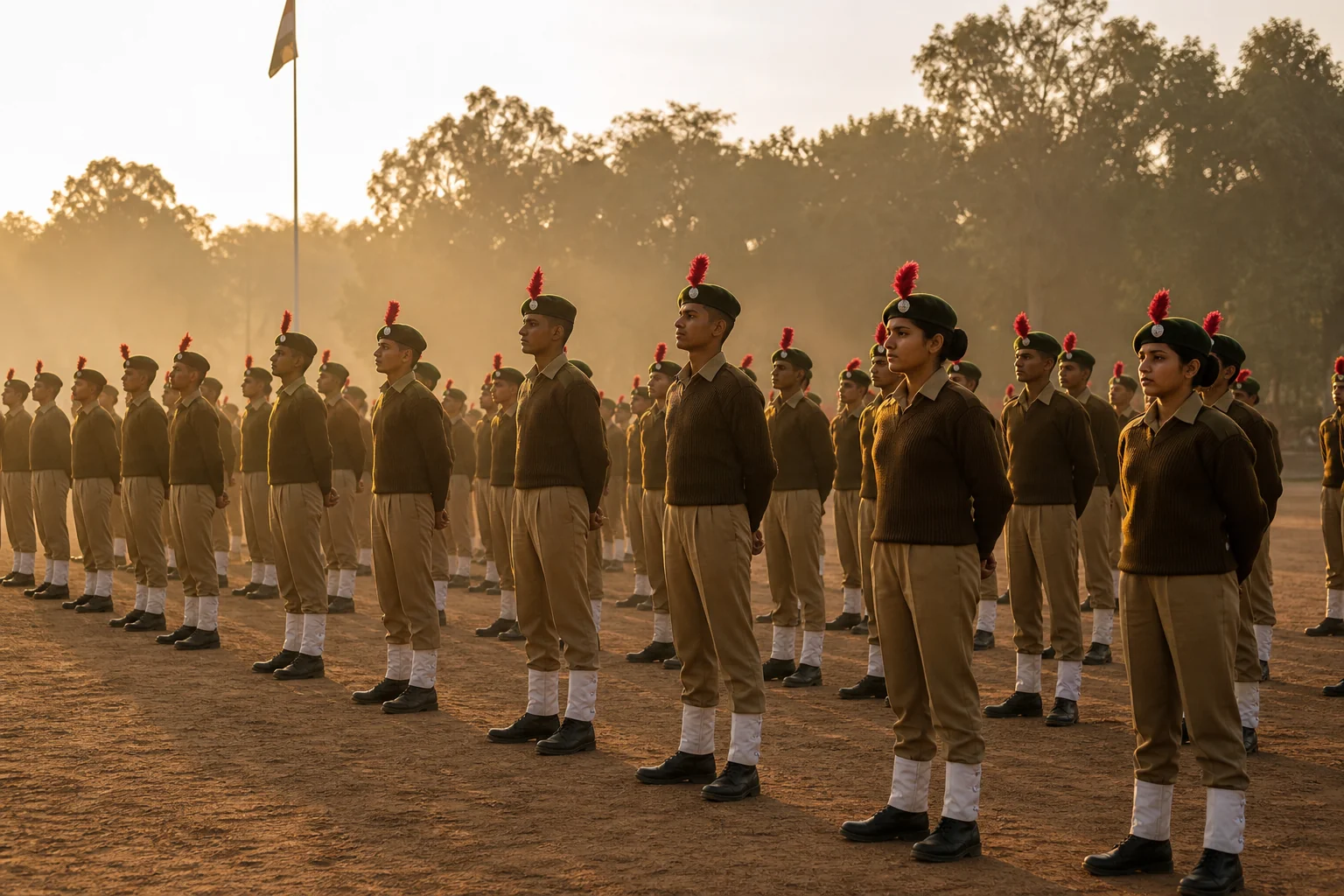
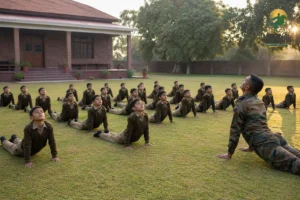
A typical day at a military school follows a fixed rhythm: wake-up at a set hour, physical training, breakfast, academic blocks, drill or leadership activity, study hall, and lights out. This is not busywork. Behavioural science has long shown that predictable routines reduce decision fatigue, the mental exhaustion caused by making too many small choices in a day. When a child doesn’t have to decide whether to wake up, study, or exercise, that energy gets redirected toward actually doing the task well.
Three specific mechanisms drive this change:
- Fixed daily routine: Waking, eating, training, and studying at the same time every day rewires the brain’s habit loops, making discipline automatic rather than effortful.
- Physical training: Regular exercise increases blood flow to the brain and has been linked by child development researchers to better attention and mood regulation, which is part of why physical training is core to military-style schooling and not just tradition.
- Peer and rank accountability: Drill formations, cadet ranks, and shared responsibilities mean a child is held accountable by peers and mentors daily, not just by a report card twice a year.
Over months, external structure becomes internal habit. That’s the actual mechanism behind the discipline improvements parents report, not fear of punishment, but repetition inside a consistent, supportive system.
Does It Improve Academic Focus Too? What Changes in the Classroom
Discipline outside the classroom is one thing. Parents really want to know whether it carries over into homework, exams, and long-term academic focus. It does, and here’s why.
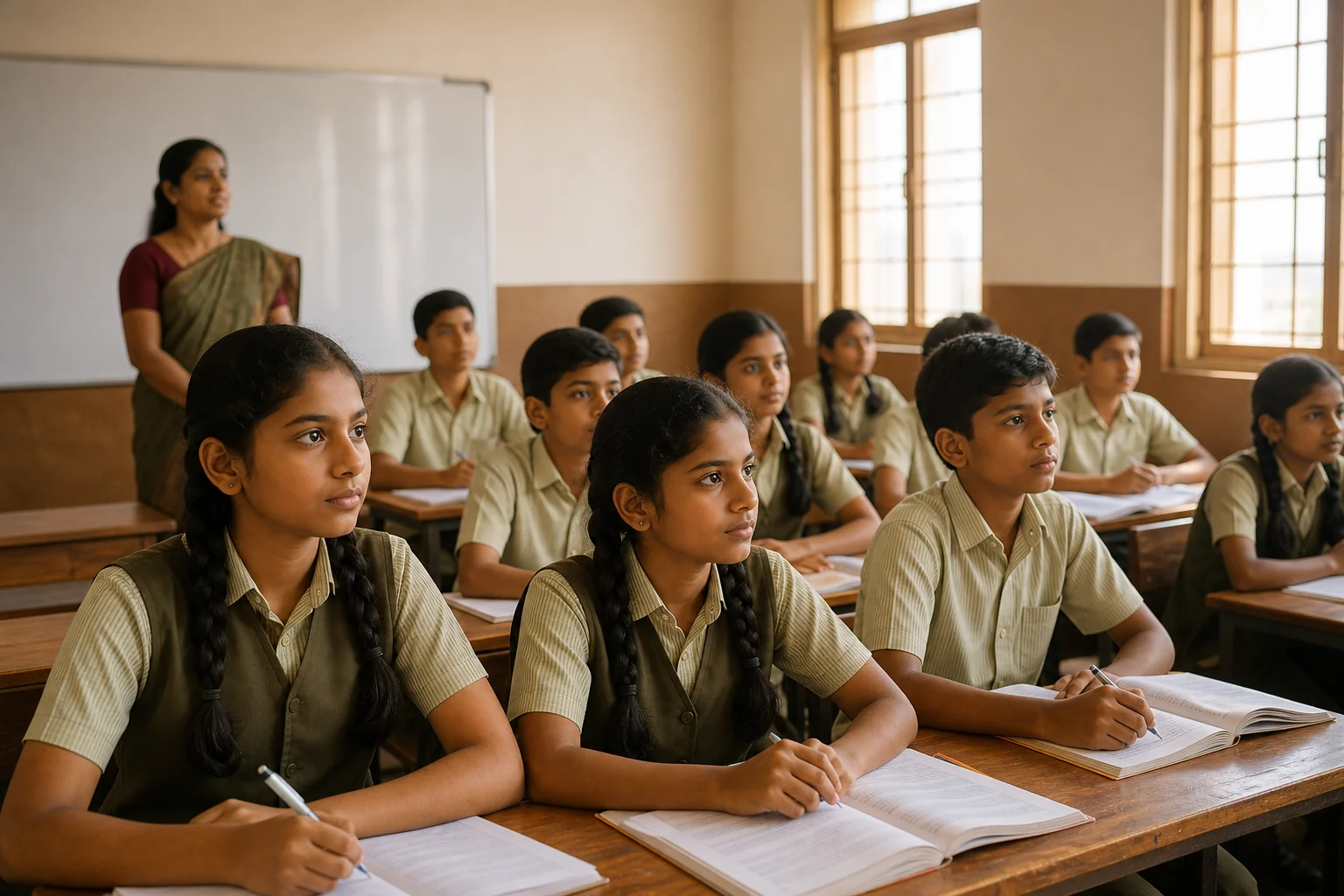
When screen time is limited and study hours are fixed, children rebuild a longer attention span simply because they aren’t constantly interrupted. Reduced distraction alone accounts for a significant part of the focus improvement families notice within the first term. Combined with a CBSE-integrated curriculum, this structure translates directly into stronger academic outcomes rather than discipline existing in a separate silo from studies.
At schools like Cardinal Warriors, this connection is deliberate. Military discipline isn’t separate from academics, it feeds directly into NDA coaching, NEET, JEE, SSB interview preparation, RIMC, and RMS entrance readiness. A child who has already learned to sit through a 45-minute drill or PT session without complaint finds it far easier to sit through a 90-minute mock exam. The same self-control muscle is doing both jobs.
Parents typically notice these markers of improved academic focus within the first two to three terms:
- Better attendance and punctuality without daily reminders
- Homework completed without repeated parental follow-up
- Improved performance in timed tests and mock exams
- Greater willingness to prepare for competitive exams like NDA, NEET, or JEE well in advance
To understand exactly what shape this education takes at the curriculum level, it helps to first look at what military school education in India actually includes, since the term covers a wide range of models, not all of them CBSE-integrated.
Character Building: Discipline Beyond the Report Card
Discipline that only shows up in a classroom doesn’t last. Real character building happens when a child practises responsibility in situations that actually matter to them.
Military-style schools use rotating leadership roles, cadet ranks, and group tasks to give every child a turn at responsibility, not just the naturally confident ones. A child who is made responsible for their dormitory’s morning inspection, or leads a squad during drill, learns accountability in a way no lecture can teach. Add structured moral education sessions and a values-based ethos, and the result is a child who carries discipline into decisions their parents never see: how they treat a junior student, how they respond to failure, how they handle a task nobody is watching them do.
This is a deeper question than academics alone, and it’s one many Chhattisgarh parents are actively researching. If you want a fuller exploration of this specific angle, our detailed piece on how to choose the right military school for your child walks through the character-building criteria worth checking before you enrol.
The Strictness vs Nurturing Question: Will My Child Be Happy?
This is usually the real worry hiding behind the discipline question. Parents picture a harsh, cold environment and wonder if their child will simply become obedient and unhappy rather than genuinely disciplined and confident.
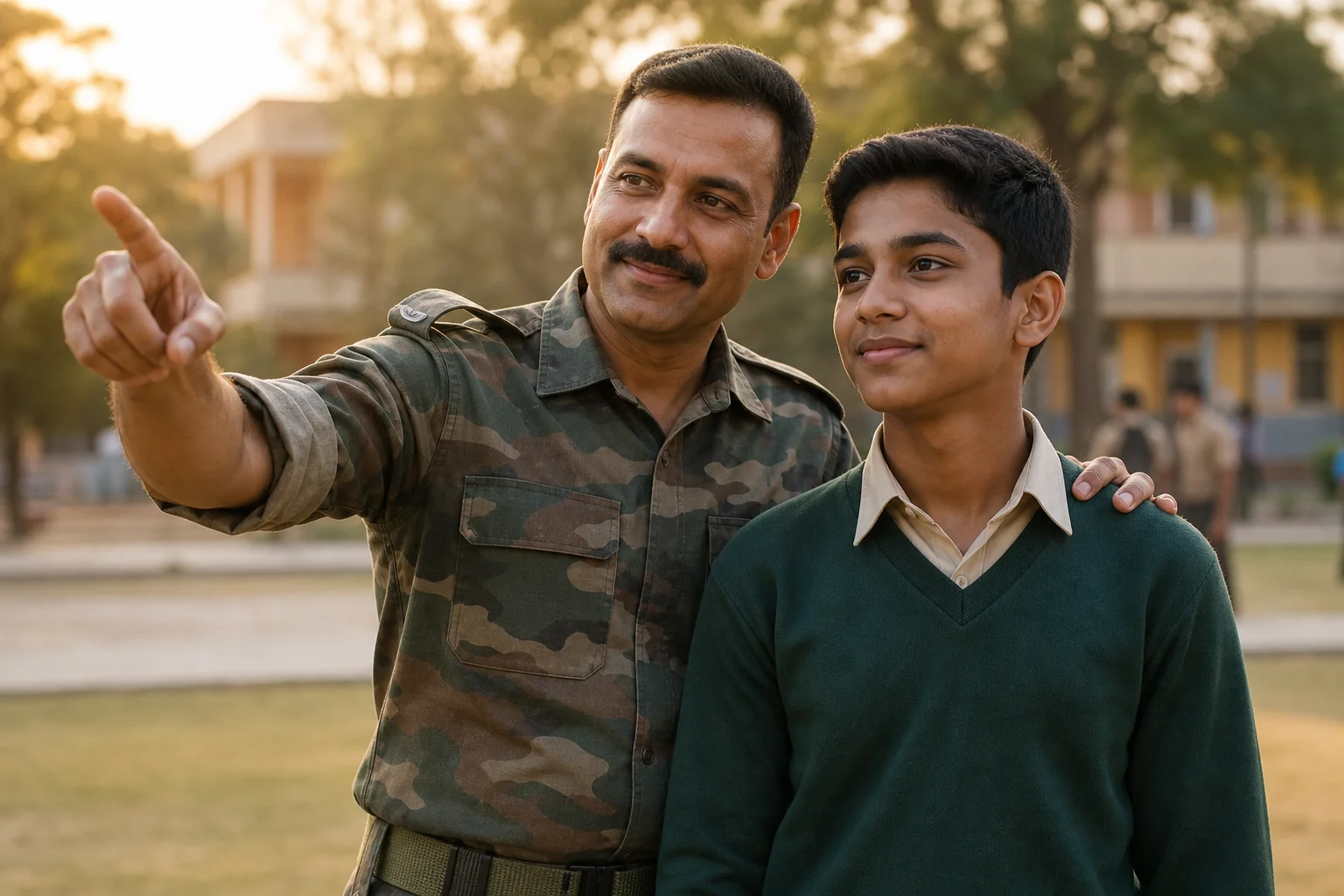
This is a legitimate concern, and it’s one Cardinal Warriors addresses directly through its CODE Principle, “Josh With Hosh”, which pairs energy and intensity (Josh) with wisdom and emotional grounding (Hosh). In practice, this means firm routines and physical training are balanced by mentorship, counselling access, house-parent style pastoral care, and a boarding environment designed for genuine supervision rather than isolation.
A well-run military school should never feel like a punishment posting. It should feel like a place where a child is pushed to grow, while also knowing an adult is paying close attention to their emotional wellbeing. Before choosing any school, ask direct questions about counselling access, senior mentorship structures, and how homesickness is handled in the first term. These answers tell you more about the nurturing side of the balance than any brochure will. For a broader safety-focused checklist, see our guide on what to look for in boarding schools with military training in Chhattisgarh.
What the Research and Real-World Patterns Show
It’s worth being honest here: there is no single definitive Indian study that isolates military schooling as the sole cause of improved discipline. What does exist is a consistent pattern across structured-environment research in child development, showing that predictable routines, physical activity, and mentorship relationships are associated with better self-regulation and attention in children and adolescents. Defence training institutions worldwide have long relied on the same principles, structured routine, physical conditioning, and graduated responsibility, to build focus and reliability in young recruits.
The honest caveat matters just as much as the pattern itself. Outcomes depend heavily on the quality of staff, the balance between discipline and care, and continued parental involvement. A uniform alone does not build character. A well-run structured environment, staffed by mentors who genuinely invest in each child, is what produces the discipline and focus parents are looking for. This is exactly why the choice of school matters more than the choice of “military school” as a category.
How Cardinal Warriors Blends Military Discipline With CBSE Academics
Cardinal Warriors was founded in Raipur by Major Pravin Singh (Retd.), an Army veteran who built the school around a simple belief: discipline and academic excellence should reinforce each other, not compete for a child’s time. The result is a CBSE-integrated curriculum running alongside military training, physical fitness, and leadership development from pre-school through higher secondary levels.
What makes this model distinct from a purely defence-track institution is the breadth of career coaching layered on top: NDA and RIMC/RMS preparation for students aiming at the armed forces, alongside SSB interview guidance, NEET and JEE coaching for medical and engineering aspirants, and even CA Foundation classes for students headed toward commerce and finance. A child doesn’t have to choose between a disciplined environment and a strong academic pathway. Both run in parallel.
How does this compare to other well-known options? Government-run Sainik Schools and Rashtriya Military Schools follow a more rigid, defence-focused admissions process through AISSEE, with limited seats and a narrower academic scope. Elite institutions like The Doon School or Welham Boys’ School offer strong all-round education but without a dedicated military training structure or defence exam coaching built into daily school life. Cardinal Warriors sits deliberately in between: a private school with more flexible admissions than a government Sainik School, but with a structured military ethos and integrated career coaching that general boarding schools don’t offer. For families weighing this specific comparison, our piece on military school versus regular school in Chhattisgarh lays out the practical differences in day-to-day student life.
Families researching costs alongside outcomes can also review our detailed breakdown in military school fees in India: what do they cost, which explains what typically drives fee differences between institutions.
Signs Your Child May Benefit From a Structured Military School Environment
Not every child needs this kind of environment, and that’s worth saying plainly. Consider a structured military school if you notice several of these signs together:
- Your child struggles with time management and needs constant reminders for basic routines
- Screen time and mobile use are becoming difficult to control at home
- Focus during homework or classwork has visibly declined over the past year
- Your child shows little sense of goal or direction beyond daily entertainment
- Your child has expressed genuine interest in defence, leadership, or uniformed careers
- You, as a parent, have limited daily bandwidth to supervise routine and study habits
If most of these apply, a structured boarding environment is worth serious consideration. If your child is already self-motivated, focused, and thriving in a regular school setting, that structure may not be necessary yet, though many parents still choose it for the leadership and career-coaching advantages alone. Either way, a campus visit and an honest conversation with your child before deciding is always the right first step.
Frequently Asked Questions
Does military school really improve focus, or does it just teach obedience?
Genuine improvement in focus comes from routine, physical activity, and reduced screen distraction, not from obedience training alone. A well-run school channels discipline into self-directed study habits and academic focus, rather than simple compliance.
What age is best for a child to join for the strongest discipline outcomes?
Younger children, typically from upper primary age onward, tend to internalise structured routines faster and with less resistance, though many students successfully join at the middle or secondary level as well. The right age depends more on the child’s readiness than a fixed cutoff.
Is military school too strict for a sensitive or introverted child?
Not necessarily. A quality school pairs firm structure with mentorship and counselling support, which often helps sensitive children build confidence gradually rather than overwhelming them. It’s important to ask specifically how a school supports emotionally sensitive students before enrolling.
How is Cardinal Warriors different from Sainik School or Rashtriya Military School?
Cardinal Warriors is a private institution with more flexible admissions than government-run Sainik Schools or RMS, and it layers broader career coaching, including NEET, JEE, and CA Foundation, alongside NDA and defence preparation, within a CBSE curriculum.
Does military school help with NDA, NEET, or JEE preparation as well as discipline?
Yes. At integrated schools, the same daily structure that builds discipline also supports rigorous, sustained exam preparation, since students are already accustomed to fixed study blocks and long periods of focused effort.
Making the Right Decision for Your Child’s Future
So, does military school improve child discipline and focus? The evidence and the mechanism both point to yes, but only where structure is paired with real mentorship, sound academics, and genuine care, not strictness for its own sake. Routine builds habit, physical training builds focus, and leadership responsibility builds character. When those three elements come with a school that also protects a child’s emotional wellbeing, the result is a confident, capable young person, not just an obedient one.
If you’re weighing this decision for your own child in Raipur, Chhattisgarh, or anywhere in India, the best next step isn’t another article, it’s a conversation and a campus visit. Read more about the Cardinal Warriors approach and see how the CODE Principle brings discipline and nurturing together in one campus. You can also explore more with us to understand the school’s academic and military training model in detail, or contact us directly to schedule a visit and ask the questions that matter most for your child’s specific needs. Follow along on Facebook, Instagram, and Twitter / X for a closer look at daily life on campus before you decide. Your child’s discipline and focus are worth more than a guess, give them a structured start today.

You may also like
What Age Is Best to Join a Military School?