Best Military School in Raipur: A Parent’s Guide for 2026
A grandmother in Raipur once asked an admissions officer a question that had nothing to do with rankings or results: “If my grandson falls sick at 2 AM, who walks into his room?” The officer didn’t have a rehearsed answer. That silence told her more than any brochure could. It is exactly the kind of question every parent should be asking, because knowing how to evaluate boarding school safety for kids matters far more than glossy photographs of a football field or a smart classroom.
Choosing a residential school is one of the biggest decisions a family in Raipur or anywhere in Chhattisgarh will make. It means handing over daily care of your child to people you may have met only twice. Before you sign an admission form, you need a clear method for judging what actually keeps children safe on a campus, not just what looks impressive during a scheduled tour. This guide walks you through the physical security checks, supervision standards, emotional well-being markers, and pointed questions that separate a genuinely secure boarding environment from one that only photographs well.
Why Campus Safety Should Come Before the Prospectus
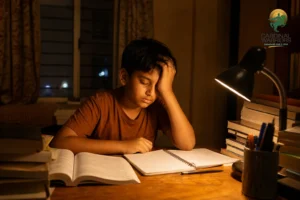
Most parents start their search by reading brochures. They look at the library size, the sports facilities, and the exam results. Safety usually gets a passing mention, a line about “24/7 security” that nobody verifies. This is backwards. A school can have strong academic outcomes and still fail at the basic job of keeping a ten-year-old safe and settled through the night.
Before you compare curriculum or coaching programs, you need a working method for assessing security infrastructure, staff accountability, and student well-being. Once you know a campus is safe, everything else, academics, sports, career coaching, becomes a real comparison instead of a leap of faith. This is especially true in a boarding context, where your child sleeps, eats, and spends unsupervised hours on campus, unlike a day school where they return home each evening.
1. Start With the Physical Security Infrastructure
Physical security is the most visible, and most easily verified, part of any campus. It is also where many parents stop looking too soon, satisfied by a boundary wall and a guard at the gate. Dig a little deeper.
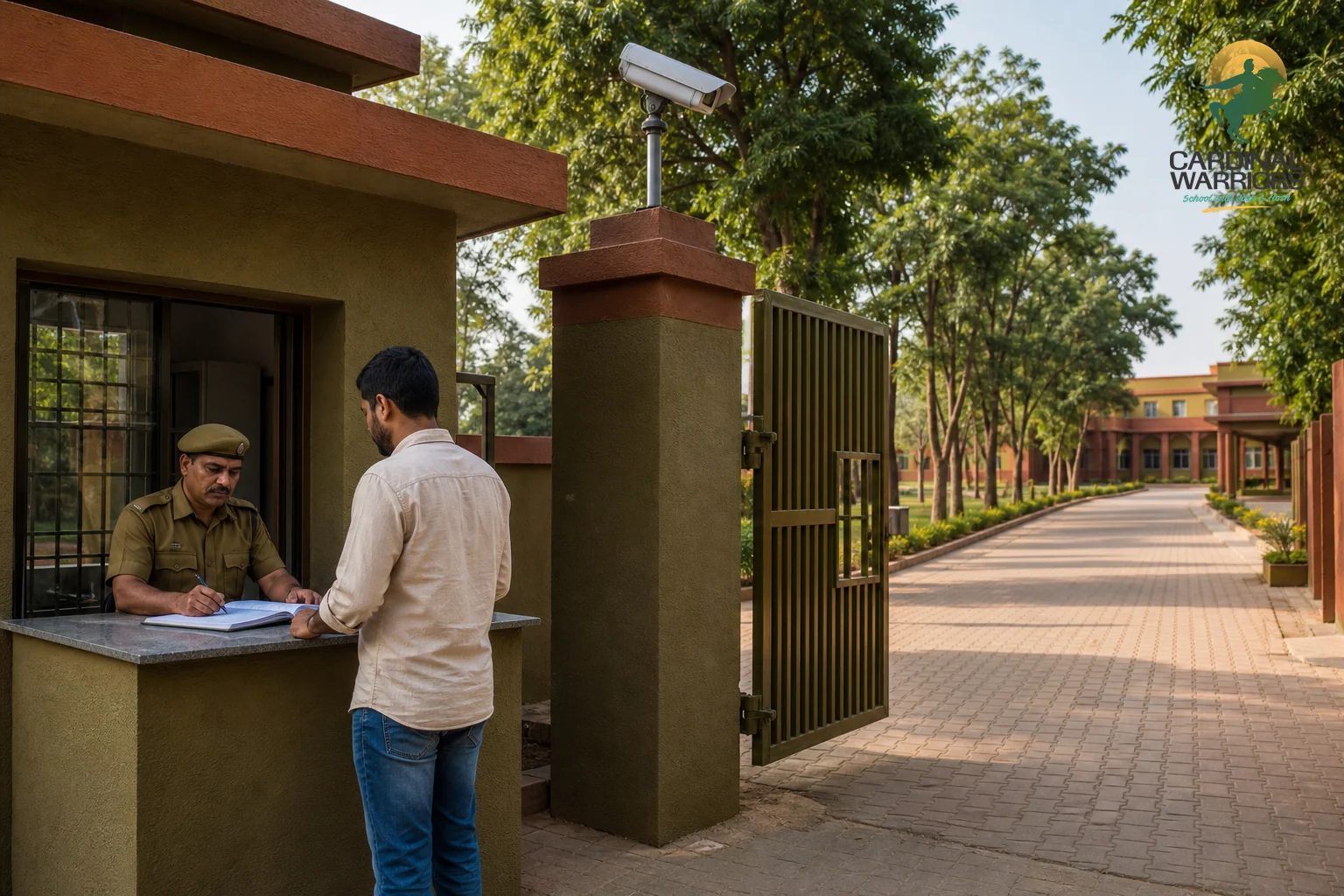
- Boundary and access control: Walk the perimeter if you can, or ask directly how the campus is enclosed. A single gated entry point with a manned checkpoint is a baseline to check for, not proof of overall security on its own.
- CCTV coverage: Ask where cameras are placed, corridors, dining hall, hostel entrances, sports areas, and how long footage is retained. A school that cannot answer this clearly likely hasn’t thought it through.
- Visitor management: Every visitor should be logged with ID verification, and no child should be released to anyone outside an approved pickup list without a phone confirmation to parents.
- Fire and emergency preparedness: Ask about fire extinguishers, emergency exits, and whether the school conducts fire drills. This is required under most state fire safety norms, yet not every school follows through in practice.
Don’t just accept a verbal “yes, we have all this.” Ask to see the visitor register from that morning, or ask when the last fire drill happened. A school confident in its systems will show you without hesitation.
2. Check the Adult-to-Child Supervision Ratio
Infrastructure only works if there are enough trained adults watching over it. This is the number most brochures never print, and the one that matters most once the lights go out in a dormitory.
Ask directly: how many wardens or house-parents are on duty per dormitory, especially at night? A single warden responsible for eighty children across two floors cannot realistically respond to an emergency in time. Look for schools that staff dedicated night supervisors, not just a security guard patrolling outside.
Also ask about medical coverage. Is there a resident nurse or doctor on call round the clock? What is the protocol if a child develops a fever at midnight, or twists an ankle during evening sports? A written, rehearsed protocol beats a vague assurance every time. Schools that take structured discipline and student welfare seriously usually have this documented and can walk you through it step by step.
3. Evaluate Emotional and Psychological Safety, Not Just Physical Security
A campus can have flawless CCTV coverage and still leave a child feeling unseen and anxious. Emotional safety is harder to measure, but it shows up in specific, checkable details.
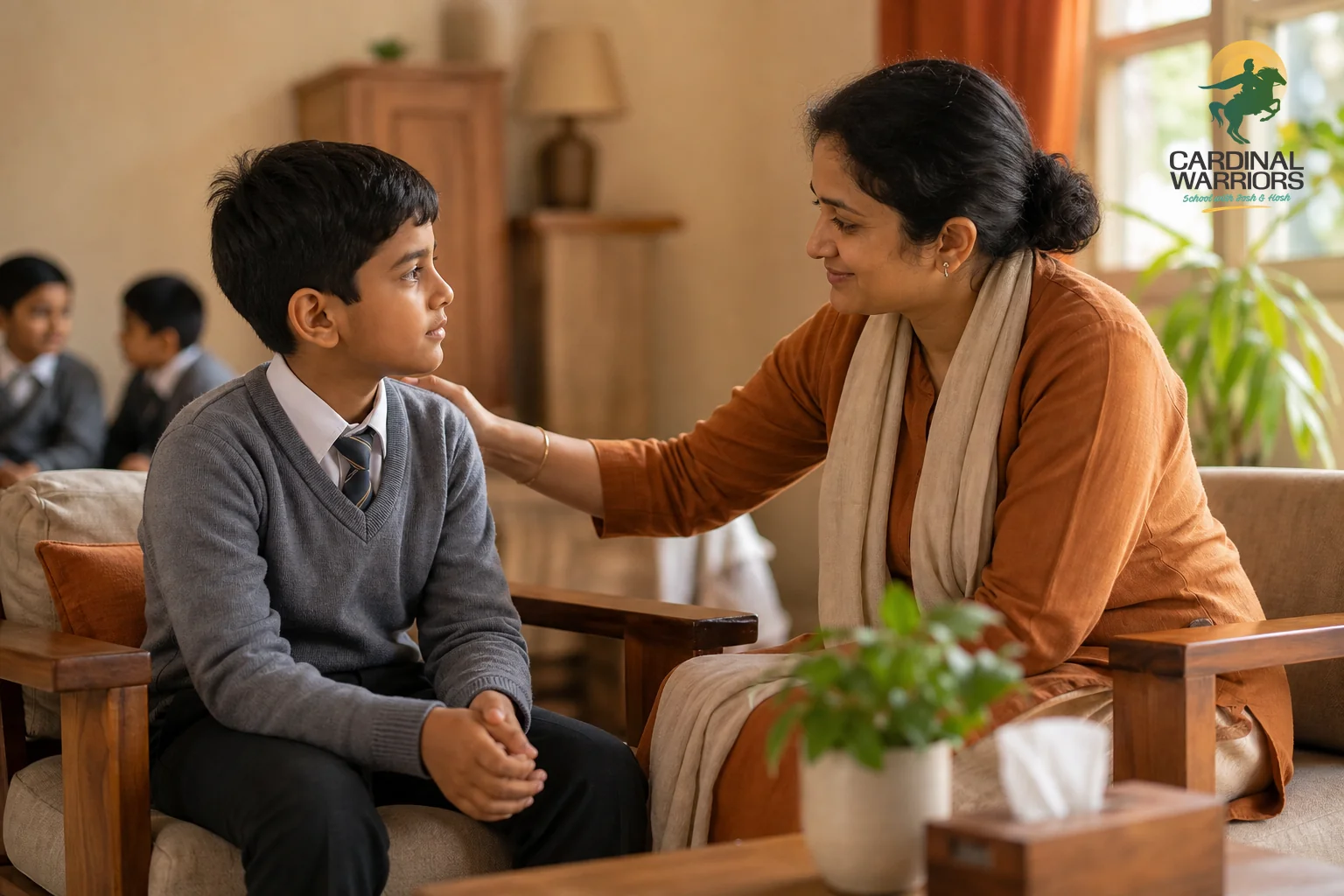
Ask whether the school has a written anti-bullying policy, and what the actual reporting process looks like for a child who feels targeted. Ask whether counselors or psychometric assessment support is available, not just for academic guidance, but for a homesick eight-year-old in their first month away from home. A school that treats emotional adjustment as seriously as physical security tends to build routines that reduce anxiety instead of ignoring it.
Structure itself plays a quiet role here. Children who know exactly what happens at 6 AM, at mealtimes, at study hour, and at lights-out tend to settle faster than those left to navigate unstructured free time in a new environment. This is one reason disciplined daily routines can support a child’s focus and confidence, not just their marks.
4. Ask the Right Questions During Your Campus Visit
A scheduled tour will always show you the most polished version of a campus. Your job is to ask questions that reveal what happens on an ordinary Tuesday, not just during a parent visit day.
- What is the exact adult-to-child ratio in the hostel at night?
- Can I see the hostel rooms and mess kitchen without advance notice next time?
- What is your written policy for handling bullying or ragging complaints?
- How often are police verification and background checks done for staff, including wardens and support staff?
- What happens if my child needs to speak to a parent urgently outside visiting hours?
- Can I speak with a current parent whose child boards here?
If possible, ask to see the hostel and dining area during an unannounced visit later in the term, not just the induction tour. Reasonable schools accommodate this. Speaking to current parents, even briefly, often tells you more about day-to-day reality than an hour with the admissions team ever will.
5. Red Flags That Should Make You Pause
Some warning signs are subtle, but they matter. Watch for these during your evaluation:
- Vague answers about staff qualifications or an unwillingness to share how wardens and instructors are trained and verified.
- No visible child protection policy, or one that exists only as a line in the prospectus with nobody able to explain how it works in practice.
- Reluctance to show the hostel or mess during your visit, or repeated postponement of a promised tour.
- High staff turnover, especially among wardens and house-parents, which disrupts the consistency children need to feel secure.
- No formal grievance redressal system for parents or students to raise concerns and track resolution.
None of these red flags alone should end a conversation, but two or more together are a strong signal to look elsewhere. For a deeper breakdown of specific warning signs, it helps to review what separates a genuinely secure campus from one that only appears that way on the surface, a topic covered in detail when comparing military school and traditional boarding environments for discipline.
How Structured Military-Discipline Campuses Support Safety and Well-Being
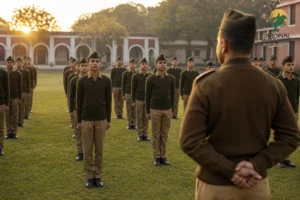
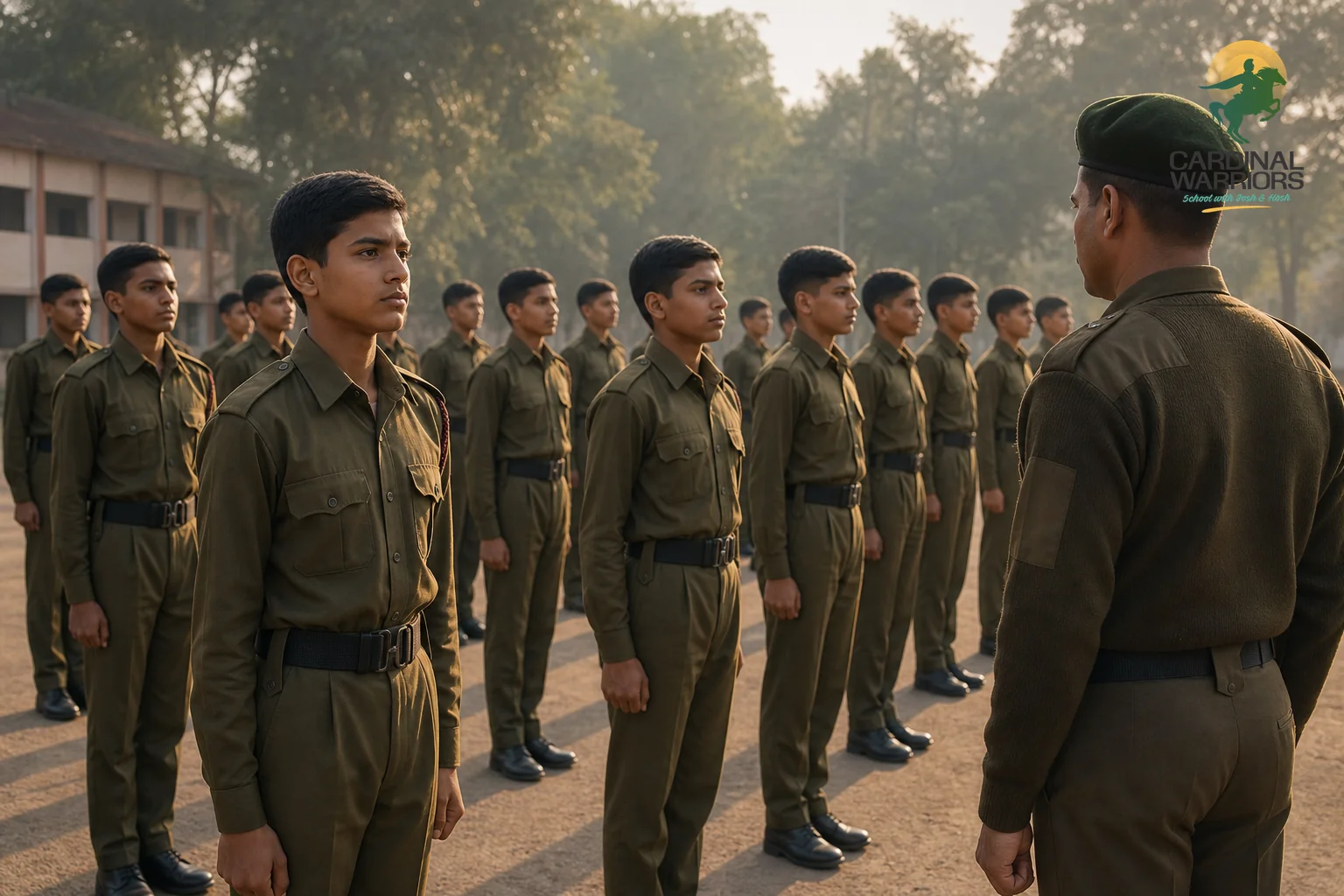
Structure and safety tend to move together. On a campus organised around clear daily routines, squad formations, and defined chains of accountability, it becomes much harder for a child to go unnoticed. At Cardinal Warriors in Nimora, Raipur, this structure is built into the school’s METTALS approach, which stands for Military Education, Tactical Training, Academic Learning and Sports, where cadets move through the day in supervised groups rather than loosely monitored free time.
Every squad answers to a designated instructor, and daily formations mean staff know quickly if a child is missing or unwell. This is not about strict punishment. It is about accountability that doubles as a safety net. The school’s value framework for student conduct works alongside this structure, aiming to build officer-like qualities while still keeping a nurturing, watchful eye on every child’s well-being, summed up in the phrase “Josh with Hosh,” enthusiasm balanced with awareness.
This structured approach doesn’t replace warmth with rigidity. Daily morning PT and yoga sessions, supervised sports periods, and smart classrooms all run on set schedules precisely so that no part of a child’s day is left unaccounted for. Parents evaluating how to choose the right military school for their child often find that this predictability, knowing where a child is and who is responsible for them at every hour, is part of what a safe environment looks like in practice.
Boarding School Safety Checklist: Comparing What to Evaluate
Different types of residential schools in and around Chhattisgarh structure their safety and supervision systems differently. Here is how the major categories typically compare on the parameters that matter most to parents.
| Safety Parameter | Private Military-Discipline School (e.g., Cardinal Warriors) | Government Sainik School / RMS | Traditional Elite Boarding School |
|---|---|---|---|
| Daily supervision structure | Squad-based, instructor-led formations through the day | House and dormitory system with defined staff duty | House-parent system, varies by school |
| Admission process | Direct, school-managed admissions | Centralised AISSEE entrance exam, limited seats | School-specific entrance test and interview |
| Night supervision | Dedicated wardens with defined dormitory ratios | Government-appointed hostel wardens | House-parent or matron system |
| Career-focused coaching | Integrated NDA, RIMC, RMS, NEET, JEE, CA Foundation coaching on campus | Primarily NDA and defence-focused preparation | General academics, limited defence-specific coaching |
| Class size flexibility | Smaller batches, more individual attention | Larger batches due to high demand and limited seats | Varies widely by institution |
| Grievance redressal | School-level, direct parent access to administration | Institutional, government-monitored process | School-level, varies in transparency |
This comparison is a starting point, not a final verdict. Every school, regardless of category, should be evaluated individually against the criteria in this guide. If you are weighing a private option like Cardinal Warriors against a government Sainik School, our detailed piece on Sainik School versus military school in Chhattisgarh covers admissions and structural differences in more depth. Families comparing costs alongside safety standards may also find our guide to military school fees in India useful for budgeting the full picture.
Frequently Asked Questions on Boarding School Safety
Is military school safe for young children?
Safety depends on the specific school’s systems, not the label alone. Look for verified supervision ratios, a written child protection policy, round-the-clock medical access, and transparent staff background checks, the same criteria that apply to any residential school. A structured, routine-driven campus tends to make it easier for staff to notice when something is wrong.
What documents should parents ask for before admission?
Ask for the school’s CBSE affiliation details, its child safety or anti-bullying policy in writing, fire safety compliance certificates, and information on staff verification procedures. You can also ask for a copy of the hostel rules and daily schedule so you understand exactly how your child’s day and night will be structured.
How is discipline different from punishment in a safe campus?
Discipline, in a genuinely safe environment, is about consistent routines, clear expectations, and accountability, not fear-based control. A school focused on character building through structured discipline should be able to explain its behaviour management approach clearly, including how it handles mistakes without resorting to harsh punishment.
What role does CBSE affiliation play in safety standards?
CBSE affiliation requires schools to meet certain infrastructure, staffing, and safety norms as part of their recognition process, covering areas like fire safety, sanitation, and classroom-student ratios. It is a useful baseline check, though parents should still verify specific hostel and supervision practices directly, since affiliation covers academic infrastructure more than boarding-specific protocols.
Making a Confident, Informed Choice for Your Child
Evaluating boarding school safety isn’t about finding a perfect institution. It is about asking specific, verifiable questions, checking supervision ratios, reviewing written policies, and watching how staff respond when questioned closely, rather than accepting reassurance at face value. A school that welcomes scrutiny, shows you its systems without hesitation, and speaks plainly about how it handles emergencies and everyday well-being is one worth taking seriously.
At Cardinal Warriors in Nimora, Raipur, this structured, accountable approach is built into daily campus life, from supervised squad routines to a residential setup guided by experienced educators and retired military personnel. If you want to see how this looks in practice, we invite you to read more about our campus and approach or explore our programs in detail before your visit. For direct answers to your safety and admissions questions, you can contact us and speak with our admissions team.
You can also follow campus updates and everyday life at Cardinal Warriors on Facebook, Instagram, and Twitter/X. Take the checklist in this guide with you on your next campus visit. The questions you ask before enrollment will shape how confident, and how safe, your child feels long after the admission form is signed.

You may also like
SSB Interview Coaching: What Parents Should Know