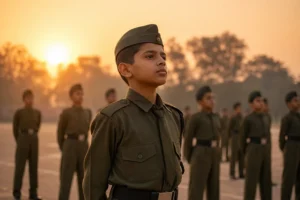
What Age Is Best to Join a Military School?
The best age to join a military school is between 4 and 10 years old, when children absorb routine, discipline and physical training with the least resistance, but this does not mean older children miss the boat. Middle school entrants (age 10-13) still get 4-6 years to prepare for RIMC, RMS and NDA, while high schoolers (14-16) can join and build strong character and exam readiness with focused effort. The right age depends less on a fixed rule and more on your child’s readiness and your family’s goals.
Key Takeaways
- Earliest entry wins on habit formation: Children who join at pre-primary or primary level (age 4-10) treat morning PT, drills and routine as normal life rather than a disruption, because they never knew anything else.
- Middle school is the RIMC/RMS sweet spot: RIMC entrance typically suits boys around 11.5 to 13 years after Class 6, 7 or 8, and RMS admissions target Class 6 and Class 9, so joining at this stage still leaves years to prepare.
- High school entry is not too late: Students joining in Class 9 to 11 can still build strong NDA and SSB readiness in 1-2 years of structured coaching, though the adjustment curve is steeper.
- Cardinal Warriors admits across every stage: From pre-primary through higher secondary, so a family is never locked out of military-style education just because a child has already started regular school.
- Adjustment matters more than birthdate: A well-supported 14-year-old often settles faster than an unsupported 6-year-old; readiness and family involvement decide outcomes more than age alone.
At a Glance: Best Age to Join Military School by Stage
| Entry Stage | Typical Age | Focus at This Stage | Exam Runway Before NDA/RIMC/RMS | Adjustment Period |
|---|---|---|---|---|
| Pre-Primary / LKG-UKG | 4-6 years | Routine, play-based discipline, habit building | 7-9 years | Very short; treated as normal school life |
| Primary (Class 1-5) | 6-10 years | Structured PT, basic academic and moral foundation | 4-8 years | Short to moderate |
| Middle School (Class 6-8) | 10-13 years | RIMC/RMS-focused prep, drills, tactical basics | 3-6 years | Moderate; needs structured onboarding |
| High School (Class 9-10) | 14-15 years | NDA foundation, academic rigor, leadership roles | 2-3 years | Longer; needs self-motivation |
| Higher Secondary (Class 11-12) | 16-17 years | NDA/SSB intensive coaching, competitive exams | Under 2 years | Steepest; but character gains still real |
Parents across Raipur and greater Chhattisgarh keep circling the same question during admission season: is my child too young for boarding discipline, or have we already missed the window? Some are weighing military schooling for a five-year-old who has never spent a night away from home. Others are researching options for a Class 9 student who suddenly wants to attempt NDA and has almost no runway left. Both situations are common, and both can work out well with the right approach.
The honest answer is that there is no single “correct” age. What matters is matching the entry point to your goal. If discipline and habit formation are the priority, earlier is easier. If a specific exam like RIMC, RMS or NDA is the target, the age is partly dictated by that exam’s own eligibility criteria. This is exactly why a school offering admission from military school education in India at every stage, rather than one fixed entry class, gives families more room to decide based on the child, not the calendar.
1. Pre-Primary and Primary Entry (Age 4 to 10): Building the Foundation Early
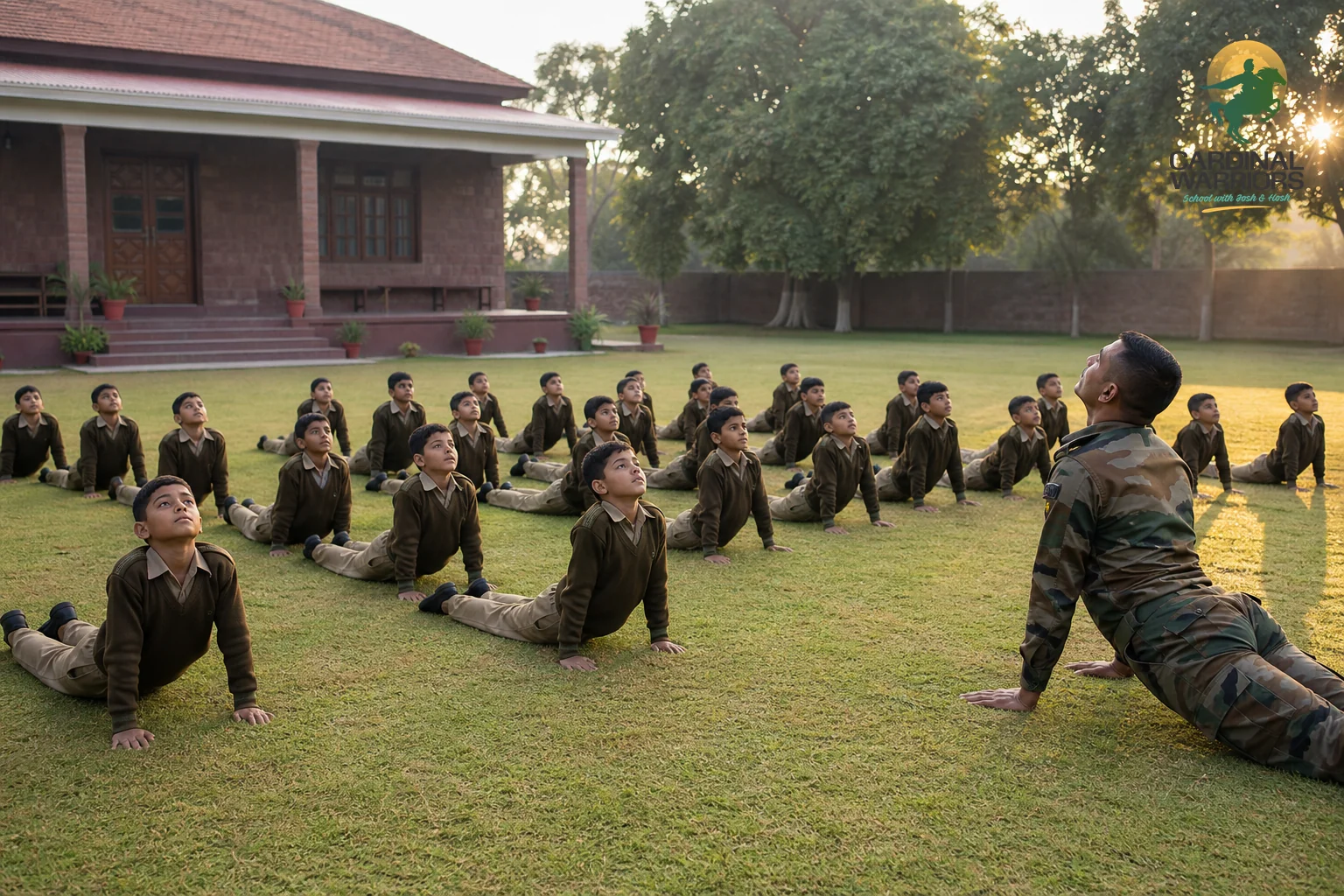
Children who join a military school between ages 4 and 10 grow up inside the routine instead of adjusting to it later. A five-year-old who starts the day with a short PT session and structured play does not experience it as strict; it is simply what school looks like. By the time they reach Class 6, habits like making their own bed, standing in formation, or following a timetable without reminders are automatic.
At Cardinal Warriors, this stage is handled through the METTALS framework, which stands for Military Education, Tactical Training, Academic Learning and Sports, calibrated for young learners. Tactical training at this age looks like obstacle-style play, teamwork games and simple drill patterns rather than anything demanding. Academic learning follows the standard CBSE curriculum for pre-primary and primary classes, so there is no compromise on foundational literacy and numeracy while discipline is being built in parallel.
Early entry also gives the longest possible runway toward big milestones. A child who joins at age 6 has close to seven years before RIMC eligibility windows open around age 11.5, and roughly a decade before NDA written exams become relevant. That time is not wasted; it is used to build reading habits, physical stamina, and comfort with structured routine well before any exam pressure enters the picture.
There is a quieter benefit too. Early boarding-style routine reduces exposure to unsupervised screen time and mobile addiction before those habits take root. Many parents who write in to ask about whether military school improves discipline and focus are really asking how to prevent distraction from ever becoming a problem in the first place. Starting early is one direct answer to that concern.
2. Middle School Entry (Age 10 to 13): The RIMC and RMS Sweet Spot
Many families discover military schooling only after a few years in a regular school, often around Class 5 or 6. This is not a disadvantage. Age 10 to 13 lines up almost exactly with the entrance windows for two of the most sought-after defence-track institutions in the country.
The Rashtriya Indian Military College (RIMC), whose admissions are administered through the official RIMC portal, admits boys roughly between 11.5 and 13 years of age, typically after Class 6, 7 or 8, through a written exam followed by an SSB-style interview. The Rashtriya Military School (RMS) system, meanwhile, runs its main entry points at Class 6 and Class 9. A child joining a military school at age 10 or 11 still has three to six years to build the academic depth, physical fitness and interview confidence these exams demand.
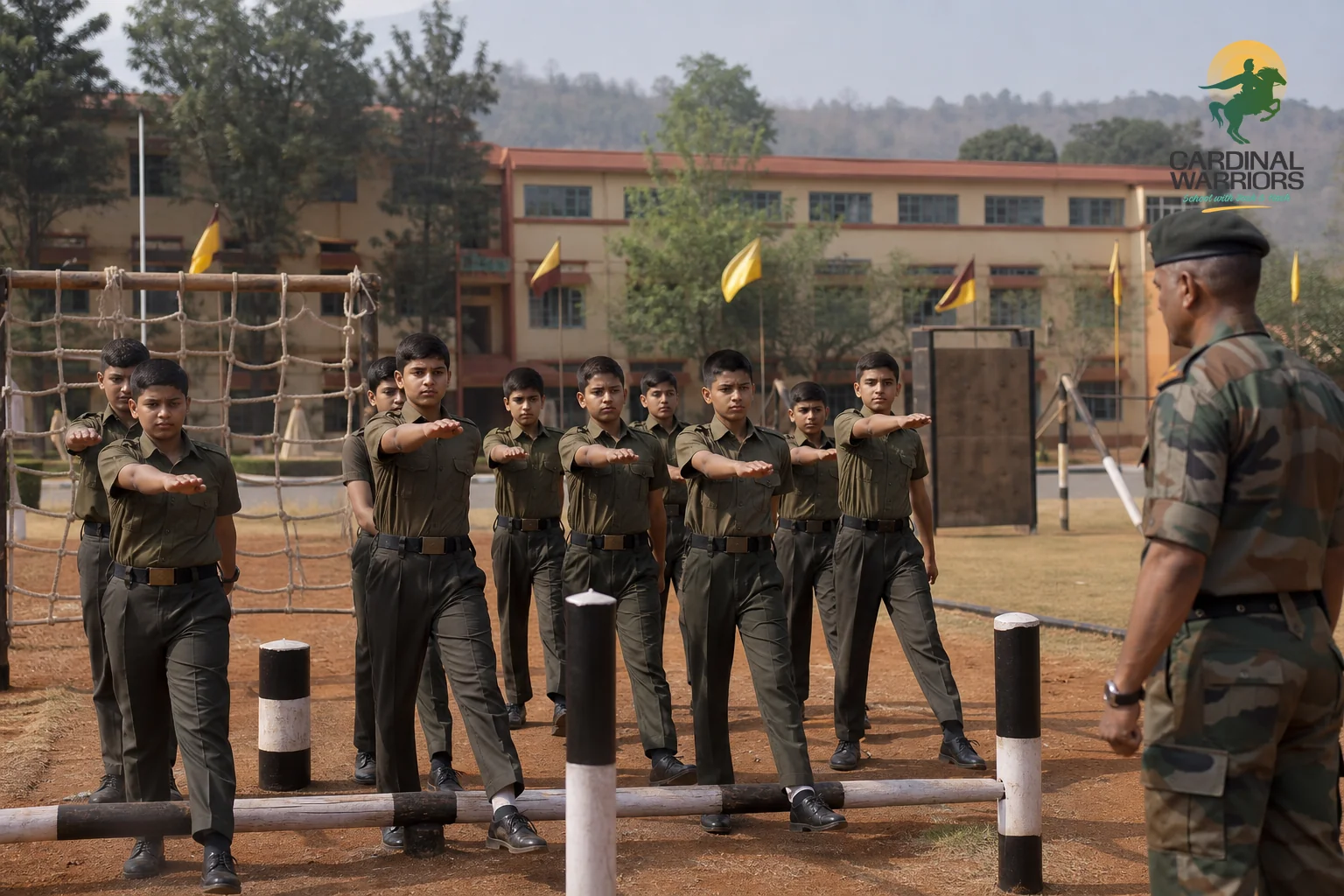
This age band does need a slightly more deliberate onboarding than the youngest entrants. A ten-year-old arriving from a conventional day school has already formed habits around screen time, home routines and academic pace that differ from a residential military-discipline setup. Cardinal Warriors handles this transition through structured house supervision, psychometric assessment on entry, and gradual escalation of physical training rather than an abrupt shift. Within a term or two, most children in this age group settle fully into the rhythm.
Parents comparing options at this stage often ask how a private military school stacks up against government alternatives. If that is your question, our detailed comparison on Sainik School vs military school in Chhattisgarh and our guide on RIMC and RMS prep schools in Chhattisgarh walk through the entrance timelines, coaching structure and outcomes in detail.
3. High School and Higher Secondary Entry (Age 14 to 16): Late but Not Too Late
Some students join a military-discipline school as late as Class 9, 10 or even 11, usually because a parent or the student themselves develops a sudden, strong interest in a defence career, NEET, JEE or CA Foundation preparation, or simply wants a more structured environment before board exams. This is genuinely late compared with the ideal window, but it is far from a lost cause.
The NDA written examination, conducted twice a year by the Union Public Service Commission, generally becomes relevant to students around 16.5 to 19 years of age, typically while in or just after Class 12. A student joining at 14 or 15 still has two to three years, enough time for focused academic coaching, physical conditioning and SSB interview preparation if the effort is consistent. What changes at this stage is the intensity required. There is less room for gradual habit-building and more need for the student’s own motivation to carry them through the adjustment.
Character-building outcomes are still meaningful at this age, just compressed into a shorter timeline. A 15-year-old who commits to daily PT, structured mentorship and disciplined routine for two years will show real change in confidence, time management and physical fitness, even if the transformation looks different from a child who has had a decade inside the system. If you are weighing whether this stage still delivers genuine value, our piece on whether military school is good for character building covers what changes to expect and over what timeframe.
How Military Training Adapts Across Age Groups
A common misconception is that military school training looks the same for a six-year-old and a sixteen-year-old. It does not. The METTALS framework is deliberately staged by age and academic level, so training intensity and expectations rise gradually rather than being applied uniformly.
- Pre-primary and primary: Play-based discipline, short PT sessions, simple drill patterns and moral education through stories and daily routine.
- Middle school: Structured 30-minute morning PT and yoga, basic tactical exercises, introduction to obstacle courses, and early exposure to squad-level teamwork.
- High school and higher secondary: Full tactical training, leadership responsibilities such as leading a squad or briefing juniors, intensive NDA/SSB-oriented coaching, and academic tracks for NEET, JEE or CA Foundation running alongside military training.
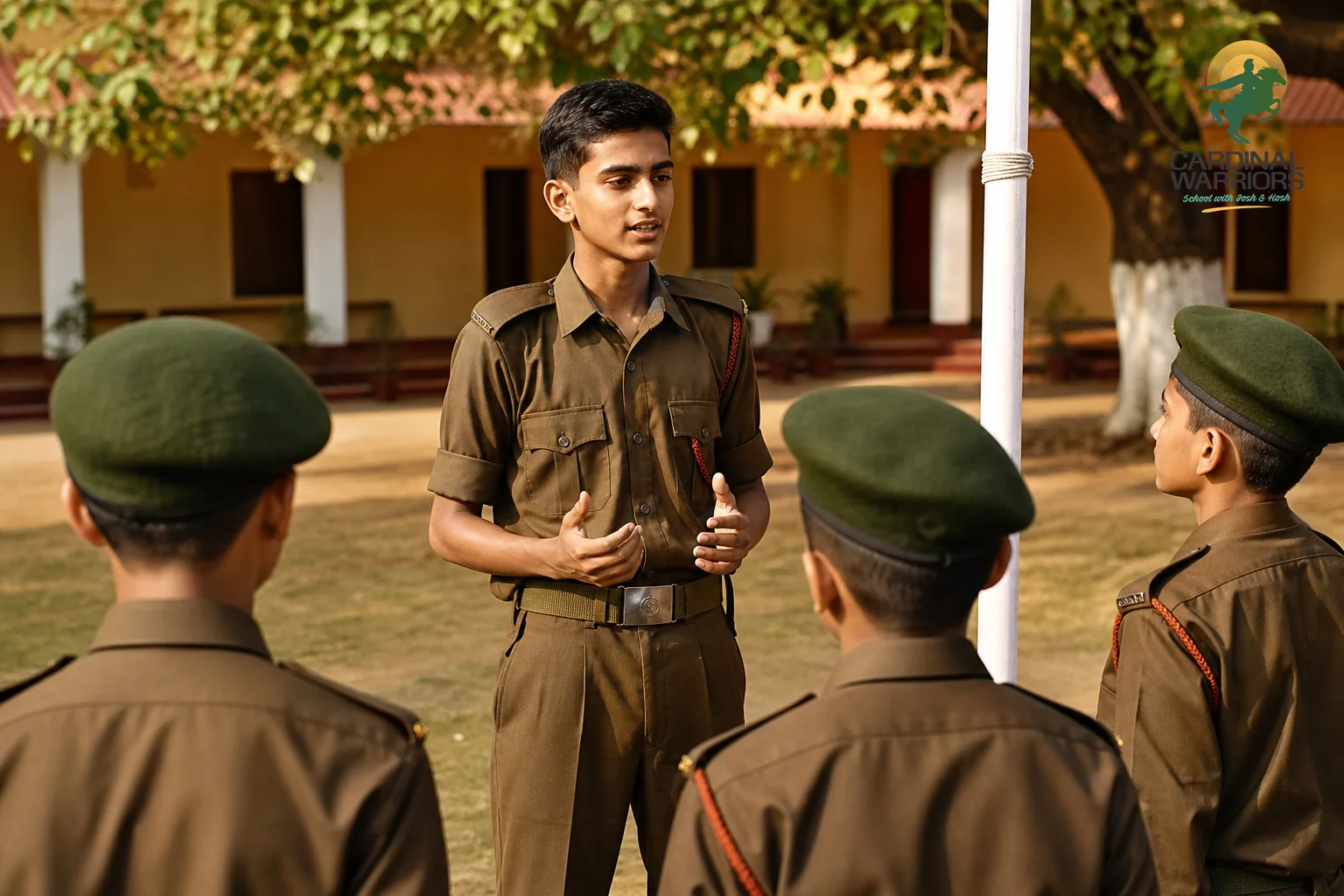
Every stage also includes psychometric testing and personalised career counseling, which helps identify whether a child is naturally drawn toward the armed forces, medicine, engineering or another path well before board exams force a decision. Boarding supervision follows the same graded logic: younger children get closer, more frequent house-parent contact, while older students are given structured independence that mirrors the responsibility they will need for SSB interviews and, eventually, officer training.
This staged model is one reason schools built specifically around military discipline tend to outperform a bolt-on coaching class layered over a regular school day. For a broader look at how the two models differ, see our comparison of military school vs regular school in Chhattisgarh style setups.
What Parents Worry About: Readiness, Homesickness, and Adjustment
Two opposite anxieties show up at almost every admission counseling session. Parents of very young children ask whether a five- or six-year-old is too small for boarding life. Parents of teenagers ask whether their child is too old to adapt to a structured, disciplined culture after years of a relaxed routine.
Both concerns deserve honest answers rather than reassurance for its own sake.
For younger children, readiness has less to do with age in isolation and more to do with basic independence: can the child dress themselves, follow simple instructions, and cope with short periods away from parents. Most children who show these signs by age 5 or 6 settle into a structured boarding routine within a few weeks, often faster than expected, because young children adapt to new environments quickly when the environment itself is warm and consistent.
For older children, the bigger variable is motivation rather than age. A 15-year-old who wants to be there, even if the desire came from a single inspiring conversation or a Republic Day parade on television, will push through the early discomfort of stricter routine far faster than a younger child who was enrolled without any say in the decision. This is why Cardinal Warriors involves the student, not just the parent, in admission counseling wherever the child’s age allows it.
Signs that suggest a child is ready, regardless of exact age, include:
- Basic personal independence appropriate for their age (dressing, eating, following a schedule)
- Some exposure to team activities like sports, scouts, or group classes
- An expressed interest, however small, in structure, uniforms, sports or the armed forces
- Parents who are prepared to support the transition with regular visits and consistent messaging at home
If you are still mapping out what a genuinely disciplined boarding environment should offer at any age, our guide on what to look for in a disciplined boarding school lays out the specific markers to check during a campus visit.
Why Early Enrollment at a CBSE Military School Gives a Long-Term Edge
While late entry works, the compounding advantage of starting early is real and measurable over the years. A child who joins a CBSE-affiliated military school at pre-primary or primary level is building two things simultaneously for a decade: strong academic fundamentals under the CBSE board, and physical, mental and leadership conditioning that most regular schools never attempt.
By the time an early entrant reaches the RIMC or RMS entrance age window, they are not starting tactical training from zero. They have already spent years with structured PT, moral education woven into daily routine, and exposure to sports like football, hockey, boxing and even horse riding. That head start tends to show up later as stronger stamina in SSB group tasks, better time management in NDA written exams, and more natural composure during interviews.
Compare this with Sainik Schools, which admit primarily from Class 6 and Class 9 through AISSEE, or institutions like The Doon School, which focus on broad-based leadership without a defence-specific coaching track. Cardinal Warriors’ model, admitting from pre-primary through higher secondary under School Code 16180, means a family does not have to time an application around a single narrow entry window. For a side-by-side look at how these paths compare, read our analysis of military school vs Doon School for building discipline, and our breakdown of NDA coaching schools in Chhattisgarh for how early academic foundations translate into exam results years later.
Cost is naturally part of this decision too. Parents often ask how fees differ by entry stage and boarding requirements; our detailed military school fees in India guide and the more granular CBSE military boarding school fees breakdown cover what to budget at each stage, from pre-primary boarding to senior secondary coaching-intensive years.
Frequently Asked Questions
Is there a minimum age to join Cardinal Warriors?
Cardinal Warriors admits students from the pre-primary level right through to higher secondary, since it follows the full CBSE curriculum structure. There is no single fixed “military school starting age”; admission timing depends on the class level and boarding readiness of the child, which the admissions team assesses individually.
Can a Class 9 or 10 student still prepare for NDA effectively?
Yes. A student joining at 14 or 15 still has two to three years before the NDA written exam becomes relevant, which is enough time for structured academic coaching, physical conditioning and SSB interview preparation, provided the training is consistent and the student stays committed to the daily routine.
Does joining later affect RIMC or RMS eligibility?
RIMC and RMS both have their own fixed age and class-based eligibility rules set by the respective boards, independent of which school a student attends. Joining a military-discipline school closer to the eligible age (around Class 6 to 8) still leaves enough time to prepare, though earlier entrants generally arrive better conditioned for the physical and interview components.
What is the ideal age to start SSB interview preparation?
Structured SSB-style preparation, including group tasks, psychological testing familiarity and interview practice, works best when started at least one to two years before the actual exam window, typically from Class 9 or 10 onward. Earlier exposure through school-level leadership roles and team activities also builds a strong foundation well before formal coaching begins.
Is boarding suitable for very young children?
Boarding can suit children as young as pre-primary age when the child shows basic personal independence and the school provides close, age-appropriate supervision. Cardinal Warriors staggers house-parent attention and daily structure by age group, so younger children receive closer support than older, more independent students.
The best time to start is the moment your child is ready, not a fixed birthday on a calendar. What matters most is choosing a school built to support that readiness at every single stage, from the first day of kindergarten to the final year before NDA.
Whether your child is five years old and just beginning their academic journey, or fifteen and finally ready to commit to a disciplined path toward NDA, RIMC or RMS, the right decision is the one made with clear eyes about readiness, not anxiety about timing. Cardinal Warriors, Chhattisgarh’s first military-discipline CBSE school, is built precisely to support families at every one of these entry points. Read more about our approach and campus to see how our training framework adapts to your child’s age and goals, or explore more with us before your next admission decision. For direct answers about admission timing for your child’s specific age, contact us today and speak with our admissions team. You can also follow our cadet life and campus updates on Facebook, Instagram and Twitter/X.

You may also like
Does Military School Improve Discipline & Focus?