What Holistic Development Really Means at a Military School
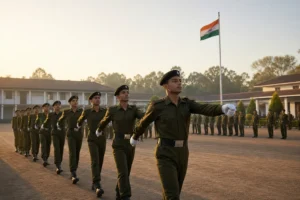
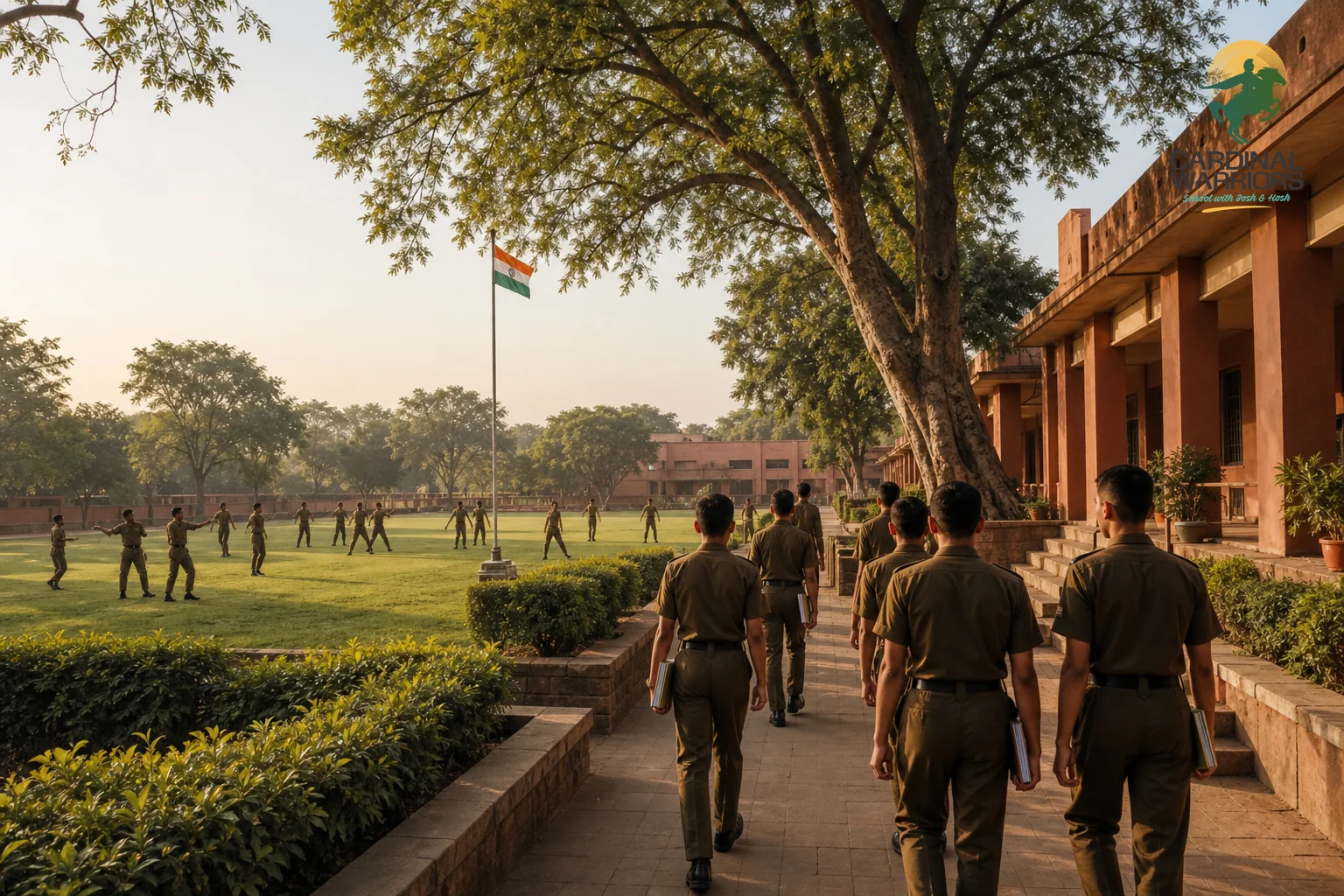
Holistic development in school means growing a child’s academics, physical fitness, moral character, and leadership ability together, as one system, rather than treating marks as the only measure of success. At a military-discipline school like Cardinal Warriors in Raipur, this is not a poster on a wall. It is a timetable that puts drill, classroom, sport, and values practice inside the same day, every day, so no single pillar grows at the cost of another.
Key Takeaways
- Four pillars, one schedule: Real holistic development covers academics, physical fitness, moral values, and character/leadership inside a single daily routine, not as separate, optional add-ons.
- Conventional CBSE schools often deliver one pillar well: Most day schools excel at academics but treat PT, values, and leadership as short periods squeezed around exam prep.
- METTALS is the delivery system, not the marketing: Cardinal Warriors structures Military Education, Tactical Training, Academic Learning, and Sports into the same day so each pillar reinforces the others.
- Parents should verify, not just read brochures: A genuine holistic program shows up in daily schedules, supervision ratios, and how values are practiced, not just in prospectus language.
- Character building measurably improves focus: Structured physical training and squad responsibility directly counter the mobile-addiction and attention-span concerns many Chhattisgarh parents raise.
Holistic Development at a Glance
| Pillar | What It Means | How Conventional CBSE Schools Handle It | How Cardinal Warriors Delivers It |
|---|---|---|---|
| Academics | Curriculum mastery, exam readiness, competitive exam prep | Core focus; often the only measured outcome | Full CBSE curriculum plus integrated NDA, AISSEE, RIMC, RMS, NEET, JEE and CA Foundation coaching |
| Physical Fitness | Strength, stamina, motor skills, healthy routine | One or two PT periods a week, often skipped before exams | Daily 30-minute morning PT/yoga plus obstacle courses and tactical drills |
| Moral Values | Honesty, respect, discipline, service before self | A moral science or value-education period, rarely practiced daily | Values framework lived through daily routine, mess discipline and squad duties |
| Character & Leadership | Decision-making, accountability, teamwork under pressure | Limited to student council or annual events | Squad postings, sports captaincy, tactical training exercises and psychometric career counseling |
| Supervision | Consistent adult guidance beyond classroom hours | Ends when the school bell rings | Residential boarding on a 5-acre campus with round-the-clock staff presence |
| Screen & Focus Management | Reducing distraction, building sustained attention | Rarely addressed directly | Structured day with drills, sport and study blocks replacing unsupervised screen time |
What Does Holistic Development Actually Mean in a School Setting?
Parents in Raipur and across Chhattisgarh hear the phrase “holistic development” in almost every school prospectus. Few schools explain what it actually requires. In practical terms, holistic development means a child’s growth is tracked and supported across four connected areas at the same time: the mind, the body, the values they hold, and the leadership habits they practice under real pressure.
Educational researchers usually group this into cognitive growth (academic reasoning and knowledge), physical growth (fitness, coordination, health habits), social-emotional growth (empathy, self-regulation, teamwork), and moral or character growth (honesty, responsibility, service). A school claiming holistic development should be able to show how it builds all four, not just one, with the others mentioned as a footnote. The National Education Policy 2020 explicitly names this multi-pillar approach as a national goal for Indian schools, moving away from rote, exam-only learning.
This question matters more for parents evaluating military school education in India because these institutions market themselves specifically on this promise. The real test is whether a school’s daily timetable, not its brochure, reflects all four pillars working together.
Why Conventional CBSE Schools Struggle to Deliver All Four Pillars
Most conventional CBSE day schools are built around one measurable outcome: board exam results. That focus is not wrong, but it tends to push everything else to the margins. Physical education often becomes one or two periods a week, and those periods are the first to be cancelled when exams approach. Values education is frequently a single subject period, disconnected from how students actually behave in the corridor or the canteen.
Leadership opportunities in a regular school are usually reserved for a small group, the head boy, the head girl, a handful of prefects, while the rest of the class watches from the sidelines. Once the final bell rings, supervision ends. What a child does with the next five or six hours, homework, coaching, screen time, is largely left to the family to manage, and for working parents in Raipur, that gap is exactly where mobile addiction and lost focus creep in.
None of this makes conventional schools bad. It simply means their structure was designed to optimize one pillar. A family weighing what to look for in a disciplined boarding school is really asking whether they want a school built around exam scores alone, or one built to carry all four pillars through the same day.
How Cardinal Warriors Builds All Four Pillars Through METTALS
Cardinal Warriors, as the first military-discipline school in Chhattisgarh, was designed around a structure called METTALS: Military Education, Tactical Training, Academic Learning, and Sports. Instead of treating these as four separate departments, the daily schedule interlocks them so a cadet moves from classroom to drill ground to sports field within the same day, guided by the same staff who know their academic record and their squad performance equally well.
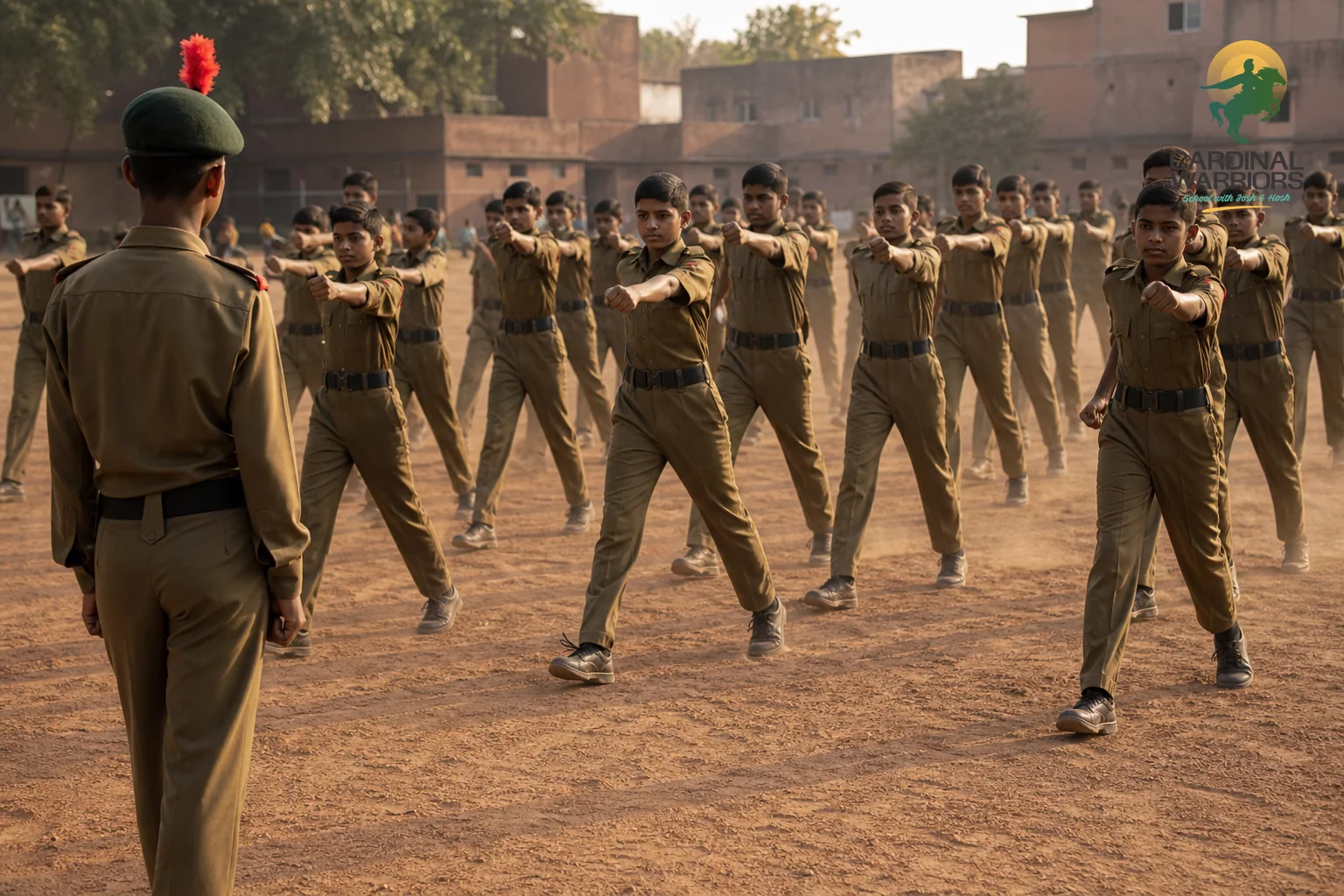
A typical day begins with a 30-minute morning PT and yoga session before classes start, not as a warm-up activity but as a structured routine that sets the tone for focus. Academic periods follow the CBSE curriculum with the same rigor as any board-affiliated school. Tactical training and military education periods introduce discipline concepts like formation, punctuality, and chain of command in age-appropriate ways. Sports and co-curriculars, football, hockey, cricket, basketball, boxing, horse riding, dance and art, round out the afternoon.
Woven through all of this is the school’s values framework, reinforced not through a separate lecture but through how meals are served, how squads are held responsible for their spaces, and how seniors mentor juniors. The goal, in the school’s own language, is to build Officer Like Qualities and what it calls “Josh with Hosh,” enthusiasm paired with judgment, rather than discipline for its own sake.
Parents comparing structured environments often ask how this differs from other elite boarding institutions. Our detailed comparison of military school vs Doon School on discipline breaks down exactly where the daily structures diverge.
Academics: The First Pillar, Not the Only One
Holistic development does not mean academics take a back seat. Cardinal Warriors is CBSE-affiliated under School Code 16180, running a full curriculum from pre-primary through higher secondary, taught in smart classrooms supported by science and computer labs and a library carrying more than 3,000 books. Board exam preparation continues on the same track as any strong CBSE school, in line with guidelines from the Central Board of Secondary Education.
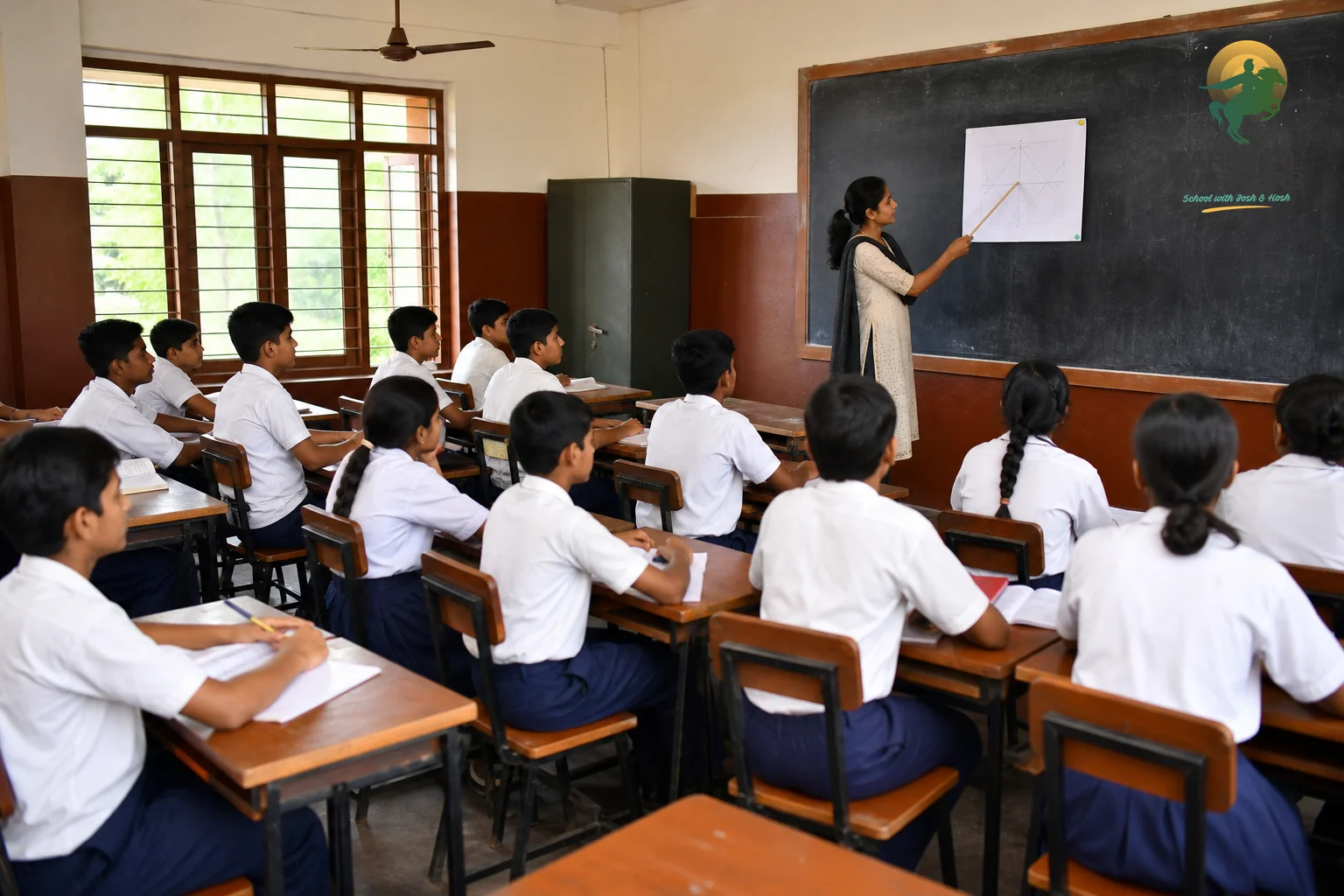
What changes is what sits alongside the curriculum. Students preparing for defence careers get integrated coaching for NDA and AISSEE, along with dedicated preparation for RIMC and RMS entrance exams, built into the school day rather than requiring a separate evening coaching center. Families whose children are aiming for medical or engineering careers get NEET and IIT/JEE preparation on campus, and commerce-track students can access CA Foundation coaching without leaving the school ecosystem.
This integration matters because it removes the fragmentation many Raipur families face when juggling a day school, a coaching institute, and home study across the city. When academics, coaching, and structured routine sit under one roof, a child’s cognitive growth happens without stealing hours from physical training or sleep, which is often the quiet cost of a fragmented schedule.
Physical Fitness and Tactical Training: Building the Body and Focus
The physical pillar of holistic development is often the first one conventional schools compromise on, and it is also the pillar most directly linked to the attention-span concerns parents raise today. A child who spends thirty minutes each morning on structured PT and yoga, followed by tactical drills and sport later in the day, simply has less unsupervised time left for a phone screen, and a body that is genuinely tired sleeps and focuses better.
At Cardinal Warriors, this pillar includes:
- Daily 30-minute morning PT and yoga before academic periods begin, building consistency rather than occasional activity.
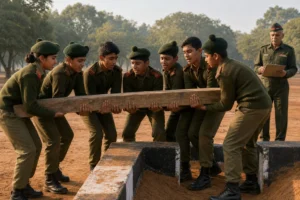
- Obstacle courses and squad posts on the 5-acre campus that turn physical challenge into a team exercise, not just individual fitness.
- Mandatory military training and tactical drills that teach coordination, formation discipline, and quick decision-making under mild physical stress.
- A broad sports program, football, hockey, cricket, basketball, boxing, yoga, horse riding, dance and art, so fitness connects to a skill the child can build over years, not a single mandatory period.
Parents specifically researching whether structured routine improves attention and behavior should read our detailed look at whether military school improves discipline and focus, which covers this connection between physical structure and mental focus in more depth.
Moral Values and Character: The Pillar Parents Worry About Most
When parents ask what holistic development means, the pillar they usually care about most, but articulate least clearly, is character. Marks and fitness are visible on a report card. Whether a child tells the truth when no one is watching, takes responsibility for a mistake, or looks out for a teammate is much harder to measure, and it is exactly where conventional schooling often falls short.
Cardinal Warriors approaches this through its own values framework, built into daily routine rather than confined to a single period. Squad postings give students rotating responsibility for their living spaces and their peers. Mess discipline, uniform standards, and punctuality are treated as character exercises, not just rules to follow. Senior cadets mentor juniors, which builds accountability in both directions.
The school also uses psychometric testing and personalized career counseling to help students understand their own strengths and inclinations early, connecting character development to real decisions about future direction rather than leaving it abstract. Families weighing this pillar specifically should read our companion piece on whether military school is good for character building, which goes deeper into how these values translate into daily behavior.
Holistic development is not a subject you can timetable for forty minutes a week. It has to be the operating system of the entire school day, or it stays a phrase in a brochure.
What Parents Should Look For When Evaluating a School’s Holistic Program
Every school in Raipur, Chhattisgarh and beyond will claim it offers holistic development. The difference between a genuine program and marketing language shows up in specific, verifiable details. Before enrolling, ask to see or confirm the following:
- A published daily schedule, not a general description, showing exactly when PT, academics, values practice and sport happen, and how much time each gets.
- Staff-to-student supervision ratios during non-academic hours, especially in a residential setting, since holistic growth depends on consistent adult presence, not just classroom teaching.
- Evidence that values are practiced, not just posted. Ask how a recent rule violation or a squad conflict was actually handled, rather than accepting a values statement at face value.
- Working sports and training facilities, not brochure photography. Ask to see the obstacle course, the sports fields, and the labs in active use during a campus visit.
- Coaching outcomes and pathways for competitive exams like NDA, RIMC, RMS, NEET or JEE, since academic holism includes preparing students for what comes after school, not just the current year’s syllabus.
- Fee transparency covering tuition, boarding, and training costs together, so there are no hidden gaps between what is promised and what is charged. Our CBSE military boarding school fees breakdown is a useful reference point when comparing schools on this basis.
Our guide on how to choose the right military school for your child walks through this evaluation process step by step, including questions to raise directly with admissions staff during a visit.
Frequently Asked Questions
Does holistic development affect academic results, or slow them down?
Structured physical training and values practice do not compete with academics when they are built into the same schedule. At Cardinal Warriors, students follow the full CBSE curriculum alongside PT, drills and sport, and the structured routine itself tends to improve focus during study hours rather than reducing them.
Is military-style discipline suitable for younger children?
Yes, when it is age-appropriate. Younger cadets at Cardinal Warriors follow lighter versions of drills and structured play rather than the intensive tactical training given to older students, while still building routine, punctuality and basic teamwork habits early.
How is Cardinal Warriors different from Sainik School or Doon School on holistic growth?
Sainik Schools focus primarily on defence-exam preparation within a government framework, while Doon School emphasizes an elite liberal-arts residential model. Cardinal Warriors combines military discipline with integrated coaching across defence, medical, engineering and commerce streams, giving families a broader academic pathway alongside character and fitness training. See our detailed comparisons on Sainik School vs military school in Chhattisgarh for more.
What age should a child join to get the full benefit of holistic development?
Earlier admission, generally between the pre-primary and middle school years, gives a child more years to absorb routine, physical training and values practice as habits rather than adjustments. Older students can still benefit significantly, particularly when preparing for RIMC, RMS or NDA entrance timelines.
Does this kind of school help with mobile addiction and lost focus?
A fully scheduled day, morning PT, academics, tactical training and sport, structurally reduces the unsupervised hours where screen dependence usually develops. Combined with residential supervision, this is one of the more direct, measurable effects parents report when comparing structured boarding schools to day schools.
Real holistic development is a daily structure, not a slogan, and the clearest way to judge it is to walk the campus and see the schedule in motion. If you want to see how Cardinal Warriors puts academics, fitness, values and leadership into a single day for cadets from pre-primary through higher secondary, read more about our approach or explore the campus and programs with us. For direct answers about admissions, fees or a campus visit for your child, contact our admissions team today. You can also follow updates from campus life on Facebook, Instagram, and Twitter/X.

You may also like

Military School With NEET JEE Coaching in Chhattisgarh
Best SSB Interview Coaching Schools in Chhattisgarh